This work proves that the supremum approximation achievable with polynomially many value queries and worst-case constant recourse is 1-1/e-\varepsilon, and determines the exact curvature-dependent threshold $1-(\sqrt2-1)\vartheta$ for weighted coverage with weighted coverage with $O(\varepsilon^{-1})$ recourse.
Abstract
Consistent submodular maximization studies the tradeoff between solution quality and stability when elements arrive over time. For a monotone submodular objective, which models diminishing returns, an algorithm maintains a set of at most $k$ available elements and changes only $O(1)$ elements after each insertion. D\"utting et al. [2025] established a tight $2/3$ approximation with unrestricted computation and a polynomial-time $0.51$ approximation. They left open at STOC 2025 whether efficient algorithms can match the offline $1-1/e$ guarantee. We resolve this problem by proving that the supremum approximation achievable with polynomially many value queries and worst-case constant recourse is \[ \beta=2-\sqrt2\approx0.5858<1-1/e. \] For every $\varepsilon>0$, our randomized algorithm attains $\beta-\varepsilon$ with $O(\varepsilon^{-2})$ changes per insertion. Any fixed improvement requires exponentially many queries before one critical insertion or linear recourse of $\Omega(k)$ changes at that insertion, even with unlimited queries afterwards. This gap quantifies the cost of consistency: the current oracle hides which elements will be needed after an arrival. We also determine the exact curvature-dependent threshold $1-(\sqrt2-1)\vartheta$, attain $1-1/e-\varepsilon$ for weighted coverage with $O(\varepsilon^{-1})$ recourse, and separate the existence of universal future-price certificates from their efficient computation. Our algorithm has a bounded-bit polynomial-time implementation for polynomial-bit rational oracle answers; the lower bound uses only logarithmic-bit rational answers.
Submodular maximization under a knapsack constraint (SMK) is a fundamental combinatorial optimization problem with broad applications across machine learning and data mining. Motivated by large-scale applications where query efficiency is paramount, we study non-monotone SMK and focus on deterministic algorithms with l...
$k$-submodularity generalizes submodularity by allowing each selected element to be assigned one of $k$ labels, rather than being merely selected or not selected. We study the problem of maximizing a nonnegative non-monotone $k$-submodular function, where $k\ge 2$, under classical support constraints, including a singl...
Si-Yuan Chen, Shengminjie Chen, Sui-Xiang Gao et al.· 0 citations
Motivated by applications in fairness and foundational questions, we consider the problem of maximizing a monotone submodular function $f\colon 2^E \rightarrow \mathbb{R}_+$ over maximum cardinality sets in the intersection of two matroids on a common ground set $E$. An important special case is submodular perfect matc...
Chandra Chekuri, Lars Rohwedder, Neta Singer et al.· 0 citations
We nearly settle the polynomial-time approximability of the Directed Feedback Vertex Set problem in tournaments. This problem is Vertex Cover-hard, and thus cannot have a $(2 - \varepsilon)$-approximation for any $\varepsilon>0$ in polynomial time assuming the Unique Games Conjecture. In the past 28 years, several work...
The soundness uses a result of Haeupler, Saha, and Srinivasan building on the proof of Moser and Tardos, to upper-bound the probability that a fixed relatively large subset is an independent set after the Moser-Tardos algorithm terminates.
Karlin, Klein, and Oveis Gharan introduced a randomized better-than-$3/2$ approximation algorithm for metric TSP [KKO21] and subsequently established the corresponding improvement in the integrality gap of the subtour-elimination LP [KKO22], with an explicit constant $\varepsilon>1.00000\cdot10^{-36}$. Gurvits, Klein,...
Zhao-Feng Song· 0 citations
Related blog posts
MIT News · Artificial Intelligence· news.mit.eduOct 2, 2026
Martin Trust Center Managing Director Bill Aulet introduces Dear Dreamer, a free platform for middle and high school students who want to learn about entrepreneurship.
Microsoft Research Blog· microsoft.comSep 30, 2026
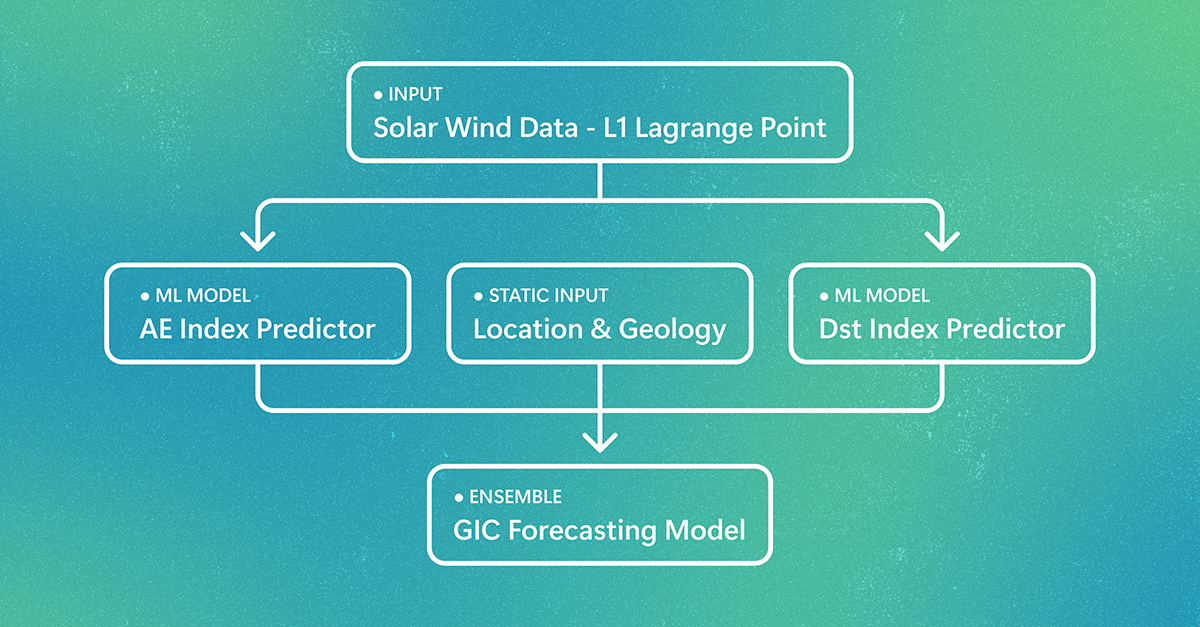
Extreme space-weather events can damage power systems on Earth and degrade GPS accuracy and satellite operations. A new machine learning system can predict where damage is likely to occur 30-60 minutes before a storm arrives. The post Forecasting space weather risks on power grids appeared first on Microsoft Research.
We use cookies to run the site and, with your consent, for analytics and to show ads.
See our Cookie Policy.