Feb 2026· arXiv.org· Vol abs/2602.06759· 1 citation· 69 references
Computer Science
TL;DR
The first systematic security study of NES systems is conducted, finding that NES retrieves a significantly expanded context, including inputs from imperceptible user actions and global codebase retrieval, which increases the attack surfaces.
Abstract
Modern AI-integrated IDEs are shifting from passive code completion to proactive Next Edit Suggestions (NES). Unlike traditional autocompletion, NES is designed to construct a richer context from both recent user interactions and the broader codebase to suggest multi-line, cross-line, or even cross-file modifications. This evolution significantly streamlines the programming workflow into a tab-by-tab interaction and enhances developer productivity. Consequently, NES introduces a more complex context retrieval mechanism and sophisticated interaction patterns. However, existing studies focus almost exclusively on the security implications of standalone LLM-based code generation, ignoring the potential attack vectors posed by NES in modern AI-integrated IDEs. The underlying mechanisms of NES remain under-explored, and their security implications are not yet fully understood. In this paper, we conduct the first systematic security study of NES systems. First, we perform an in-depth dissection of the NES mechanisms to understand the newly introduced threat vectors. It is found that NES retrieves a significantly expanded context, including inputs from imperceptible user actions and global codebase retrieval, which increases the attack surfaces. Second, we conduct a comprehensive in-lab study to evaluate the security implications of NES. The evaluation results reveal that NES is susceptible to context poisoning and is sensitive to transactional edits and human-IDE interactions. Third, we perform a large-scale online survey involving over 200 professional developers to assess the perceptions of NES security risks in real-world development workflows. The survey results indicate a general lack of awareness regarding the potential security pitfalls associated with NES, highlighting the need for increased education and improved security countermeasures in AI-integrated IDEs.
This publication proposes a definition and a classification of agile software development approaches and analyses ten software development methods that can be characterized as being "agile" against the defined criterion.
P. Abrahamsson, O. Salo, Jussi Ronkainen et al.· arXiv.org· 727 citations· ⚡54
The study shows that agile practices improve both informal and formal communication, but indicates that, in larger development situations involving multiple external stakeholders, a mismatch of adequate communication mechanisms can sometimes even hinder the communication.
M. Pikkarainen, Jukka Haikara, O. Salo et al.· Empirical Software Engineeri...· 401 citations· ⚡48
The results indicate that software engineering work practices are chosen opportunistically, adapted and configured to provide value under the constrains imposed by the startup context.
Nicolò Paternoster, Carmine Giardino, M. Unterkalmsteiner et al.· Information and Software Tec...· 394 citations· ⚡54
The perception of the impact of agile methods is predominantly positive, and several challenge areas were discovered, but based on this study, agile methods are here to stay.
M. Laanti, O. Salo, P. Abrahamsson· Information and Software Tec...· 260 citations· ⚡20
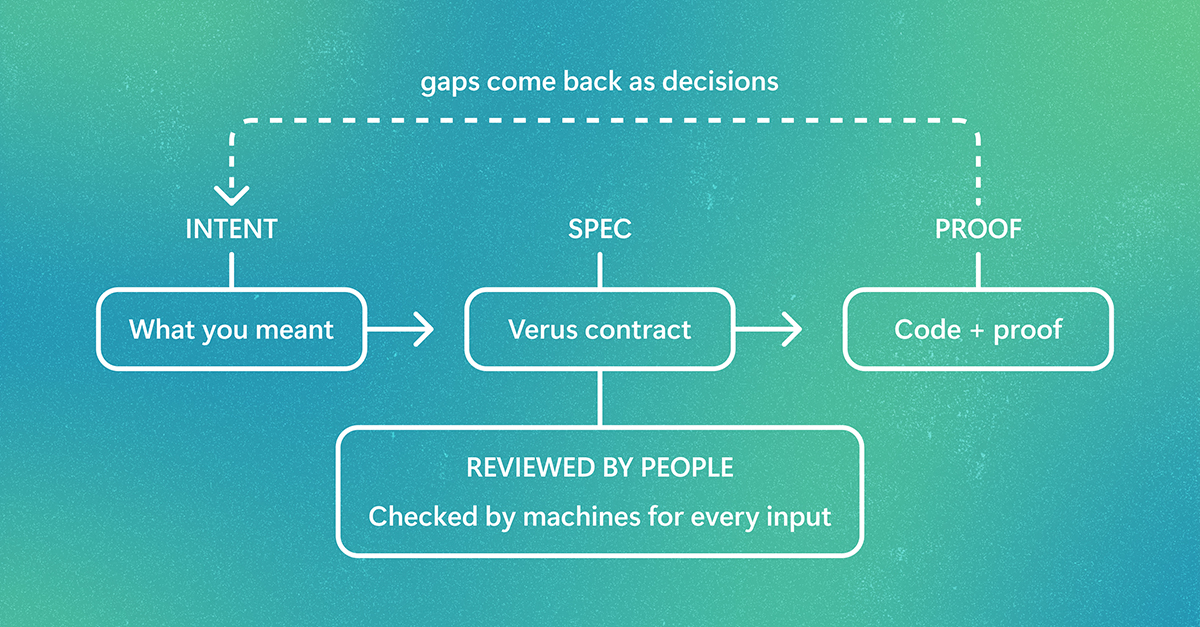
AI agents can generate code at a scale that’s hard for humans to review line-by-line. PDD Kit helps ensure the code is doing what the developer intended by creating formal specifications and testing against them. It converts developer intent into a Verus specification, proves AI-generated code meets it for every input, and uses tests where proofs aren't practical. Developers review intent, not every line. The post Formally verifying agent-written full-stack web apps with PDD Kit appeared first o…
Research Manager Mike Walker reflects on a career spanning hacker culture, cybersecurity, and AI, sharing lessons about trust, teamwork, leadership, and why solving difficult problems requires curiosity, judgment, agility—and an understanding of the rules. The post Learn the rules: The hacker mindset appeared first on Microsoft Research.
Critical flaws, compromised release channels and agentic AI threats landed within days of each other in mid-October 2026. Why “Black October” may say more about how well we now find weaknesses than about the attacks themselves. The post Black October? The Week AI Changed the Cybersecurity Conversation appeared first on GPT-Lab.
We use cookies to run the site and, with your consent, for analytics and to show ads.
See our Cookie Policy.