Skip to content

Digital Twin-Assisted Beamforming for Millimeter Wave Massive MIMO

Sep 2026 · Italian National Conference on Sensors · Vol 26 · 0 citations · 17 references
Medicine

TL;DR

Numerical results demonstrate that the proposed DT-assisted approach significantly reduces online interaction overhead by shifting the computational burden of ray-tracing to an offline generative phase, and achieves superior sum-rate performance and link robustness under dynamic blockages compared to conventional deep learning and heuristic benchmarks.


Abstract

Millimeter wave (mmWave) Massive MIMO is a cornerstone technology for sixth-generation (6G) wireless networks, providing the directional gain necessary to overcome high path loss. However, the acquisition of high-fidelity Channel State Information (CSI) and the associated beamforming overhead remain significant bottlenecks, particularly in dynamic environments with frequent blockages. In this paper, we propose a fast and robust beamforming strategy enabled by a digital twin (DT) framework. Specifically, we develop a Conditional Generative Adversarial Network (cGAN)-based DT module that serves as a high-fidelity virtual surrogate for site-specific ray-tracing. By processing environmental 3D geometry and dynamic obstacle data, the cGAN predicts real-time Beam-Power Maps (BPM) with minimal computational latency. Building upon these predictions, we introduce a Graph Neural Network (GNN)-based resource allocation agent that models the network as a spatial interference graph to perform coordination and power control. Numerical results demonstrate that our proposed DT-assisted approach significantly reduces online interaction overhead by shifting the computational burden of ray-tracing to an offline generative phase. Furthermore, the framework achieves superior sum-rate performance and link robustness under dynamic blockages compared to conventional deep learning and heuristic benchmarks.
Read PDF

Similar papers

Open access Oct 2026

Photonic Beamforming for mmWave MIMO via Machine Learning Inverse Design

Results show LightGBM achieves the highest accuracy for VDL prediction due to its tabular data processing efficiency, and provides a foundation for low-complexity, low-power photonic front-ends for 5G/6G.

Cheng-Kai Yao, Jyun-Wei Li, Guang-Sheng Liu et al. · 0 citations
Open access 2026

Spectrum-Aligned DFT for THz Massive MIMO: A Fully Digital Transmit Precoding Solution to the Bandwidth Disaster

The transition to terahertz (THz) and millimeter-wave (mmWave) frequencies is essential for meeting the extreme data-rate demands of 6G wireless networks. However, the associated ultra-wide bandwidth induces severe beam squint—a frequency-dependent beam misalignment that drastically reduces array gain and spectral effi...

Henry H. Liao, Kaiyuan Wang, Y. Wan · 0 citations
Open access 2026

Agentic Beam Optimization for mmWave V2X Communications Using Fluid Antenna Systems

An agentic AI model with the grey wolf optimizer (GWO) for robust beam management in mmWave vehicular networks is proposed, which operates as an autonomous networking agent that perceives environmental dynamics, including mobility and LOS/NLOS conditions, and performs goal-driven beam selection and adaptation.

Mandavi Dubey, Vijay Dubey, Pi-Chung Wang · 0 citations
Open access Sep 2026

Performance enhancement of 6g millimeter wave links via RIS beamforming and CDL-based channel modeling

This paper discusses how using realistic cluster-delayed-line (CDL) channel modelling can improve the performance of RIS-assisted millimeter-wave communication links and shows that RIS-assisted beamforming greatly improves communication performance from direct established links.

K. Swamy, Suman Turpati, Sivasubramanyam Medasani et al. · 0 citations
Open access 2026

Hybrid Beamforming Optimization for Near-Field Terahertz Multi-User System With FTTDs

In this paper, we investigate beamforming for a wideband terahertz (THz) communication system serving multiple users in the near-field region. A hybrid beamforming architecture employing fixed true time delays (FTTDs) and phase shifters (PSs) is introduced to reduce the spatial wideband effect. Both fully-connected (FC...

Wen-Qiang Chu, Qiu-Yan Liu, Yan-Xia Cao et al. · 0 citations

Related blog posts

Microsoft Research Blog Jul 13, 2026

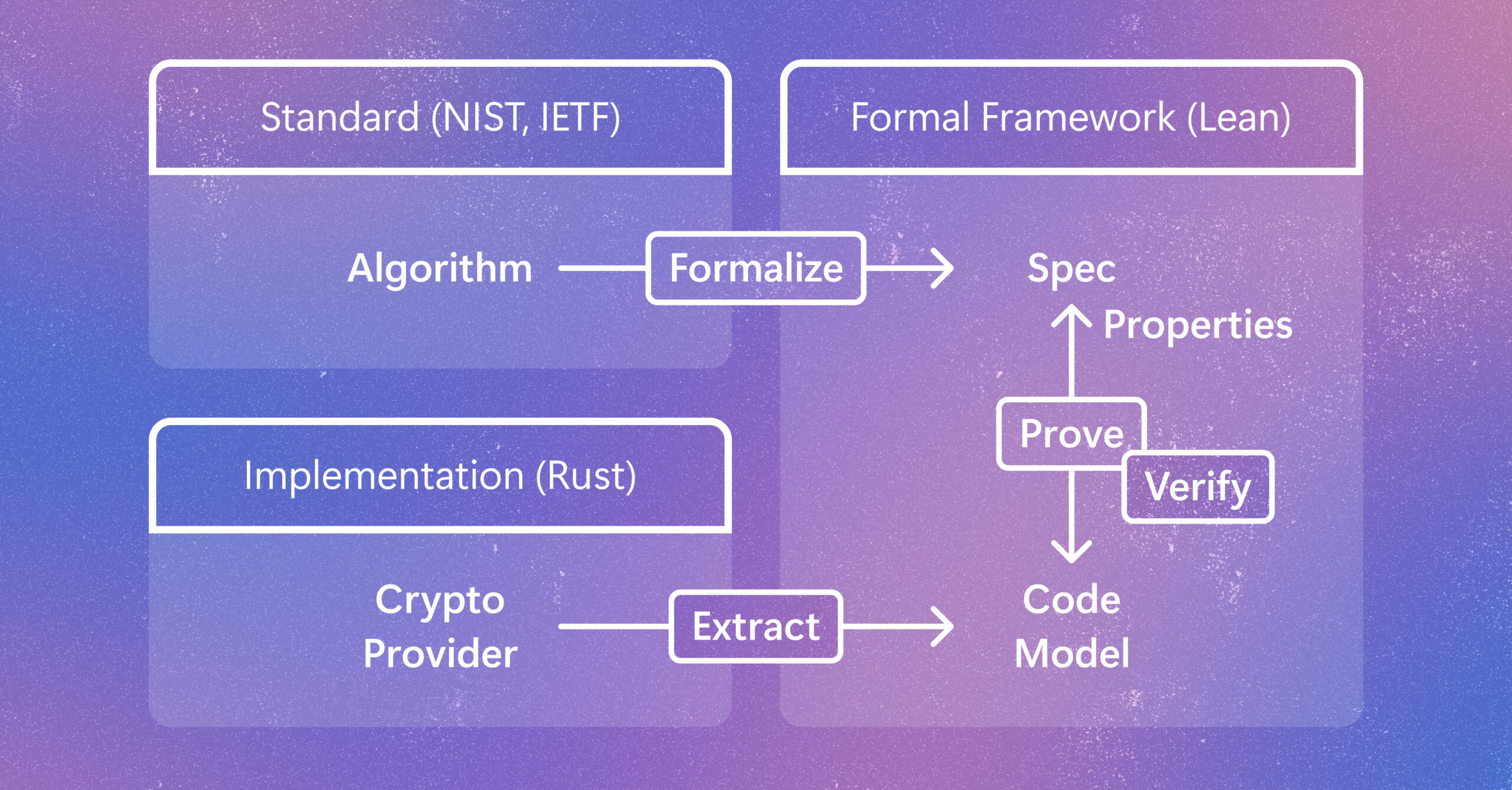
Verifying Rust cryptography in SymCrypt, from standards to code

Cryptographic code supports vital protections in modern computing systems. Learn how a new method helps verify code as developers write it while preserving speed and adaptability as it gets implemented and evolves. The post Verifying Rust cryptography in SymCrypt, from standards to code appeared first on Microsoft Research.

We use cookies to run the site and, with your consent, for analytics and to show ads. See our Cookie Policy.