Skip to content

Artificial intelligence-driven drug discovery: a deep learning paradigm shift in pharmaceutical research and development

Sep 2026 · Frontiers in Pharmacology · Vol 17 · 0 citations · 172 references
Medicine

TL;DR

To bridge the gap between in silico predictions, chemical synthesis, and biological reality, emerging solutions such as federated learning, causality-aware Explainable AI, closed-loop autonomous laboratories, and efficiency-oriented algorithmic strategies are explored.

Abstract

Efficient drug discovery is essential to mitigate the high attrition rates and capital-intensive nature of traditional pharmaceutical research. Deep learning (DL) has catalyzed a paradigm shift, offering unprecedented computational capabilities to accelerate this process. This review systematically summarizes advancements in DL methodologies for drug discovery. First, the critical data foundations, Molecular Representation Learning, and core architectures underpinning artificial intelligence (AI)-driven therapeutics are elucidated, with a particular emphasis on the evolution of generative AI frameworks (such as Variational Autoencoders (VAEs), Generative Adversarial Networks (GANs), and diffusion models) for chemical space exploration. Subsequently, diverse DL applications across the discovery pipeline are investigated, encompassing target identification, virtual screening, de novo molecular design, retrosynthetic analysis, absorption, distribution, metabolism, excretion, and toxicity (ADMET) profiling, and drug repurposing. Furthermore, persistent challenges, particularly data scarcity, model opacity, experimental validation bottlenecks, and escalating computational resource requirements, are critically evaluated. To bridge the gap between in silico predictions, chemical synthesis, and biological reality, emerging solutions such as federated learning, causality-aware Explainable AI (XAI), closed-loop autonomous laboratories, and efficiency-oriented algorithmic strategies are explored. Ultimately, this article provides strategic insights into leveraging DL, underscoring its transformative potential in driving next-generation medicinal and therapeutic innovation.

Read PDF

Similar papers

Review Sep 2026

Precision Drug Discovery in the Era of Artificial Intelligence: A Critical Review.

A paradigm shift toward autonomous scientific agents capable of causal reasoning and end-to-end experimental guidance is highlighted, and persistent challenges are discussed, including data bias, limited interpretability, and in silico-to-wet lab translation.

Meng Liu, Jia-Cheng Xiong, Ming-Yue Zheng · 0 citations
Review Open access Sep 2026

Artificial intelligence-assisted lead optimization in drug discovery: bridging computational advances and translational challenges.

It is concluded that future progress will depend less on increasingly sophisticated algorithms than on trustworthy AI systems that improve scientific decision-making within iterative lead optimization workflows and ultimately enhance translational success in drug discovery.

F. A. Mohamed, A. M. K. El-sagheir · 0 citations
Review Aug 2026

Advancing cancer drug discovery through the integration of machine learning and high-throughput screening.

This review highlights the synergy between AI and HTS, emphasizing DL techniques such as convolutional neural networks for bioactivity prediction, recurrent neural networks for de novo design, and reinforcement learning for property optimization.

Kamil Herbetko, Katarzyna Herbetko, Magdalena Mikołajek et al. · 1 citation
Review Sep 2026

Artificial Intelligence for Natural Products Discovery and Development.

Natural products (NPs) remain a cornerstone of modern drug discovery, offering stereochemical complexity and diverse bioactivities that precisely modulate therapeutic targets, refined through billions of years of evolution. However, their research has long been hindered by inefficient, empirical workflows, high resourc...

Wei-Jin Wang, Zhao-Xin Xu, Yu Lin et al. · 0 citations
Review Aug 2026

Harnessing the Power of AI: A Modern Review on the Prediction of ADMET Properties in Drug Discovery.

Artificial intelligence-driven ADMET prediction is becoming a vital tool in lowering attrition, speeding up candidate prioritization, and influencing the direction of rational drug development, despite persistent issues with data quality, regulatory acceptance, and synthetic viability.

Satyam Kumar Vishwash, Ram Babu Soni, Ratima Sood et al. · 0 citations
Review Open access Sep 2026

Network biology to artificial intelligence: building the next generation of predictive drug discovery

Artificial intelligence-driven systems biology approaches could contribute to the development of dynamic, patient-specific computational representations of biological systems, potentially accelerating precision medicine and transforming drug discovery from empirical experimentation toward predictive, mechanism-guided t...

Kumar Selvarajoo · 0 citations

Related blog posts

GPT-Lab Aug 28, 2026

We built an AI factory for HVAC control

What does it take to trust AI-driven HVAC optimization? Our AI Model Factory combines agents, machine learning, reinforcement learning and deterministic checks in a governed workflow designed for messy, real-world building data. The post We built an AI factory for HVAC control appeared first on GPT-Lab.

Microsoft Research Blog Jul 30, 2026

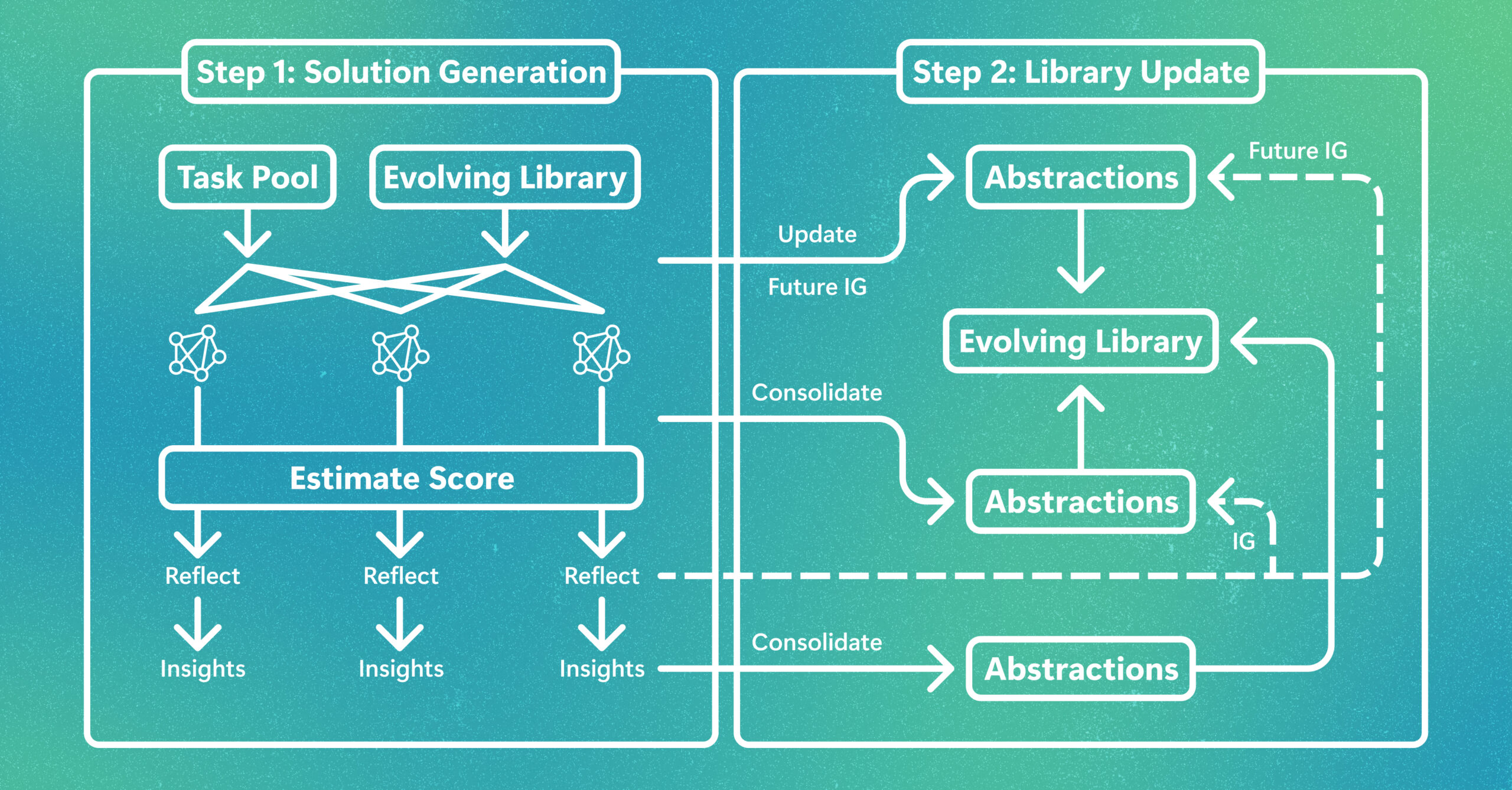
EvoLib: Turning experience into evolving knowledge

LLMs do not get smarter just by remembering more. EvoLib turns experience into evolving knowledge, taking reusable skills and insights that help models learn and adapt across tasks long after deployment. The post EvoLib: Turning experience into evolving knowledge appeared first on Microsoft Research.

We use cookies to run the site and, with your consent, for analytics and to show ads. See our Cookie Policy.