Sep 2026· International Conference on Intelligent Transportation Systems and Automation Control· Vol 14368, pp. 143681G - 143681G-8· 0 citations· 23 references
Engineering
TL;DR
The results indicate that edge-side resource allocation can improve computational reliability and operational scalability for automated VPP dispatch as well as improve computational reliability and operational scalability for automated VPP dispatch.
Abstract
Virtual power plants (VPPs) aggregate photovoltaic units, battery storage, electric-vehicle chargers, flexible loads, and optical/electrical sensing devices through cloud-edge-terminal platforms. Centralized cloud scheduling is often too slow for dispatch verification, emergency frequency-control, and burst telemetry processing. This paper proposes a priority- aware edge computing resource allocation method for VPPs. A cloud-edge-terminal model is established, heterogeneous VPP computing tasks are described by data size, CPU cycles, deadline, and operational priority, and a rolling-window allocator jointly optimizes offloading decision, CPU frequency, bandwidth quota, utilization balance, and emergency reserve. The method combines a deadline-priority score, feasibility repair, and dynamic reserve guidance so that routine forecasting and settlement tasks do not occupy capacity required by high-priority control tasks. A simulated IEEE 33-bus VPP with 280 distributed energy-resource endpoints is used for validation. Compared with cloud-only scheduling, the proposed method reduces average latency from 168 ms to 64 ms and decreases deadline violations from 18.6% to 4.9%. Ablation tests further show that priority scoring, feasibility repair, and reserve protection are all necessary for stable real- time operation. The results indicate that edge-side resource allocation can improve computational reliability and operational scalability for automated VPP dispatch.

A dynamic resource allocation and task scheduling approach based on end-edge-cloud cooperation is established in order to enhance task completion, resource utilization, satisfaction of service level agreements (SLA) and reduce delay and energy consumption.
Shao-Meng Ren, Zheng-Jie He, Xiang-Yun Yi et al.· 電腦學刊· 0 citations
Cloud platforms still suffer from problems such as insufficient resource utilization, low data convergence efficiency, and excessively long fault recovery links in areas like cross-chip adaptation, multi-primary/backup consistency guarantees, and fault self-healing. To address these issues, this paper proposes a multi-...
Wen-Chong Fang, Wei Jiang, Wen Zhu et al.· European Conference on Elect...· 0 citations
Integrating distributed energy resources (DERs) via Virtual Power Plants (VPPs) faces challenges like renewable intermittency, communication scheduling uncertainties, and high data collection costs. While existing studies often overlook practical implementation efficiency, this paper proposes a VPP scheduling framework...
The results support the usefulness of hierarchical scheduling under the considered scenario-based settings, while field SCADA/PMU or hardware-in-the-loop validation remains necessary before practical deployment.
Bin Guo, Xing-Xing Feng, Haitong Gu et al.· Energies· 0 citations
Next-generation green power direct-connection data centers face the dual challenges of the random nature of renewable energy output and short-term load fluctuations, which can cause significant power fluctuations at the grid connection point. This not only places enormous strain on grid operations but also poses securi...
Yucheng Zheng, G. I. Rashed, Xin-Fa Jiang et al.· International Conference on...· 0 citations
High penetration of renewable energy imposes greater demands on the scheduling flexibility of demand-side resources in virtual power plant (VPP) dispatch. Nevertheless, heterogeneous resources exhibit remarkable differences in response reliability, and electric vehicles (EVs) in particular show distinct execution perfo...
Yu-Kun Jin, Xiao-Peng Li, Si-Yuan Cai et al.· World Electric Vehicle Journ...· 0 citations
Related blog posts
MIT News · Artificial Intelligence· news.mit.eduOct 2, 2026
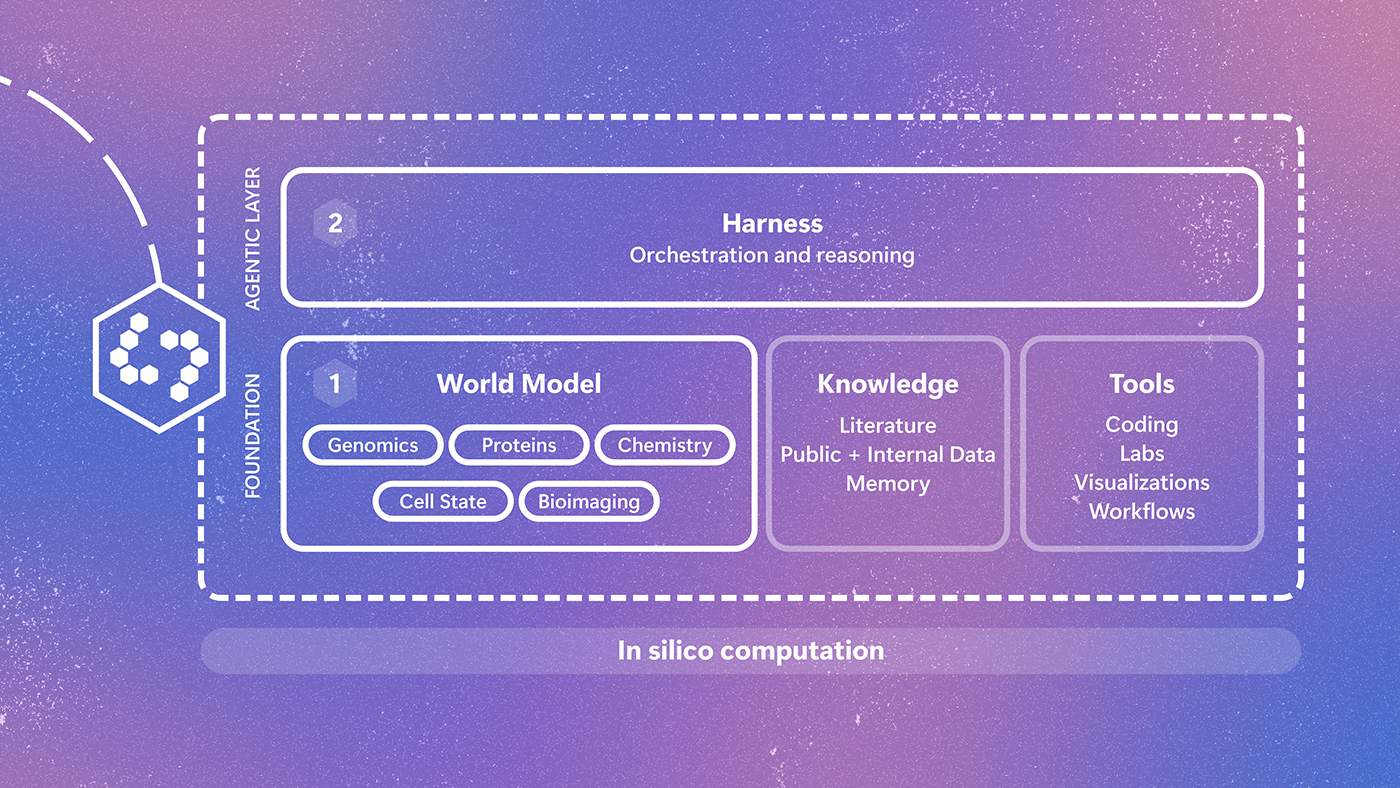
Biology doesn't operate in silos, and neither should the AI representation of it. Quine is an early-stage research effort to create a multimodal world model of biology. By connecting insights across biological scales and modalities, Quine helps scientists computationally search a space far larger than intuition allows and prioritize hypotheses before they reach the lab. Experimental results provide important feedback, helping researchers sharpen future research directions. The post Introducing Q…