The proposed framework establishes a semantic-guided hierarchical prediction paradigm, in which high-level navigational intent and local motion dynamics are jointly modeled for robust long-term vessel trajectory forecasting.
Abstract
To address the challenges of behavioral multimodality, limited semantic utilization, and long-term error accumulation in vessel trajectory prediction, this paper proposes M3-Former, a multimodal trajectory prediction framework enhanced by large language models (LLMs). The proposed framework incorporates vessel static attributes and navigational intent as semantic priors for long-term trajectory modeling. Specifically, a unified multimodal representation space is constructed, in which static semantic information is encoded by a pre-trained LLM and aligned with dynamic trajectory features through self-attention. To jointly capture global route planning and local motion variations, a dual-granularity Mixture-of-Experts (MoE) architecture is introduced, where sequence-level experts model global navigation trends and token-level experts refine fine-grained maneuvering behaviors. In addition, a Steering-Weighted Cross-Entropy loss is designed to alleviate the long-tail distribution of sparse turning samples and improve prediction accuracy in critical maneuvering scenarios. Experiments on a real-world Danish AIS dataset demonstrate that M\textsuperscript{3}-Former consistently outperforms state-of-the-art baselines across prediction horizons from 1 to 4 hours. In the 4-hour prediction task, the proposed method reduces Average Displacement Error (ADE) and Final Displacement Error (FDE) by 4.4\% and 5.1\%, respectively, compared with the strongest baseline. Qualitative and ablation analyses further verify that semantic fusion effectively reduces long-term trajectory drift, while the dual-granularity MoE improves robustness in complex waterways and route-branching scenarios. The proposed framework establishes a semantic-guided hierarchical prediction paradigm, in which high-level navigational intent and local motion dynamics are jointly modeled for robust long-term vessel trajectory forecasting.
Trajectory prediction is essential for many robotic applications, yet most existing models rely on fixed-length observations and struggle with temporally irregular inputs. In real-world settings, prediction difficulty further increases when agents exhibit strong maneuverability, as their future motions depend on distin...
Shuobo Wang, Wen-Yuan Qin, Yong-Zhao Hua et al.· IEEE Robotics and Automation...· 0 citations
A non-local multi-head spatiotemporal attention based long short-term memory model (NL-MHA-LSTM) is introduced which employs an attention mechanism to assign context weights to relevant neighbor vehicles and extends beyond pairwise effects to model long-range dependencies.
S. Rashid, M. A. Khan, Usman Akram et al.· PLoS ONE· 0 citations
Accurate human trajectory prediction is essential for autonomous driving and robot navigation. Despite substantial progress, deep learning-based approaches often suffer from the train-inference gap caused by distributional discrepancies between training and test environments. The goal-guided framework mitigates this is...
Ge Sun, Jun Ma· IEEE Robotics and Automation...· 0 citations
It is suggested that multi-scale local motion modelling can stably improve the accuracy of AIS-based vessel trajectory prediction and is evaluated under a unified data preprocessing, resampling and multi-step autoregressive prediction framework.
Qi Xu, Hua-Sheng Nong, Tian-Wei Ma et al.· International Conference on...· 0 citations
The results demonstrate that while discrete models provide high navigational stability over long horizons, CRHT offers an optimal balance of precision and maneuver tracking for real-time maritime surveillance.
Alexander Schiøtz, Bertram Hage, Christian Rand et al.· 0 citations
A vision-based end-to-end autonomous parking framework trained through imitation learning that introduces a historical context fusion encoder to capture temporal dependencies from past vehicle motions, a dual-stream attention decoder to enhance interaction between scene features and trajectory representations, and kine...
Da Zheng, Bing-Li Zhang, Xinyu Wang et al.· Engineering Research Express· 0 citations
Exploring how generative AI could make machine vision more accessible to businesses. The post GenEye in a Box: Making Machine Vision Something You Can Just Ask For appeared first on GPT-Lab.
Microsoft Research Blog· microsoft.comAug 11, 2026
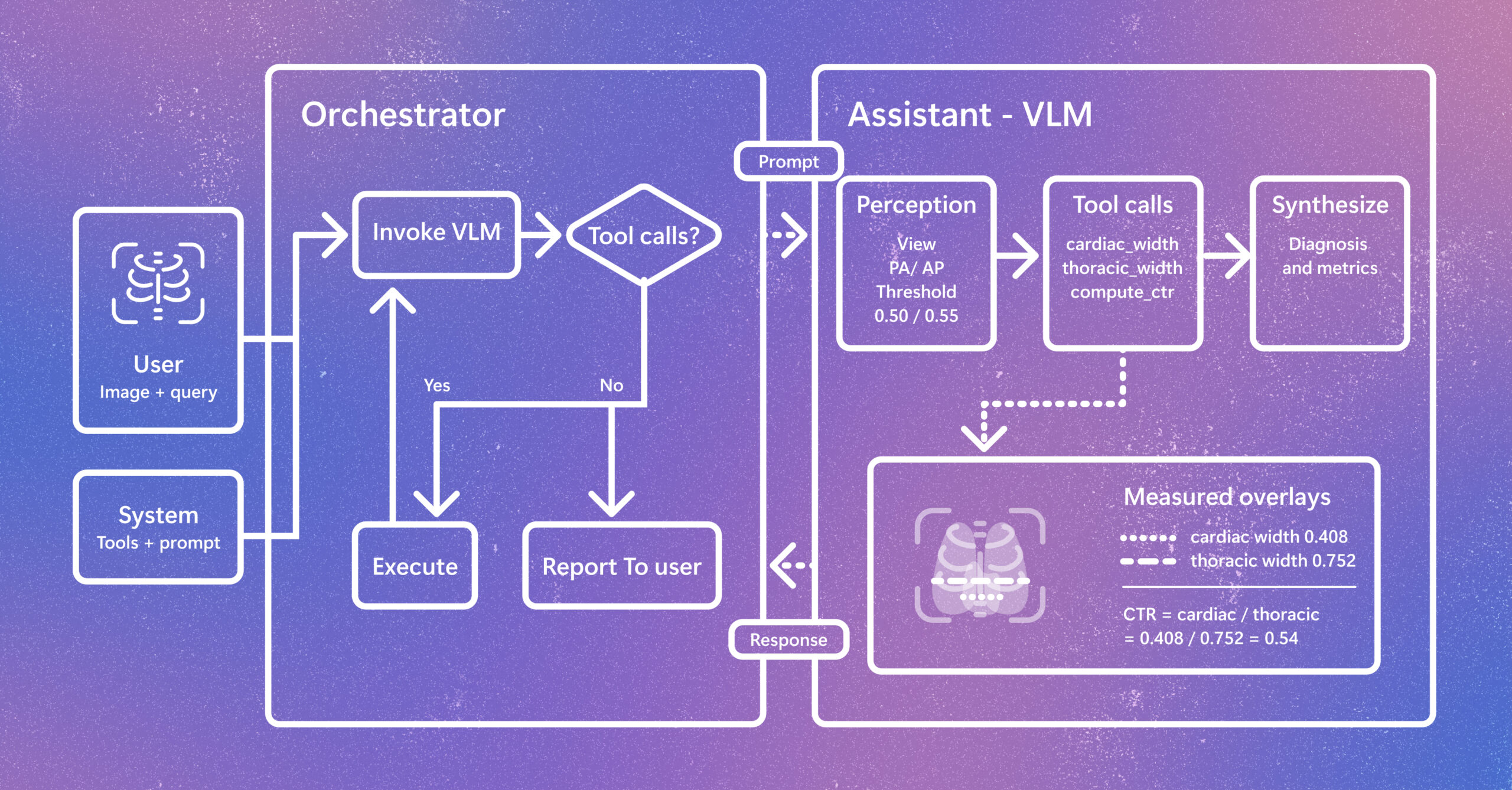
Radiology AI is evolving beyond report generation. CARE-X explores a unified approach that combines flexible reasoning, calibrated predictions, and measurement-based tools for chest X-ray interpretation. The post Introducing CARE-X: Towards Clinically Useful Radiology VLMs with Auxiliary Supervision, Reward-Aligned Learning, and Tool-Augmented Measurement appeared first on Microsoft Research.
Students in MIT’s Concourse program delve deeply into the human condition, debate challenging questions, and learn to develop judgment about issues that can’t be quantified.
We use cookies to run the site and, with your consent, for analytics and to show ads.
See our Cookie Policy.