This work presents a variational, label-free physics-informed graph neural network (PI-GNN) in which the heterogeneity is carried by the discretization rather than by the trial field, a variationally consistent, penalty-free interface representation for parametric surrogates and inverse identification rather than a replacement for a one-off FE analysis.
Abstract
Stress localization in heterogeneous solids is governed by the bimaterial interface, where the displacement field remains $C^0$-continuous, while in-plane stresses jump due to the stiffness mismatch. Coordinate-based physics-informed neural networks (PINNs) represent this jump via a prescribed regularization width or a weighted interface penalty, making their accuracy sensitive to how phase-contrast changes are handled. This work presents a variational, label-free physics-informed graph neural network (PI-GNN) in which the heterogeneity is carried by the discretization rather than by the trial field. The solver operates on a conforming adaptive mesh graph, assigns constitutive behavior per element, and minimizes the discrete total potential energy as a single unweighted objective in which only first derivatives appear. The discrete energy on piecewise-linear elements coincides with the finite element (FE) Ritz functional. Dirichlet conditions are enforced by construction, with no penalty term, no interface weight, and no prescribed transition width. Using one fixed architecture, optimizer, and loss across small-strain elasticity and finite-strain Neo-Hookean hyperelasticity in two and three dimensions, the von Mises error remains below $3.58\%$ across a stiffness-contrast sweep spanning $(E_{\mathrm{inc}}/E_{\mathrm{mat}}\in[10^{-2},10^{2}])$, where a strong-form PINN degrades to $5.58\%$, and its displacement error reaches $7.66\%$ against $0.49\%$ for the PI-GNN. A trained network halves the ($\sigma_{xx}$) error of an energy-based PINN ($5.01\%$ versus $10.94\%$). Training cost exceeds a single FE solve by more than an order of magnitude, so the construction is a variationally consistent, penalty-free interface representation for parametric surrogates and inverse identification rather than a replacement for a one-off FE analysis.
Physics-Informed Neural Networks (PINNs) serve as continuous, mesh-free solvers for partial differential equations, but they frequently encounter optimization failures when applied to strongly coupled, stiff multiphysics systems. In piezoelectricity, the disparity in energetic scales between mechanical stress and elect...
Suhas Suresh Bharadwaj· Journal of Applied Physics· 0 citations
Physics-Informed Neural Networks (PINNs) have recently gained considerable attention as a mesh-free framework for solving partial differential equations. Nevertheless, their performance deteriorates when applied to strongly coupled multiphysics systems, such as Biot's consolidation model, due to severely ill-conditione...
Kexin Sun, Qiang Liu, Ming-Cheng Feng et al.· 0 citations
In this work, viscous fluid flow governed by the Stokes equations in highly perforated domains is studied using physics-informed neural networks (PINNs). Perforated microstructures induce complex boundary conditions and fine-scale flow features that are difficult for standard neural networks to resolve. Conventional PI...
Jeeeun Lee, Denis Korolev, M. Duhovic et al.· 0 citations
The discovery of constitutive laws from experimentally accessible measurements is a central problem in nonlinear computational mechanics. Many data-driven constitutive identification approaches rely either on paired strain–stress data or on full-field displacement measurements, both of which are difficult to obtain i...
Francesco Regazzoni· Computational Mechanics· 2 citations· ⚡1
A mesh-free numerical framework based on \textit{Kolmogorov--Arnold Physics-Informed Neural Networks} (KAN-PINNs) is developed for the approximation of fourth-order elliptic boundary value problems, with specific application to the biharmonic equation governing thin plate deflection. Unlike conventional Multi-Layer Per...
A mesh-free discretization in which a single neural network represents the displacement and phase fields and is trained by minimizing the incremental energy directly is proposed.
Han Zhang, M. Alamdari, B. Shahbodagh et al.· 0 citations
Related blog posts
MIT News · Artificial Intelligence· news.mit.eduOct 2, 2026
Martin Trust Center Managing Director Bill Aulet introduces Dear Dreamer, a free platform for middle and high school students who want to learn about entrepreneurship.
Microsoft Research Blog· microsoft.comSep 30, 2026
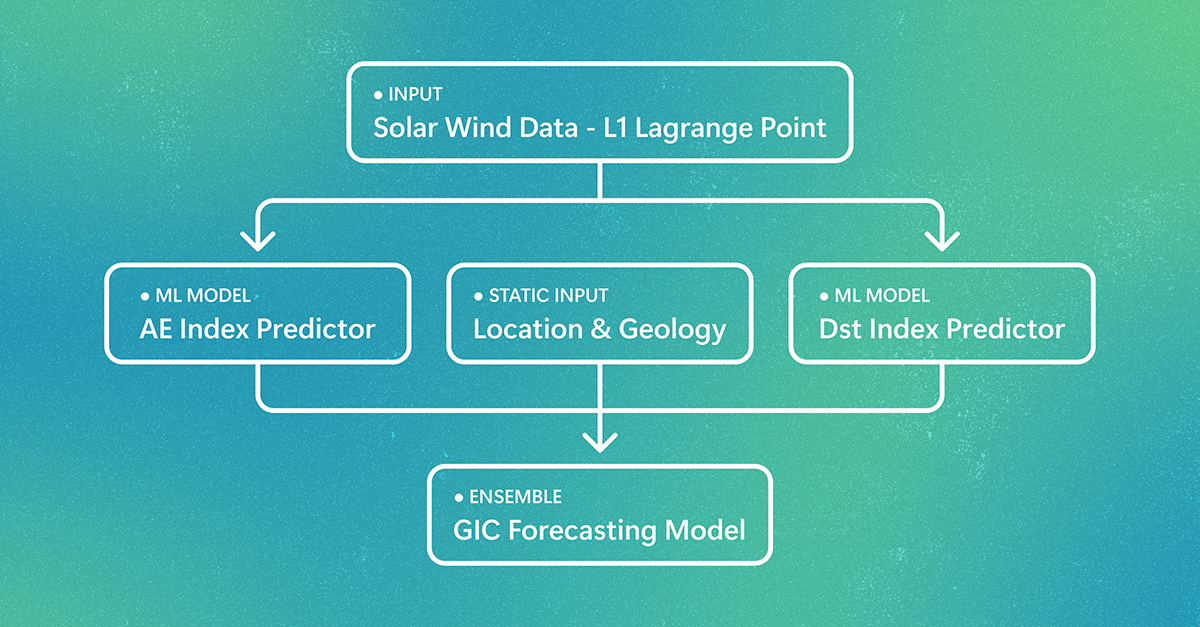
Extreme space-weather events can damage power systems on Earth and degrade GPS accuracy and satellite operations. A new machine learning system can predict where damage is likely to occur 30-60 minutes before a storm arrives. The post Forecasting space weather risks on power grids appeared first on Microsoft Research.
We use cookies to run the site and, with your consent, for analytics and to show ads.
See our Cookie Policy.