Collective intelligence depends not only on the capabilities of individual members, but also on how those members are organized. Yet artificial multi-agent systems are typically assembled using fixed organizational structures, even when the physical tasks they perform impose fundamentally different coordination requirements. Here we show that principles from human organization theory can be operationalized to organize large, heterogeneous collectives of embodied artificial agents. We introduce ORCH (Organizing Roles and Coordination Hierarchies), which constructs task-specific hierarchical organizations by combining pooled interdependence for work that can proceed concurrently with sequential interdependence for work governed by prerequisite relationships. Across 25 wildfire-response missions spanning reconnaissance, rescue, transportation, resource management, containment and suppression, we evaluated teams of up to 50 heterogeneous agents using eight large language models. Organizations constructed using these principles consistently outperformed four representative embodied multi-agent approaches across mission outcome, execution efficiency, exploration and computational resource use. Human-designed ORCH organizations improved final score by 63.97% and execution efficiency by 74.29% on average relative to the four prior frameworks. Organizations generated automatically by language models improved these measures by 43.63% and 52.53%, respectively. These advantages persisted across missions and underlying language models. Notably, collective performance was not monotonically determined by model scale. Analysis of long-horizon missions showed that hierarchical organization enabled teams to preserve concurrent activity within specialized groups while coordinating ordered transitions between mission phases.

Artificial systems increasingly participate in organizational work as recurrent contributors to interdependent activity, yet research remains fragmented across system capabilities, individual responses, episodic interactions, and constructs derived from human-only teams. This article develops Organismic Human-Artificia...
A. Rovetta, A. Bortolotti, C. Di Berardino· Frontiers in Organizational...· 0 citations
Evidence from computational studies reveals that familiar organizational forms often underperform in agentic systems when they prioritize human-like structure over context preservation, and organizations embedding agentic AI must therefore design interface structures that align computational context coordination with h...
Jonathan H. Westover· Human Capital Leadership Rev...· 0 citations
Self-Organizing Agent Teams (SAT) are introduced, fixed teams of AI agents that learn reusable strategies from prior collaborations to organize roles, conversational phases, participation, and information flow, suggesting that organization itself can become an agent capability.
Aneesh Pappu, M. Suzgun, Yongchan Kwon et al.· 4 citations
Smart factories must translate order-level objectives into production tasks at multiple scales and combine the capabilities of individual units into an overall delivery capability. To address repeated adaptation of organizational mechanisms across equipment, workshops, and factories, as well as coordination across leve...
Zi-Qing Zhou, Lin-Qiang Hu, Yu-Ning Chen et al.· 0 citations
Agentic system design is increasingly shifting from hand-crafted prompts and workflows toward automated search over agentic programs and interaction structures, with multi-agent systems receiving growing attention. Yet a central question remains unresolved: when does an automatically generated multi-agent structure exh...
Shao-Jun Xia, Yun-Er Zhang, Hui-Xin Zhang et al.· 0 citations
Autonomous artificial intelligence agents extend generative AI from producing content on demand to pursuing goals through planning, memory, tool use, environmental feedback, and iterative action. This shift matters organizationally because agency is no longer confined to recommendation: systems can increasingly initiat...
Miguel Rozalez· Frontiers in Business and AI· 0 citations
Machine-learning networks can learn without detailed instructions from a designer. Those that do may offer insight into how the brain reorganizes itself during learning.
MIT News · Artificial Intelligence· news.mit.eduSep 29, 2026
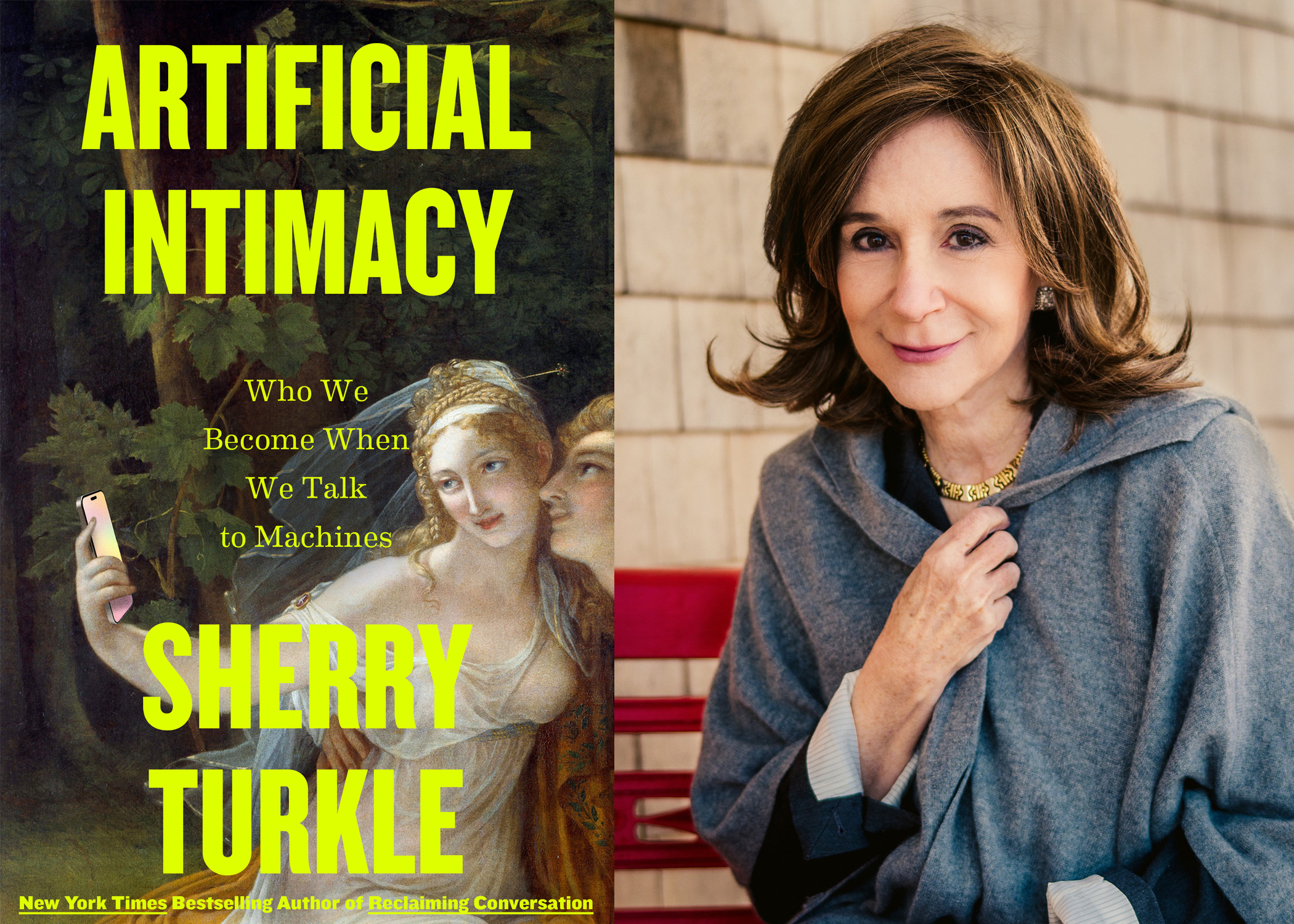
Professor Sherry Turkle’s new book, “Artificial Intimacy,” offers a withering critique of chatbots and the antisocial dynamics she believes they encourage.