Results are reported, showing an inverse relationship between benign and unsafe capability, strong evidence that baseline safety guardrails do not lead to downstream safety guarantees in the RAG case, and model-specific support for previous findings that even benign documents can lead to unsafe generation in retrieval-enabled systems.

Abstract
Allowing large language models (LLMs) to retrieve information from a set of trusted documents can increase reliability and reduce hallucination. However, recent work has demonstrated that retrieval-augmented generation (RAG) can have unintended side effects on the overall safety of the generated responses, when prompted for harmful or dangerous content. A clearer understanding of the mechanisms leading to this result is needed, as increasing numbers of end users turn to RAG to incorporate corporate documents and knowledge bases into LLM-based systems. We introduce RAG-Safety-Bench, a benchmark to measure the safety impact of RAG on LLM models. By removing the confounding effect of retriever quality, and cleanly separating the problem into four conditions -- non-RAG, RAG with an oracle document containing the answer to the harmful request, RAG with documents related to the harmful request but without the specific answer, and RAG with random, safe documents -- the benchmark isolates the impacts of different factors in the observed safety degradation. We report results across five open-source LLMs, showing an inverse relationship between benign and unsafe capability, strong evidence that baseline safety guardrails do not lead to downstream safety guarantees in the RAG case, and model-specific support for previous findings that even benign documents can lead to unsafe generation in retrieval-enabled systems.
This survey presents a unified and pipeline-aware overview of RAG robustness, formalize threat models over the corpus, retriever, and generator, and organize attacks into three main objectives: accuracy, privacy, and fairness.
Minh Tran, Cuong Dang, Tuc Nguyen et al.· 0 citations
This work proposes a refined security principle: only agents capable of deliberative System 2 reasoning may access untrusted documents, and empirically compares state-of-the-art reasoning language models with standard language models to show that reasoning-capable models are substantially more robust to corrupted evide...
It is proved that, under an honest-majority assumption and a representation-level separation condition, RAGSentinel exactly recovers a poison-free majority-sized context.
Yueyang Quan, Anjun Gao, Yu Xia et al.· 0 citations
Retrieval-augmented generation (RAG) grounds a language model in retrieved documents, which reduces hallucination but creates a new attack surface: if retrieved text is tampered with, the model may repeat the falsehood. We study how much a small quantized model, Llama 3.1 8B, degrades when a fraction of its retrieved c...
Iliano Fasolino· Zenodo (CERN European Organi...· 0 citations
KFS-RAG is proposed, a defense that mitigates information leakage by reformulating the retrieved context by identifying a small set of influential keywords from the retrieved context via an attention rollout plus a causal perturbation mechanism.
Ziliang Zhang, Yu-Bo Zhu, Wei Tong et al.· 0 citations
Retrieval-Augmented Generation (RAG) has emerged as a powerful paradigm for improving the quality of generated contents of Large Language Models (LLMs) by grounding responses in external knowledge, thus reducing hallucinations and factual errors. However, recent studies have highlighted a critical vulnerability: advers...
Xingyu Lyu, Jia-Yi Wang, Jian-Feng He et al.· 0 citations
Related blog posts
MIT News · Artificial Intelligence· news.mit.eduSep 24, 2026
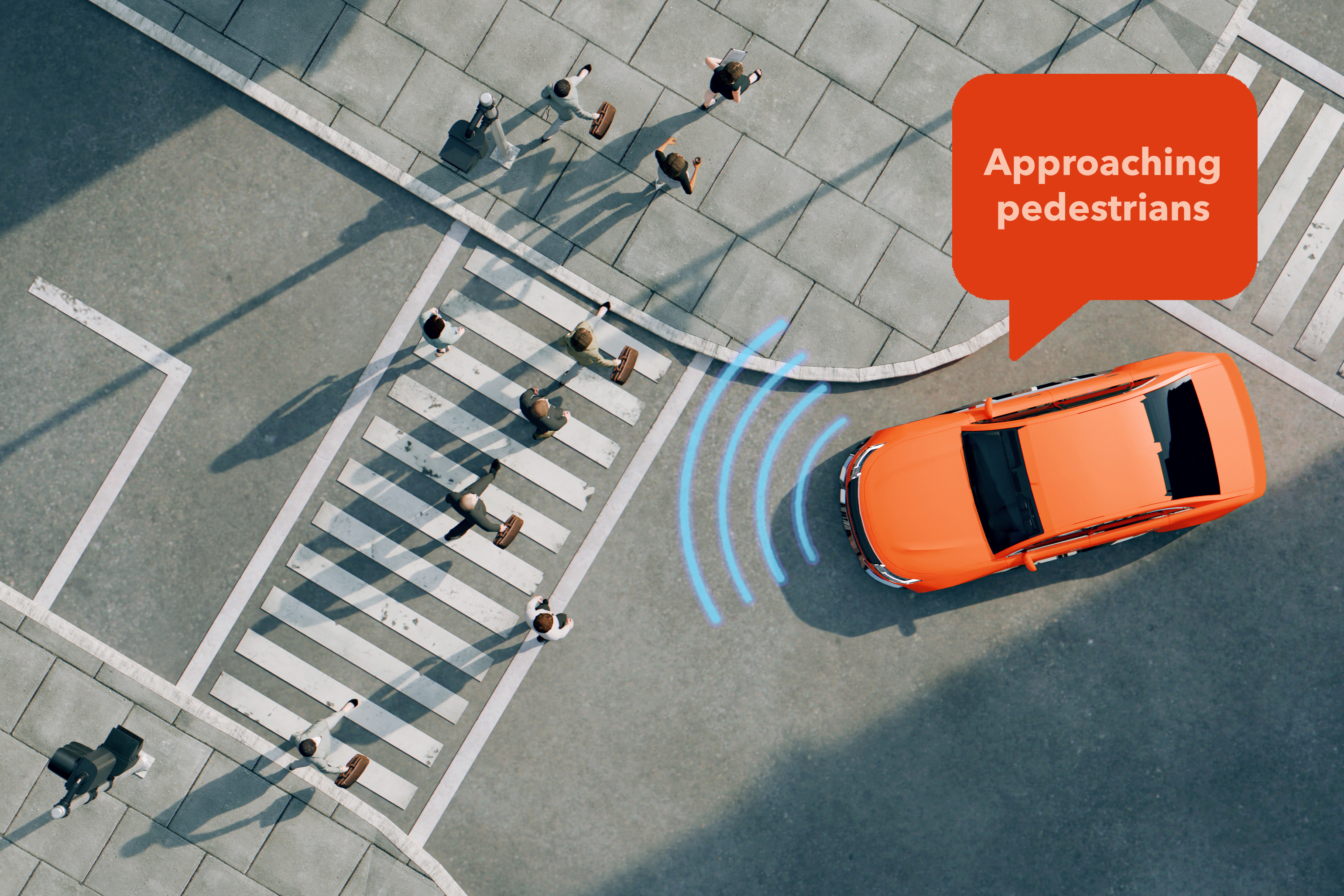
A new method, called CW-Net, translates the reasoning process of an autonomous vehicle’s AI system into understandable concepts that explain its behavior.
We use cookies to run the site and, with your consent, for analytics and to show ads.
See our Cookie Policy.