Sep 2026· IRASS Journal of Multidisciplinary Studies· 0 citations
TL;DR
This review synthesizes the current body of literature on AI-IoT integration in precision farming, covering the core enabling technologies — smart sensors, unmanned aerial vehicles, UAVs, geographic information systems, GIS, edge and cloud computing, and block chain-based traceability — and the layered architecture through which they combine into functioning smart-farming systems.
Abstract
Agriculture 4.0 marks a decisive shift from mechanized and chemically intensive
farming toward a data-driven, automated, and connected model of food production. At the center
of this shift lies the convergence of artificial intelligence (AI) and the Internet of Things (IoT),
which together allow farms to sense, interpret, and act on field conditions with a precision that
manual methods cannot match. This review synthesizes the current body of literature on AI-IoT
integration in precision farming, covering the core enabling technologies — smart sensors,
unmanned aerial vehicles (UAVs), geographic information systems (GIS), edge and cloud
computing, and block chain-based traceability — and the layered architecture through which
they combine into functioning smart-farming systems. Drawing on peer-reviewed studies
published largely between 2019 and 2025, the review examines representative applications in
smart irrigation, crop-disease detection, yield prediction, and supply-chain traceability,
consolidates the recurring barriers reported across this literature, and provides a detailed, yearordered comparison of technique, dataset, performance metrics, and reported limitations across
ten representative studies. The review concludes by outlining research gaps — particularly
around affordable edge-AI models, interoperable data standards, and region-specific validation
in smallholder contexts such as India — that merit attention in future work.

This paper discusses how these sensing elements are integrated with IoT architectures, microcontroller-based nodes, wireless sensor networks, wireless sensor networks, and cloud-enabled analytics to support precision irrigation, nutrient management, disease indication, and yield-oriented crop supervision.
Artificial Intelligence (AI), the Internet of Things (IoT), and Machine Learning (ML) are transforming precision agriculture by enabling data-driven decision-making, intelligent automation, and sustainable resource management. This review highlights recent advances in AI-enabled smart farming, focusing on applications...
Shruti Tyagi, P. Tyagi, Arvind Kumar et al.· Phytoresearch and Technology· 1 citation
It is argued that AI-ML integration improves productivity in agriculture in terms of crop yield prediction, disease prediction and optimization of resources, amongst others, and a comprehensive strategy for future work in designing sustainable agrifood systems is proposed.
Anita Veerappa Karkikatti, R. H. Goudar, Vijayalaxmi N. Rathod et al.· Discover Artificial Intellig...· 0 citations
The review shows that AI-IoT technologies are primarily applied in crop disease detection, precision agriculture, environmental monitoring, yield prediction, and livestock health monitoring, and the five-layered framework introduced here provides the first inductively derived organising structure that explicitly connec...
B. Ndlovu, Kudakwashe Maguraushe· Scientific Journal of Inform...· 1 citation
Digital agriculture has moved beyond isolated sensing and automation toward interconnected cyber-physical systems that combine the Internet of Things, artificial intelligence, robotics, edge-cloud computing, digital twins, and human expertise. This review synthesizes 55 Scopus-indexed studies published from 2019 to 202...
Roys Pakaya, Dwi Wijayanti, Sain Segar· International journal of res...· 0 citations
Overall, the reviewed material indicates that integrating IoT sensing with AI/ML can support real-time monitoring, resource optimization and faster agricultural decisions, however, Internet dependence, cybersecurity, system complexity, adoption cost, limited datasets and reduced accuracy for visually similar crop disea...
Tarun Badiwal, Manish Jain, S. Jayswal et al.· International Journal of Inn...· 0 citations
Related blog posts
MIT News · Artificial Intelligence· news.mit.eduOct 2, 2026
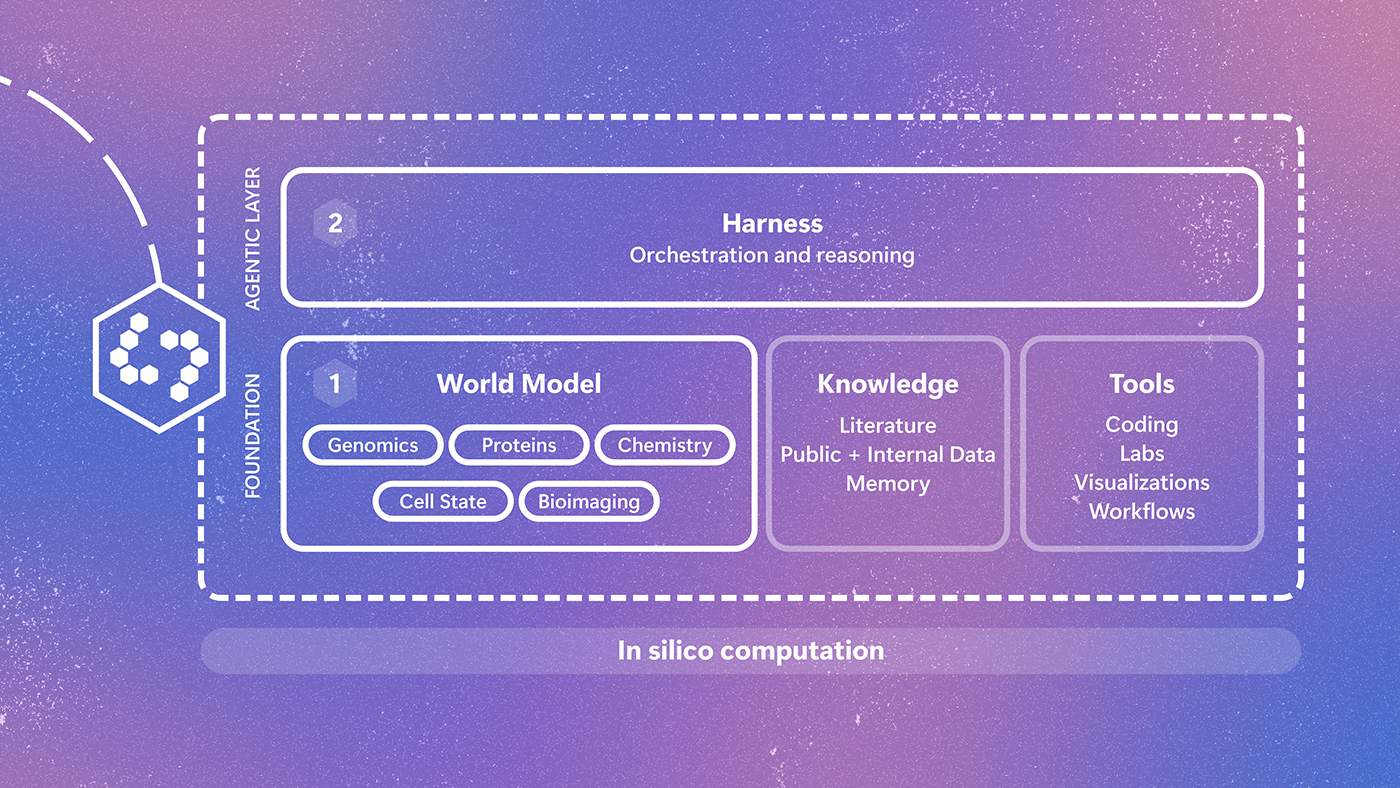
Biology doesn't operate in silos, and neither should the AI representation of it. Quine is an early-stage research effort to create a multimodal world model of biology. By connecting insights across biological scales and modalities, Quine helps scientists computationally search a space far larger than intuition allows and prioritize hypotheses before they reach the lab. Experimental results provide important feedback, helping researchers sharpen future research directions. The post Introducing Q…