For graphoid automata, these results give polynomial-time recognition without a graph-width restriction, effective boundary composition, and comparison of finite graph relations, and the quadratic boundary bounds are optimal in the worst case.
Abstract
Finite automata can describe relations of unbounded arity that are exponentially larger than their descriptions. We prove that constraint satisfaction for such relations is solvable in polynomial time whenever their length slices are preserved by a common fixed edge operation on a finite domain. The algorithm computes compact representations of the complete solution relation and its projections. Its main ingredient is a polynomial-time compilation of nondeterministic finite automata into the fork witnesses and small projections required by the few-subpowers algorithm. In the Mal'tsev case, a direct proof is polynomial also when the domain and operation table are supplied as input, answering the Mal'tsev tractability question for automatic constraint satisfaction. We also characterize all invariant relations of a family of 3-edge algebras with neither Mal'tsev nor near-unanimity terms. Their normal forms combine Boolean activity constraints with affine value spaces and yield canonical quadratic-bit representations constructible from NFAs or arbitrary generators. For graphoid automata, these results give polynomial-time recognition without a graph-width restriction, effective boundary composition, and comparison of finite graph relations. The quadratic boundary bounds are optimal in the worst case. A fixed three-state example separates polynomial-time recognition from hard exact counting.

It is proved that equal closed expressions of pattern width at most $k$ are joined by a derivation in which every step applies an equation in either direction and every intermediate width is at most a computable $B_\Sigma(k)$, independently of graph size.
Friedman’s Problem 34, attributed there to Kreisel, states that for Peano arithmetic formalized precisely as in Kleene, a uniform bound on the proof lengths of all numeral instances
$$A(\bar{n})$$
A
(
n
¯
)
entails the provability of the universal closure
$$\forall x\,A(x)$$...
Mario Piazza· Archive for Mathematical Log...· 0 citations
Let $\Lambda=KQ/I$ be a finite-dimensional zero-relation algebra. We encode Crawley--Boevey tree modules over $\Lambda$ by finite rooted trees labelled by arrows of $Q$ and their formal inverses, and construct a deterministic finite bottom-up tree automaton recognizing exactly these encodings. We define an accepted tre...
Local-unitary (LU) equivalence asks whether two quantum states differ only by independent changes of basis on their qubits. For graph states, whether this relation can be decided in polynomial time has remained open for over a decade. We give a deterministic algorithm that decides LU equivalence for graphs on $n$ label...
We study graph-based automata: nondeterministic finite automata obtained from edge-colored or oriented graphs by taking every vertex as both initial and accepting, and every edge as a pair of opposite transitions. The language of these automata corresponds to the set of edge-colored or oriented paths mapping to their c...
Cyril Pujol· 0 citations
Related blog posts
MIT News · Artificial Intelligence· news.mit.eduOct 2, 2026
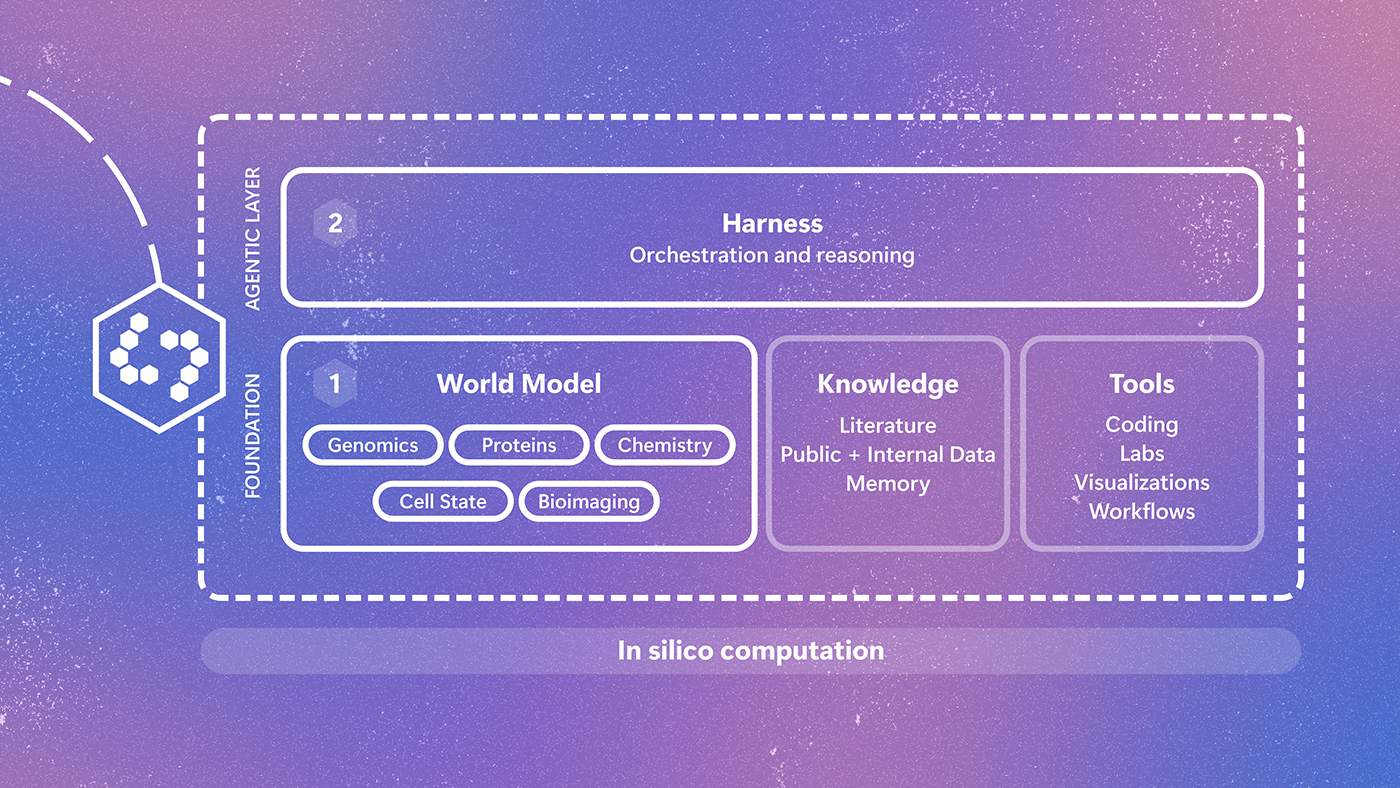
Biology doesn't operate in silos, and neither should the AI representation of it. Quine is an early-stage research effort to create a multimodal world model of biology. By connecting insights across biological scales and modalities, Quine helps scientists computationally search a space far larger than intuition allows and prioritize hypotheses before they reach the lab. Experimental results provide important feedback, helping researchers sharpen future research directions. The post Introducing Q…