Sep 2026· METHODIKA: Jurnal Teknik Informatika dan Sistem Informasi· 0 citations
TL;DR
Findings demonstrate that the proposed IoT-based TPMS offers a practical, low-cost, and reliable solution for improving motorcycle safety through continuous tire condition monitoring.

Abstract
Tire pressure is a critical factor affecting vehicle safety, riding comfort, fuel efficiency, and tire lifespan. Conventional tire pressure inspection is generally performed manually, making continuous monitoring difficult. This study aims to develop a real-time Tire Pressure Monitoring System (TPMS) based on the ESP32 microcontroller integrated with the Blynk Internet of Things (IoT) platform for monitoring tire pressure and temperature on two-wheeled motor vehicles. The system was developed using the prototype method, including requirement analysis, hardware and software design, implementation, and performance evaluation. Functional testing was conducted by comparing TPMS pressure readings with a standard tire pressure gauge and measuring the transmission latency from the ESP32 to the Blynk application under various operating conditions. The experimental results show that the proposed system achieved an average front tire pressure measurement error of 1.08% while rear wheel error averaged at 0.44% and an average data transmission delay of 0.431 millisecond, indicating that the system provides accurate measurements and fast real-time communication. Furthermore, the developed system successfully monitored tire pressure and temperature continuously, enabling early detection of abnormal tire conditions and supporting preventive maintenance. These findings demonstrate that the proposed IoT-based TPMS offers a practical, low-cost, and reliable solution for improving motorcycle safety through continuous tire condition monitoring.

Electrical energy consumption in Micro, Small, and Medium Enterprises (MSMEs) is often monitored manually, leading to potential energy waste, inefficient power utilization, and the risk of overload that may damage electrical equipment. This issue is also found at Carica Ni'mat MSME in Dieng, particularly in the heat se...
Nila Afika· Jurnal Informatika dan Tekni...· 0 citations
Boiler systems operate under high pressure and temperature, requiring reliable monitoring and alarm systems to maintain operational safety. At PT. PG. Rajawali I - PG. Krebet Baru I, the existing alarm system on the Yoshimine II boiler was limited to local notifications, which delayed operator response to abnormal oper...
Mochammad Hendra Fisabilah, Ali Nur Fathoni, Khusnul Khotimah· Jupiter· 0 citations
This research enhances security and environmental monitoring for weapon storage facilities, improving oversight through real-time integration with Blynk and Telegram.
Yosua Miha, Yohanes Yohanes, Tri Ana Setyariny· METHODIKA: Jurnal Teknik Inf...· 0 citations
Water stored in the reservoir has the potential to undergo changes in physical conditions that are not always easily recognized through routine visual inspection. This study presents the design of an Internet of Things (IoT)-based water quality monitoring system to provide preliminary information on changes in turbid...
Good wood drying depends on keeping the oven temperature within a predetermined range. Manual temperature monitoring makes process quality highly dependent on operator presence and accuracy. This study develops a web-based wood oven temperature monitoring system using NodeMCU ESP8266, DHT11 sensor, LDR light sensor, an...
C. Martins, R. Soelistijadi, Saefurrohman Saefurrohman· Jurnal Penelitian Teknologi...· 0 citations
The increasing scarcity of water resources and the need for optimal soil moisture levels for plant growth have driven the development of smart irrigation systems based on the Internet of Things (IoT). This study presents a prototype of an automatic plant watering control system using an ESP32 microcontroller equipped w...
What's new in research at Microsoft? Host Anson Ho explores the latest, including AI-powered universal translation, a breakthrough in a 31-year-old mathematics challenge, and advances making AI coding agents faster and more efficient. The post Microsoft Research Focus – Edition #98 appeared first on Microsoft Research.
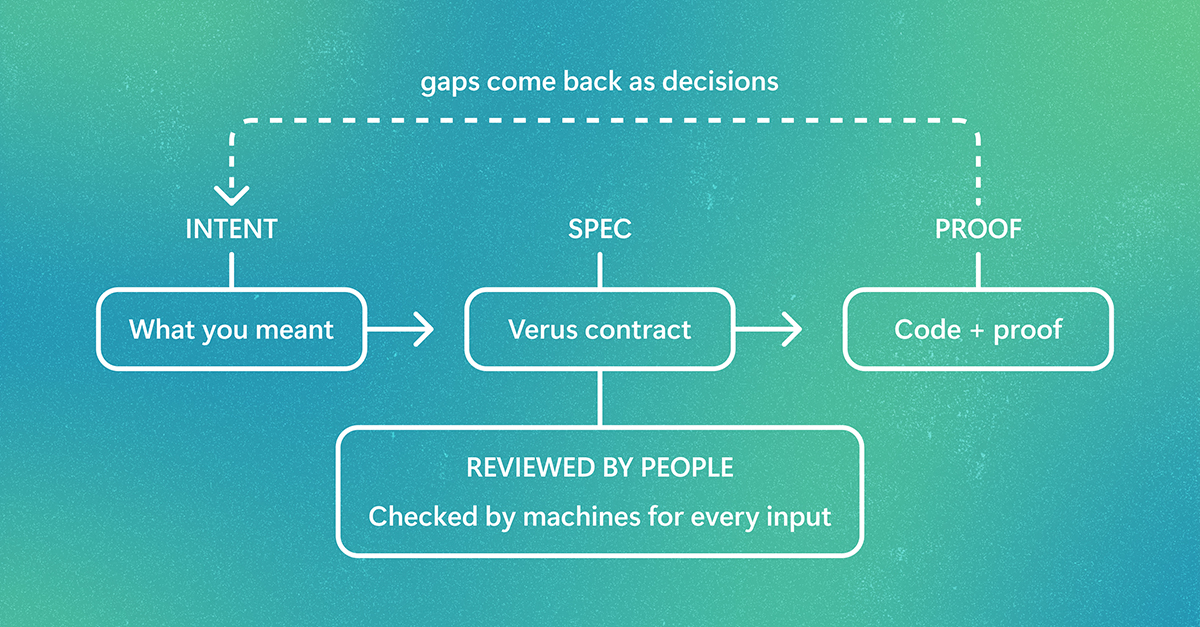
AI agents can generate code at a scale that’s hard for humans to review line-by-line. PDD Kit helps ensure the code is doing what the developer intended by creating formal specifications and testing against them. It converts developer intent into a Verus specification, proves AI-generated code meets it for every input, and uses tests where proofs aren't practical. Developers review intent, not every line. The post Formally verifying agent-written full-stack web apps with PDD Kit appeared first o…