Skip to content

How effective are traditional test criteria at detecting bugs in large language models generated code?

Sep 2026 · 0 citations · 49 references
Computer Science

TL;DR

An empirical study involving 5 Large Language Models and 4 benchmarks evaluates the effectiveness and efficiency of 3 widely used adequacy criteria: statement coverage, branch coverage, and mutation testing, finding that mutation testing only marginally outperforms traditional coverage criteria in both triggering and detecting faults.

Abstract

Test adequacy criteria are widely used to evaluate and guide software testing. Although prior research has extensively examined these criteria using human-written programs, faults, and tests, the increasing adoption of Large Language Models (LLMs) for code generation raises important questions about their effectiveness in detecting LLM-induced faults. To investigate this, we conduct an empirical study involving 5 LLMs and 4 benchmarks, simulating end-to-end workflows in which both code and tests are automatically generated. We collect 6,000+ faulty program instances and evaluate the effectiveness and efficiency of 3 widely used adequacy criteria: statement coverage, branch coverage, and mutation testing. Our findings reveal several key insights. First, most faults introduced by LLMs are relatively trivial to catch. Second, the challenging faults are difficult to trigger using either traditional coverage-based or mutation-based criteria. Third, actual fault detection rates remain extremely low, often near zero, because test oracles fail to capture faulty behavior triggered by the generated test prefixes, exposing a critical limitation of automated test generation. Fourth, prompt-aware oracles can improve fault detection, but their overall effectiveness remains limited, highlighting the need for users to manually reason about test assertions. We further observe that mutation testing only marginally outperforms traditional coverage criteria in both triggering and detecting faults, raising questions about whether its significantly higher application cost is justified in this context.

View source

Similar papers

Open access Aug 2026

Improving Bug Detection in LLM-Generated Unit Tests: Revisiting Test-Oracle Reliability Across Modern Large Language Models

This paper presents a formal mathematical model for categorizing the outcome of generated-tests into four classes, a couple of basic metrics: Bug-Revealing Rate (BRR) and Bug-Validating Rate (BVR); and two basic statistical tests to ensure that the results are rigorous.

Zeyad Farooq Lutfi · 0 citations
Preprint Sep 2026

Evaluating the effectiveness of class-level LLM-generated test suites in Python

Reliable assessment of LLM-generated tests should treat executability as a gate and combine coverage with mutation testing and structural quality indicators, and in practice, model selection should precede prompt tuning.

Bilal Al-Ahmad, M. Harshvardhan, Khaled El-Fakih et al. · 0 citations
Review Open access Sep 2026

Can LLMs Detect and Refactor Test Smells in Performance Tests?

Performance testing is essential to ensure that software meets its responsiveness and scalability requirements, and tools such as k6 are used to write performance test scripts that exercise these aspects in a structured and optimized way. Like any code, regardless of the programming language, k6 scripts are subject to...

Adelson Ornellas, Manoel Aranda, Márcio Ribeiro et al. · 0 citations
Book Open access Oct 2026

Accurate Specification Recovery for Effective Test Generation

This dissertation aims to make specification recovery from imperfect code accurate, evidence-driven, and uncertainty-aware, so that it consistently yields effective bug-finding tests.

Jun-Da Zhao · 0 citations
#software testing Preprint Oct 2026

On the Risks of using LLM-Generated Tests for Regression Testing

The results reveal a fundamental risk of LLM-generated regression tests: without manual validation, they may encode faulty behavior as expected behavior, allowing bugs to persist across software revisions and largely evade developer-maintained test suites.

Mohammadali Charoosaei, Cedric Richter, Mike Papadakis · 0 citations

Related blog posts

Microsoft Research Blog Nov 5, 2026

Formally verifying agent-written full-stack web apps with PDD Kit

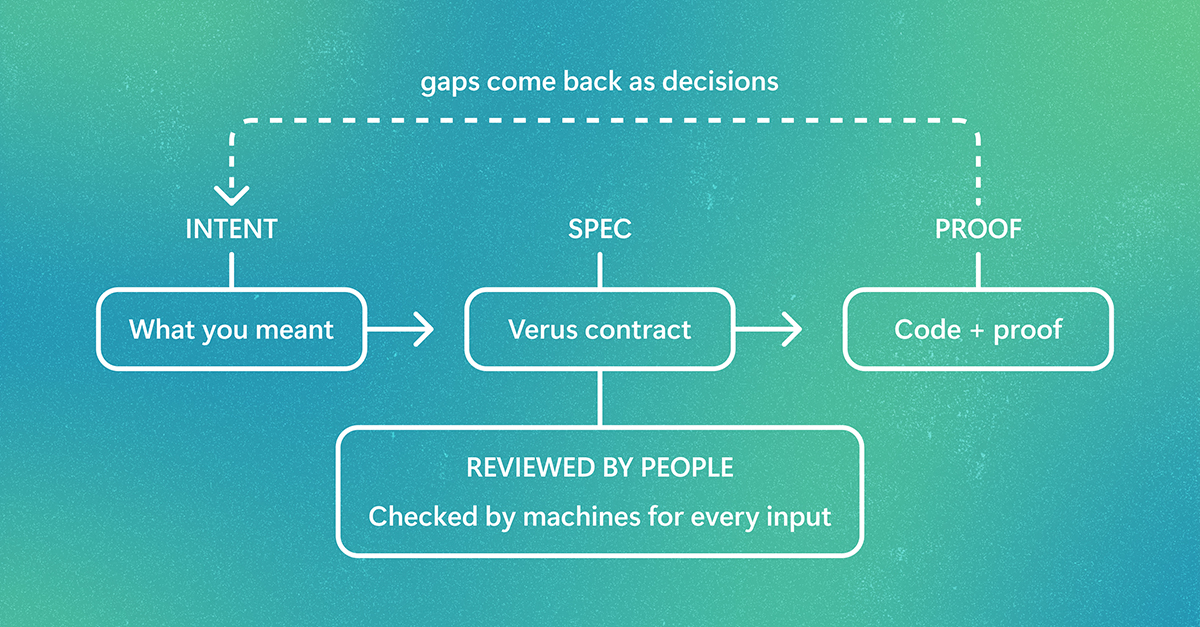
AI agents can generate code at a scale that’s hard for humans to review line-by-line. PDD Kit helps ensure the code is doing what the developer intended by creating formal specifications and testing against them. It converts developer intent into a Verus specification, proves AI-generated code meets it for every input, and uses tests where proofs aren't practical. Developers review intent, not every line. The post Formally verifying agent-written full-stack web apps with PDD Kit appeared first o…

GPT-Lab Nov 3, 2026

Sovereignty Is the Option to Leave

Is your company’s AI sovereign? A practical guide for CIOs on AI vendor lock-in, EU Data Act switching, cloud sovereignty, and testing your exit plan before you need it. The post Sovereignty Is the Option to Leave appeared first on GPT-Lab.

Microsoft Research Blog Oct 30, 2026

From synthetic enterprise data evaluations to real Microsoft Copilot AI confidence

Evaluating Microsoft Copilot at enterprise scale requires test data that captures the full complexity of real organizations, yet real enterprise data contains sensitive information that cannot be used for evaluation under any circumstances. The post From synthetic enterprise data evaluations to real Microsoft Copilot AI confidence appeared first on Microsoft Research.

We use cookies to run the site and, with your consent, for analytics and to show ads. See our Cookie Policy.