An adaptive large neighborhood search method guided by a heterogeneous graph neural network (HeteroGNN) method, termed HeteroGNN-ALNS, is developed to balance completion time, waiting time, and workload during the production process.
Abstract
This study formulates panel furniture production as a flexible job shop scheduling problem (FJSP) with constraints on transport resources under varying production conditions. An adaptive large neighborhood search (ALNS) method guided by a heterogeneous graph neural network (HeteroGNN), termed HeteroGNN-ALNS, is developed to balance completion time, waiting time, and workload during the production process. The current scheduling state in ALNS is represented as a heterogeneous graph, where panel jobs and production resources are modeled as different node types, and assignment, transport, and sequence information is represented by different edge types. A search state vector is also introduced to describe the current search process. The HeteroGNN is trained using an actor–critic method to guide neighborhood operator selection and destroy set construction in ALNS. Experiments are conducted under four production conditions and five job scales. The results show that HeteroGNN-ALNS achieves better overall scheduling performance than dispatching rules and representative search methods. Statistical and ablation analyses further verify the effectiveness of the proposed method.
This work presents APEX, an extensible production scheduling framework built around a general model and hybrid multiobjective search, and benchmarks eight APEX configurations against NSGA-II, SPEA2, MOEA/D and SMS-EMOA on 69 public job-shop instances, assessing workload completion time, total job flowtime and computati...
The dynamic job shop scheduling problem (DJSSP) is critical for optimizing production efficiency in intelligent manufacturing systems under dynamic constraints. Traditional approaches, including heuristic dispatching rules (HDRs) and evolutionary hyper-heuristics, often struggle to generalize across dynamic and unseen...
Jin Huang, Zhengqi Shi, Qi-Hao Liu et al.· IEEE Transactions on Automat...· 0 citations
New products have little sales history, which makes short-horizon demand forecasting difficult. This study tests whether a product–store–time graph can provide pre-origin relational context and whether task-conditioned meta-learning can adapt a forecasting model from limited support observations. IGEML combines a dynam...
Lei Ni, Ning Fu, Zhonglin Huang· Mathematics· 0 citations
An extended FJSP with multiple BPMs is formed and an end-to-end two-layer multi-agent deep reinforcement learning framework is proposed, supporting the framework as an effective scheduling approach for deterministic FJSP with BPMs and indicating cross-scale generalization across evaluated instances.
Analysis of queue-level dynamics reveals more regular behavior in the evaluated scenarios, with reduced fluctuations in queue lengths, batch waiting, and minimum queue entropy over time, indicating that the proposed ABC-based approach can improve observed predictability at the queue level.
Experimental results show that the improved algorithm achieves an optimal Makespan value of 190 in dynamic disturbance scenarios and exhibits strong robustness, providing an efficient and feasible solution for job shop scheduling in complex production environments.
Jianguo Du, Chengkun Li, Zijie Tang· ITM Web of Conferences· 0 citations
Related blog posts
MIT News · Artificial Intelligence· news.mit.eduJul 15, 2026
Assistant Professor Pat Pataranutaporn describes a new interface that lets everyday users glimpse inside an AI's neural network before their chatbot ever says a word.
Microsoft Research Blog· microsoft.comJul 13, 2026
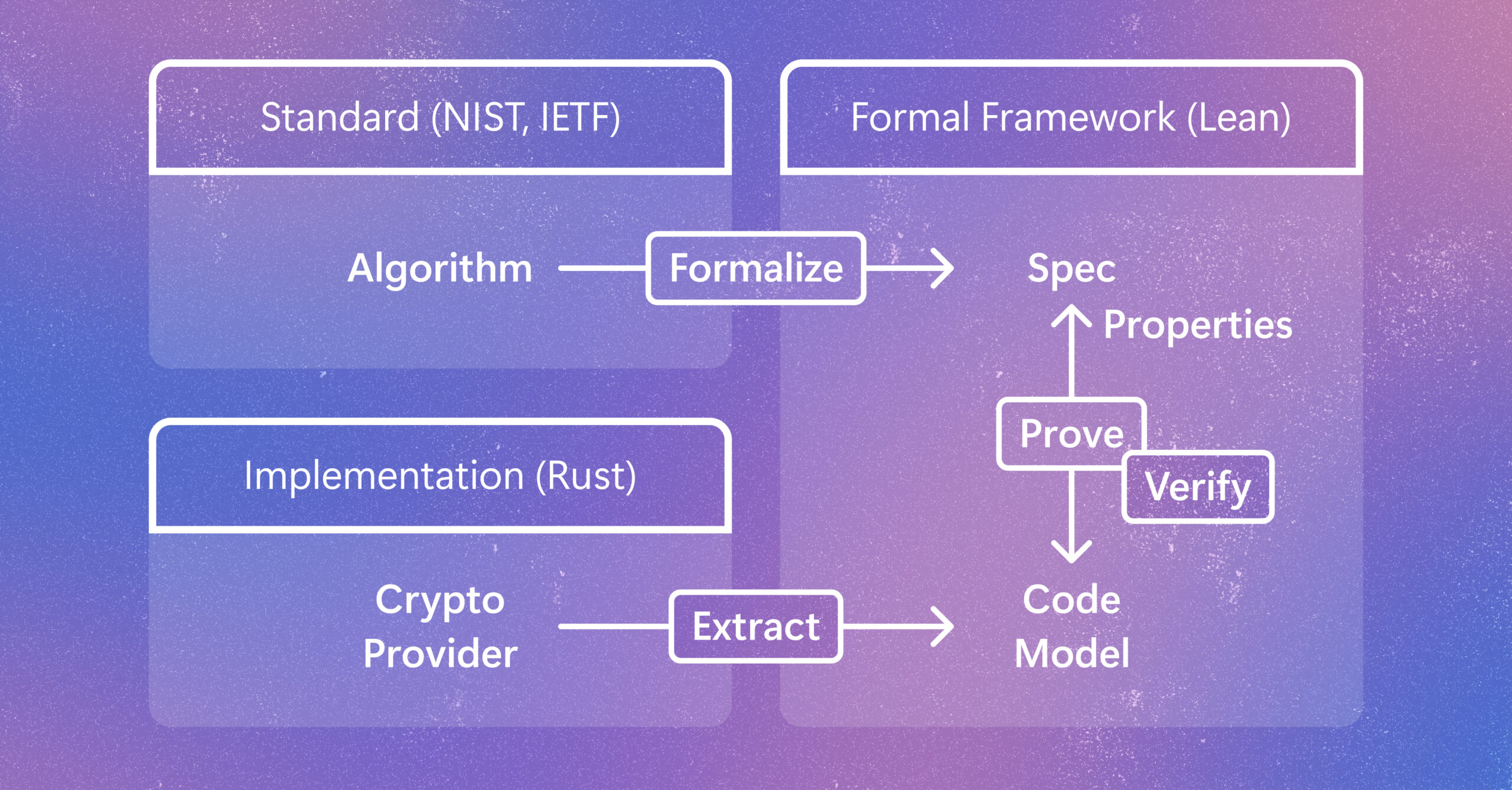
Cryptographic code supports vital protections in modern computing systems. Learn how a new method helps verify code as developers write it while preserving speed and adaptability as it gets implemented and evolves. The post Verifying Rust cryptography in SymCrypt, from standards to code appeared first on Microsoft Research.
MIT News · Artificial Intelligence· news.mit.eduJul 6, 2026
PhD student Rachel Sava, winner of the Envisioning the Future of Computing Prize, explores transformative improvements and dystopian risks of neural technology.