The canonical region graph is proposed, an input representation whose nodes, features and coordinate frame are derived from the solid itself and show theoretical invariance guarantees on repartitioning and rigid motions and matches the strongest baseline on standard benchmarks, and is stable under every perturbation the authors test.
Abstract
Boundary representation (B-rep) is the standard format used by modern CAD systems for parametric 3D models. It turns out, the exact same solid can be represented by different B-reps: for example, two engineers using different operations, a geometry kernel rebuilding the file, and an export setting repartitioning faces will lead to different B-reps even though the underlying solid remains the same. We show that existing B-rep encoders are not robust to variation in the B-rep with the same solid on perturbations applied to standard benchmarks, naturally occurring variations inherent to CAD software, and differences in how designers model the same part via a human dataset we created in FreeCAD. The performance of popular B-rep encoders often collapses catastrophically. We propose the canonical region graph, an input representation whose nodes, features and coordinate frame are derived from the solid itself and show theoretical invariance guarantees on repartitioning and rigid motions. It matches the strongest baseline on standard benchmarks, and is stable under every perturbation we test.
Generating a boundary representation (B-rep) conditioned on a single image requires faithful reconstruction of geometry, valid topology, and support for complex shapes. We present UniBRep, a geometry-first framework that adapts a pretrained image-to-3D model to generate a feature mesh as a unified intermediate represen...
Hai-Yang Ying, Allen Tu, Jia-Ye Wu et al.· 0 citations
RealCAD, a unified framework that addresses limitations at the representation, image, and feature levels, and improves real-domain command and parameter accuracy, while retaining competitive synthetic-domain performance is proposed.
Yi-He Sun, Zi-Yu Lu, Kai-Hua Tang et al.· 0 citations
NeuSOGA3D (Neuro-Symbolic Observation-Guided Geometric Abstraction in 3D), a hybrid framework that combines learned perceptual priors inherited from NeuSOGA with explicit symbolic geometric reasoning for explainable geometric intelligence is presented.
Qing-De Li, Qingqi Hong, Zi-Han Li et al.· 0 citations
Transferring deformation between characters with different geometry and topology is challenging because conventional rigs encode behaviour through character-specific structures and correspondences. We present LatentReRig, an experimental framework that investigates whether pose-associated changes can instead be represe...
D. Dolci, Fabrizio Poggioni, Carlo Melchiorri· 0 citations
KaiNinja, a part-level extension of TRELLIS.2 built on a dual-volume form of its O-Voxel representation, is the first 3D generative model trained on agent-authored part data and finds that whole-object fidelity improves over the same backbone fine-tuned on the same dataset.
Rui-Han Yu, Lian Fu, Mu-Yao Niu et al.· 0 citations
This work presents WildFab, a computational framework for multi-axis 3D printing that directly computes spatial toolpath and global collision-free motion from input models, and develops an efficient and robust coarse-to-fine collision checking scheme for motion planning.
Jia-Sheng Qu, Zhikai Shen, Chen-Yu Xu et al.· 0 citations
Related blog posts
Microsoft Research Blog· microsoft.comJul 30, 2026
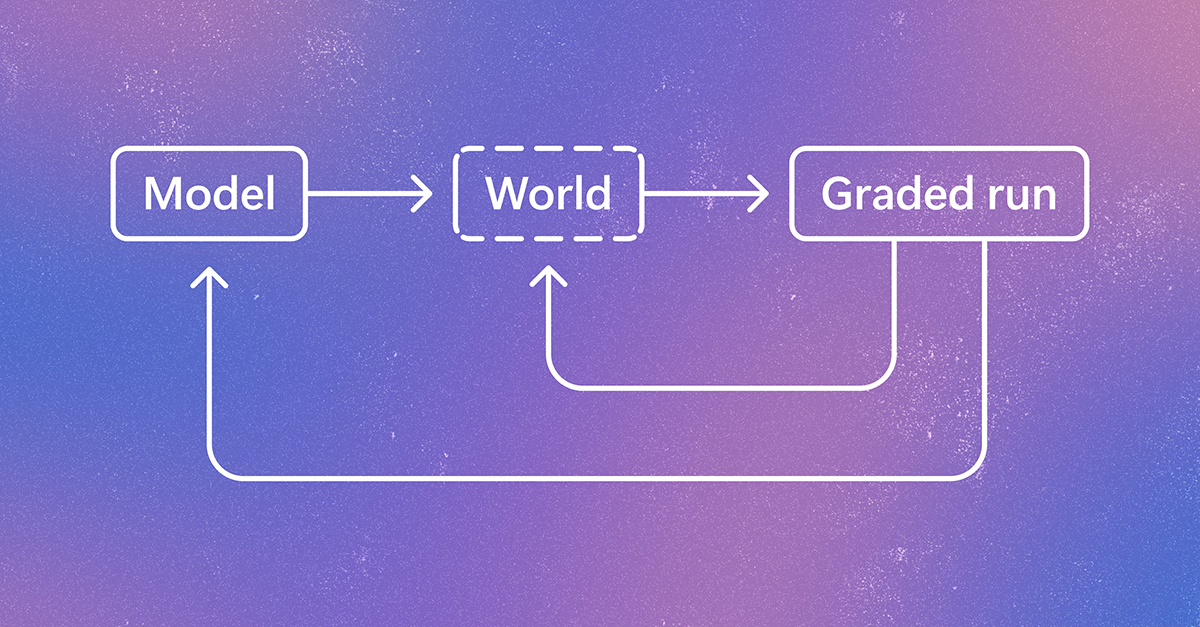
Computer-use AI agents struggle with multi-step workflows like email and customer support. Echoverse trains agents in realistic environments rather than simply providing more training tasks, helping them improve as the tasks, tests, and environments evolve. The post Echoverse: Deep, evolving environments for computer-use agents appeared first on Microsoft Research.
Evaluating Microsoft Copilot at enterprise scale requires test data that captures the full complexity of real organizations, yet real enterprise data contains sensitive information that cannot be used for evaluation under any circumstances. The post From synthetic enterprise data evaluations to real Microsoft Copilot AI confidence appeared first on Microsoft Research.
Microsoft Research Blog· microsoft.comOct 29, 2026
Host Sowbhagya Suresh shares some of the latest news and cutting-edge research from across Microsoft—from understanding the challenges facing coding agents to uncovering how people use AI at work and improving extended-range weather forecasting. The post Microsoft Research Focus – Edition #97 appeared first on Microsoft Research.
We use cookies to run the site and, with your consent, for analytics and to show ads.
See our Cookie Policy.