How WeatherNext helped the National Hurricane Center better predict Hurricane Melissa’s historic landfall in Jamaica
Learn how our WeatherNext AI model help forecasters give communities unprecedented time to prepare ahead of the historic Hurricane Melissa.
More from the blog
Planetary prediction engine: Automating global models via Earth AI
Earth AI
AI helps design new materials that work in the real world
The “CrysVCD” tool developed at MIT could cut the huge amounts of time and money spent on screening out chemically unstable designs.

Paving the way for greener ammonia production
New MIT research could lead to better materials for a fossil-fuel-free process for making the chemical that's essential to fertilizer and other products.
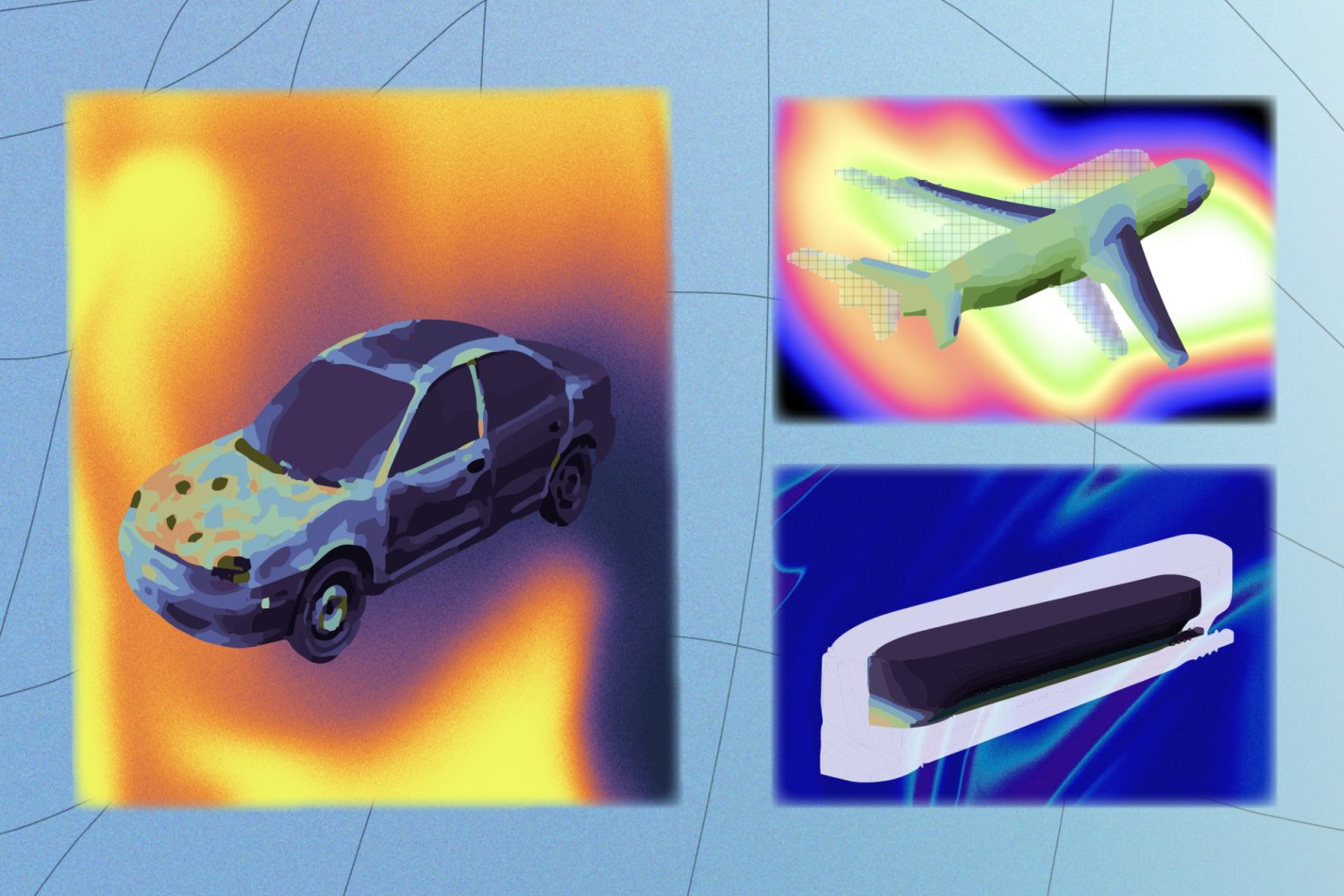
With a feel for physics, AI models simulate a wider range of real-world scenarios
“GeoPT” helps AI models understand the basics of physics so they can simulate how objects respond to things like wind and water more efficiently and accurately.
Related papers
Constitutional Midtraining: Content Presence Drives Alignment Gains
Post-training alignment is often shallow, eroding under fine-tuning. It remains untested as to whether constitutional midtraining interventions can produce durable alignment when cleanly isolated from post-training. We build a 394M-token constitutional corpus from Anthropic's Constitution and apply constitutional midtraining at 120B scale, where principled, values-based content is inserted into midtraining. A 2x2 design (curriculum ordering x deliberative reasoning) was used to produce four constitutionally midtrained conditions, plus a control, which were evaluated on self-generated and established benchmarks including alignment under pressure, value conflict resolution, blackmail, and emergent misalignment. All models were evaluated across three stages: post-midtraining, post-SFT, and post-benign fine-tuning. Constitutionally midtrained models outperformed the control on alignment generalization and durability, notably on blackmail: SFT instilled a blackmail propensity in all models, but constitutional midtraining blunted it, with the advantage surviving benign fine-tuning (-17.5pp). This durability did not extend to settings that required active resistance to in-context pressure or conflict, where the advantage attenuates after SFT. The presence of constitutional content at midtraining also mattered more than its structure, and constitutional midtraining incurred no capability cost, on average, at any stage (MMLU, ARC-Easy, piqa, GSM8K). A modest amount of constitutional content at midtraining could therefore yield broad, persistent alignment gains, offering a cheap, complementary addition to SFT-centered pipelines. Code, data, and models are available.
Application of Artificial Intelligence Frameworks in Development of Medical Imaging Diagnosis Systems: A Comprehensive Review of Novel Methodologies, Clinical Validation, Performance Optimization, and Future Perspectives
Artificial intelligence (AI) has revolutionized medical imaging with automated disease detection, image segmentation, diagnosis, prognosis prediction, and clinical decision support across various imaging modalities, such as X-ray, computed tomography (CT), magnetic resonance imaging (MRI), ultrasound, positron emission tomography (PET), retinal imaging, and digital pathology. Recent advances in deep learning, transformer architectures, multimodal learning and foundation models have significantly improved the diagnostic accuracy and reduced the reliance on handcrafted feature engineering. However, challenges like data heterogeneity, model interpretability, external validation, privacy preservation, computational efficiency, and regulatory compliance still hinder the widespread clinical implementation.In this paper, this review presents a comprehensive study on the evolution of modern AI frameworks in medical imaging by integrating recent methodological advances with perspectives on clinical translation. The review covers the latest deep learning architectures, such as convolutional neural networks, Vision Transformers, hybrid CNN–Transformer models, multimodal learning frameworks, generative artificial intelligence, diffusion models, federated learning, privacy-preserving learning, and medical foundation models. In addition, the review covers the cutting-edge explainable AI techniques, including Grad-CAM, SHAP, LIME, and attention visualization, for boosting transparency and clinician confidence. The review also discusses the state-of-the-art performance optimization strategies, including transfer learning, active learning, domain adaptation, neural architecture search, hyperparameter optimization, model compression, and computational resource optimization. Equally important, the latest developments in clinical validation, external evaluation, robustness assessment, fairness, uncertainty estimation, regulatory considerations, and deployment frameworks are critically analyzed to underscore their role in facilitating safe clinical implementation.The review analysis concludes with the identification of key research challenges and directions for the future including multimodal foundation models, vision-language systems, retrieval-augmented generation,
Application of Artificial Intelligence Frameworks in Development of Medical Imaging Diagnosis Systems: A Comprehensive Review of Novel Methodologies, Clinical Validation, Performance Optimization, and Future Perspectives
Artificial intelligence (AI) has revolutionized medical imaging with automated disease detection, image segmentation, diagnosis, prognosis prediction, and clinical decision support across various imaging modalities, such as X-ray, computed tomography (CT), magnetic resonance imaging (MRI), ultrasound, positron emission tomography (PET), retinal imaging, and digital pathology. Recent advances in deep learning, transformer architectures, multimodal learning and foundation models have significantly improved the diagnostic accuracy and reduced the reliance on handcrafted feature engineering. However, challenges like data heterogeneity, model interpretability, external validation, privacy preservation, computational efficiency, and regulatory compliance still hinder the widespread clinical implementation.In this paper, this review presents a comprehensive study on the evolution of modern AI frameworks in medical imaging by integrating recent methodological advances with perspectives on clinical translation. The review covers the latest deep learning architectures, such as convolutional neural networks, Vision Transformers, hybrid CNN–Transformer models, multimodal learning frameworks, generative artificial intelligence, diffusion models, federated learning, privacy-preserving learning, and medical foundation models. In addition, the review covers the cutting-edge explainable AI techniques, including Grad-CAM, SHAP, LIME, and attention visualization, for boosting transparency and clinician confidence. The review also discusses the state-of-the-art performance optimization strategies, including transfer learning, active learning, domain adaptation, neural architecture search, hyperparameter optimization, model compression, and computational resource optimization. Equally important, the latest developments in clinical validation, external evaluation, robustness assessment, fairness, uncertainty estimation, regulatory considerations, and deployment frameworks are critically analyzed to underscore their role in facilitating safe clinical implementation.The review analysis concludes with the identification of key research challenges and directions for the future including multimodal foundation models, vision-language systems, retrieval-augmented generation,
AI and Bullshit
It is argued that both AI and bullshitters are untrustworthy informants, and for similar reasons, it is natural to describe AI’s informational outputs as bullshit, as it signals their distinctive kind of epistemic deficiencies, which they share with bullshit.