

Introducing SynthID Bio
Proof of concept for watermarking AI-generated proteins while preserving biological function.
More from the blog
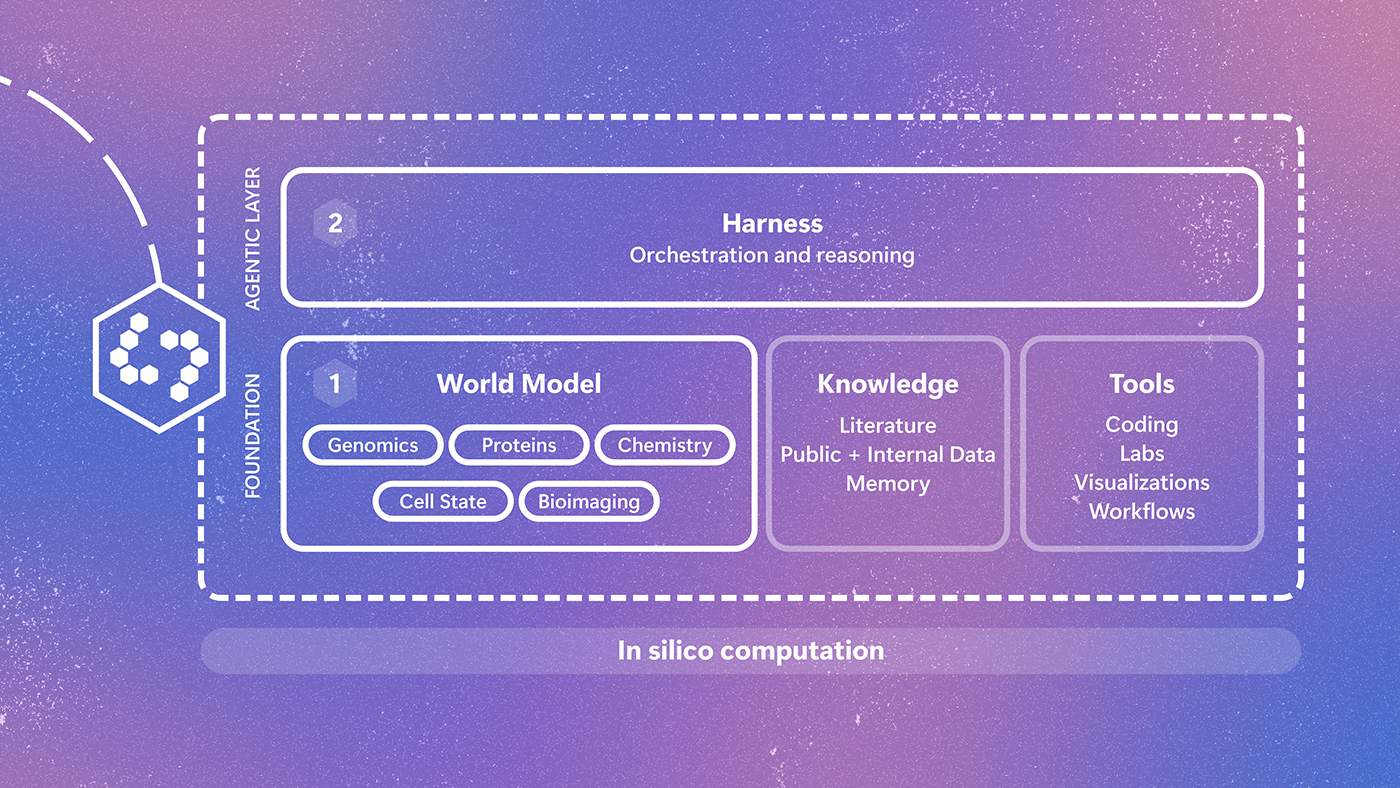
Introducing Quine: An AI research system designed for the complexity of biology
Biology doesn't operate in silos, and neither should the AI representation of it. Quine is an early-stage research effort to create a multimodal world model of biology. By connecting insights across biological scales and modalities, Quine helps scientists computationally search a space far larger than intuition allows and prioritize hypotheses before they reach the lab. Experimental results provide important feedback, helping researchers sharpen future research directions. The post Introducing Q…
Introducing Gemini 3.8 Live with Live Avatar
Introducing Gemini 3.8 Live with Live Avatar, which brings near real-time visual presence to Gemini’s conversational AI.

Advancing Private AI Compute with secure, server-side memory
Introducing private, server-side memory to Private AI Compute for personal AI.
Introducing Gemini 3.8 Live and 3.8 Live Extended Thinking
Gemini 3.8 Live and Gemini 3.8 Live Extended Thinking are our most advanced live dialogue models yet, built for natural conversation.
Related papers
Computational and AI-Driven Ecosystem for Structure-Based Covalent Drug Discovery.
This Account describes a computational and AI-driven ecosystem for structure-based covalent drug discovery and dives into a suite of cutting-edge, AI-driven computational methods, exploring the potential of deep learning in tasks such as molecular docking, covalent binding site prediction, and lead optimization.
The Synthetic Consensus Trap: Correlated AI Errors, Verification Overload, and the Mathematics of Institutional Epistemic Cascades
Institutions are beginning to use multiple large language models, AI agents, automated reviewers, and human overseers as if agreement among them were independent corroboration. That assumption can fail. This paper develops the Synthetic Consensus Cascade (SCC) framework, a multidisciplinary mathematical model linking c...
The Synthetic Consensus Trap: Correlated AI Errors, Verification Overload, and the Mathematics of Institutional Epistemic Cascades
Institutions are beginning to use multiple large language models, AI agents, automated reviewers, and human overseers as if agreement among them were independent corroboration. That assumption can fail. This paper develops the Synthetic Consensus Cascade (SCC) framework, a multidisciplinary mathematical model linking c...
AI-powered Code Review with LLMs: Early Results
The goal is to not only refine the accuracy of the LLM-based tool but also to underscore its potential in streamlining the software development lifecycle through proactive code improvement and education.