
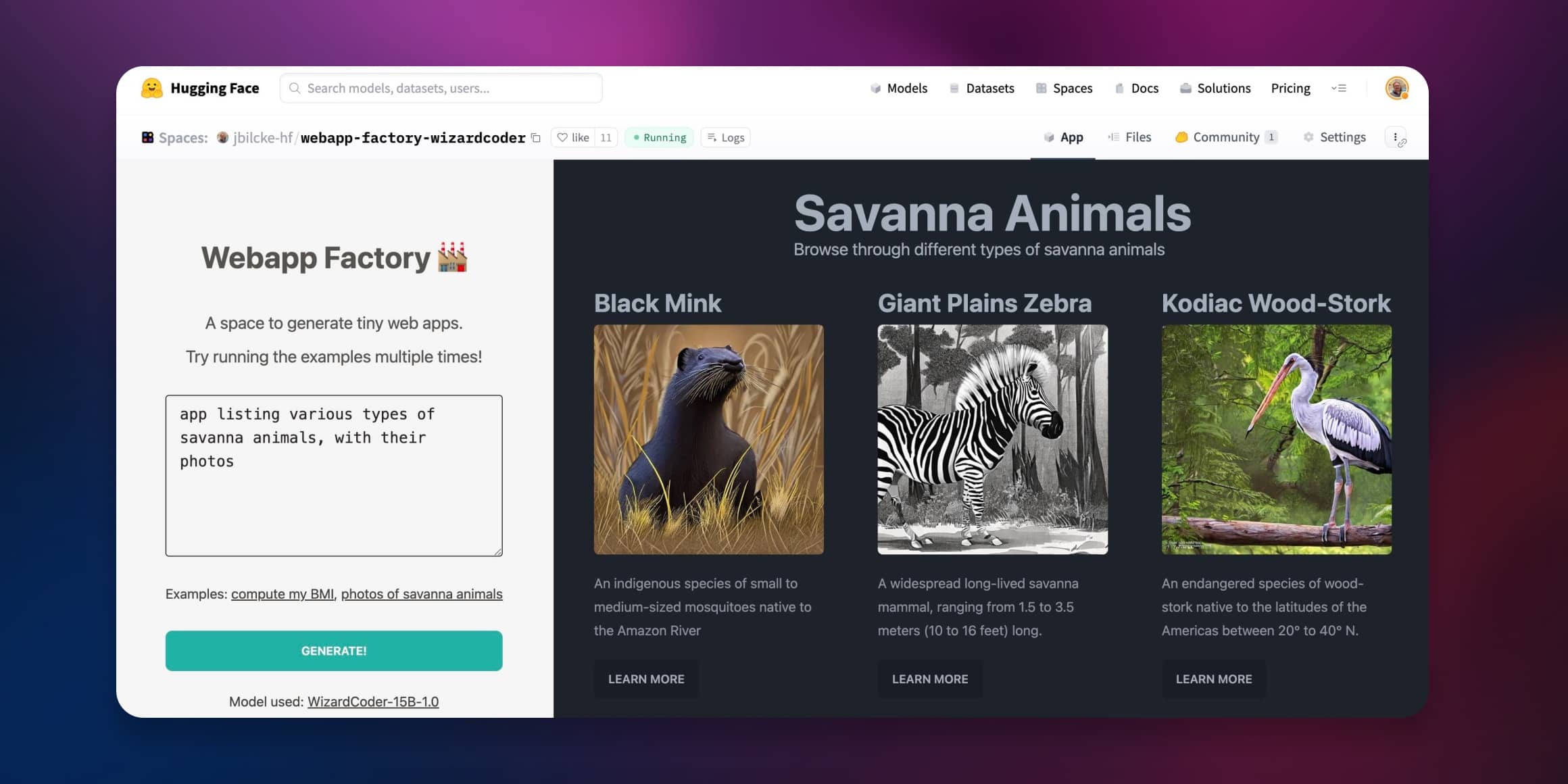
Making a web app generator with open ML models
We’re on a journey to advance and democratize artificial intelligence through open source and open science.
More from the blog
 GPT-Lab
· gpt-lab.eu
Nov 13, 2026
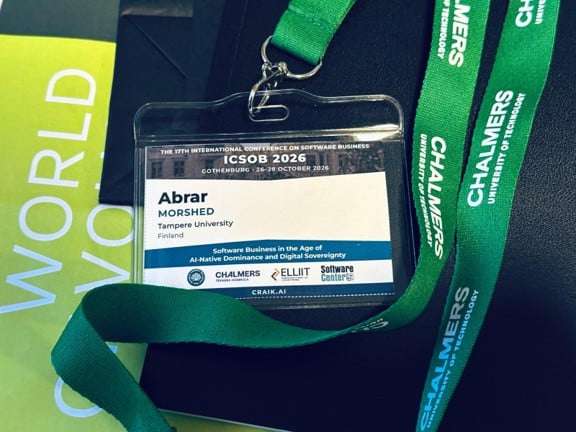
TenderIntell at ICSOB 2026: Three Days in Gothenburg
At ICSOB 2026 in Gothenburg, we presented TenderIntell, our work on multi-agent support for tendering. This post looks back at the conference, the idea behind a panel of three AI reviewers who score each proposal independently, and why evaluating agents reliably is the question we keep coming back to. The post TenderIntell at ICSOB 2026: Three Days in Gothenburg appeared first on GPT-Lab.

Microsoft Research Focus – Edition #98
What's new in research at Microsoft? Host Anson Ho explores the latest, including AI-powered universal translation, a breakthrough in a 31-year-old mathematics challenge, and advances making AI coding agents faster and more efficient. The post Microsoft Research Focus – Edition #98 appeared first on Microsoft Research.
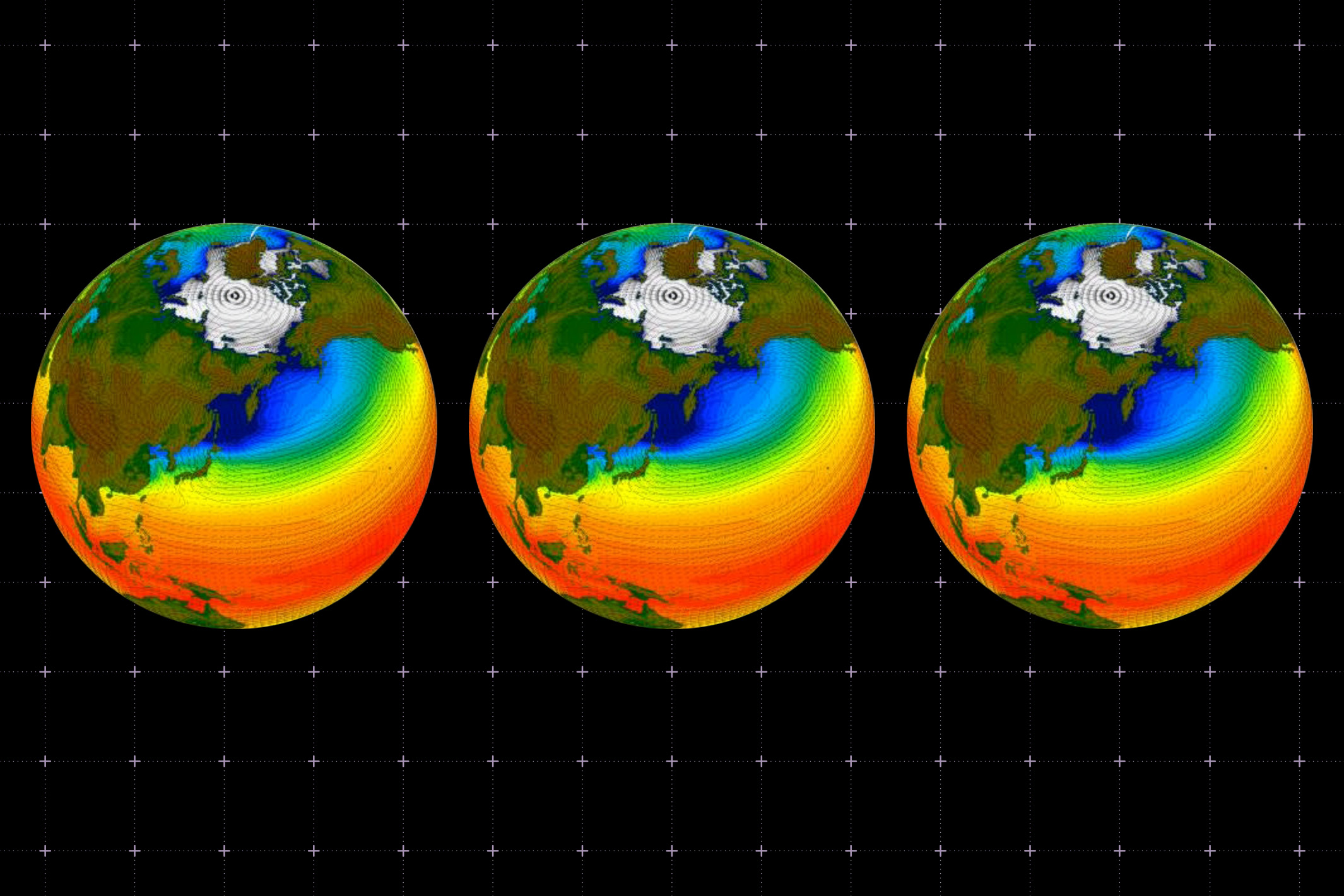
New research could lead to faster, trustworthy AI models for climate prediction
MIT scientists developed a training method to generate models that simulate the effects of human activities on climate much more quickly than other approaches.
The Definitive Fine-Tuning Guide for 3D Generation Models
We’re on a journey to advance and democratize artificial intelligence through open source and open science.
Related papers
Experimenting with Multi-Agent Software Development: Towards a Unified Platform
A unified platform that utilizes multiple artificial intelligence agents to automate the process of transforming user requirements into well-organized deliverables, including user stories, prioritization, and UML sequence diagrams, along with the modular approach to APIs, unit tests, and end-to-end tests.
Bridging Humans and LLMs: Investigating Human-AI Collaboration in Multi-agent Requirements Analysis for Organizational AI Adoption
LLM-based multi-agent systems can support strategic AI planning by enabling iterative refinement with human experts by supporting structured and collaborative Requirements Engineering processes for AI adoption planning.
Constitutional Midtraining: Content Presence Drives Alignment Gains
Post-training alignment is often shallow, eroding under fine-tuning. It remains untested as to whether constitutional midtraining interventions can produce durable alignment when cleanly isolated from post-training. We build a 394M-token constitutional corpus from Anthropic's Constitution and apply constitutional midtr...
ChargeNet: E(3) Equivariant Graph Attention Network for Atomic Charge Prediction
This work introduces an advanced equivariant graph attention neural network specifically engineered to model long-range atomic electrostatic interactions with high precision, and improves the model's accuracy, generalization, and robustness in complex scenarios.