Media Advisory: MIT to establish regional quantum hub
With $25 million investment from the Commonwealth of Massachusetts, MIT to build a new shared-use facility to serve as a statewide quantum toolbox.
More from the blog
MIT Quantum Initiative launches postdoctoral fellowship program
The Institute welcomes its first cohort of QMIT Fellows this fall to advance interdisciplinary quantum research.
How an MIT research project became a global programming language
With millions of users across the world, Julia has been used to conduct cutting-edge research and to design new drugs, jet engines, heat pumps, and more.
AI helps design new materials that work in the real world
The “CrysVCD” tool developed at MIT could cut the huge amounts of time and money spent on screening out chemically unstable designs.
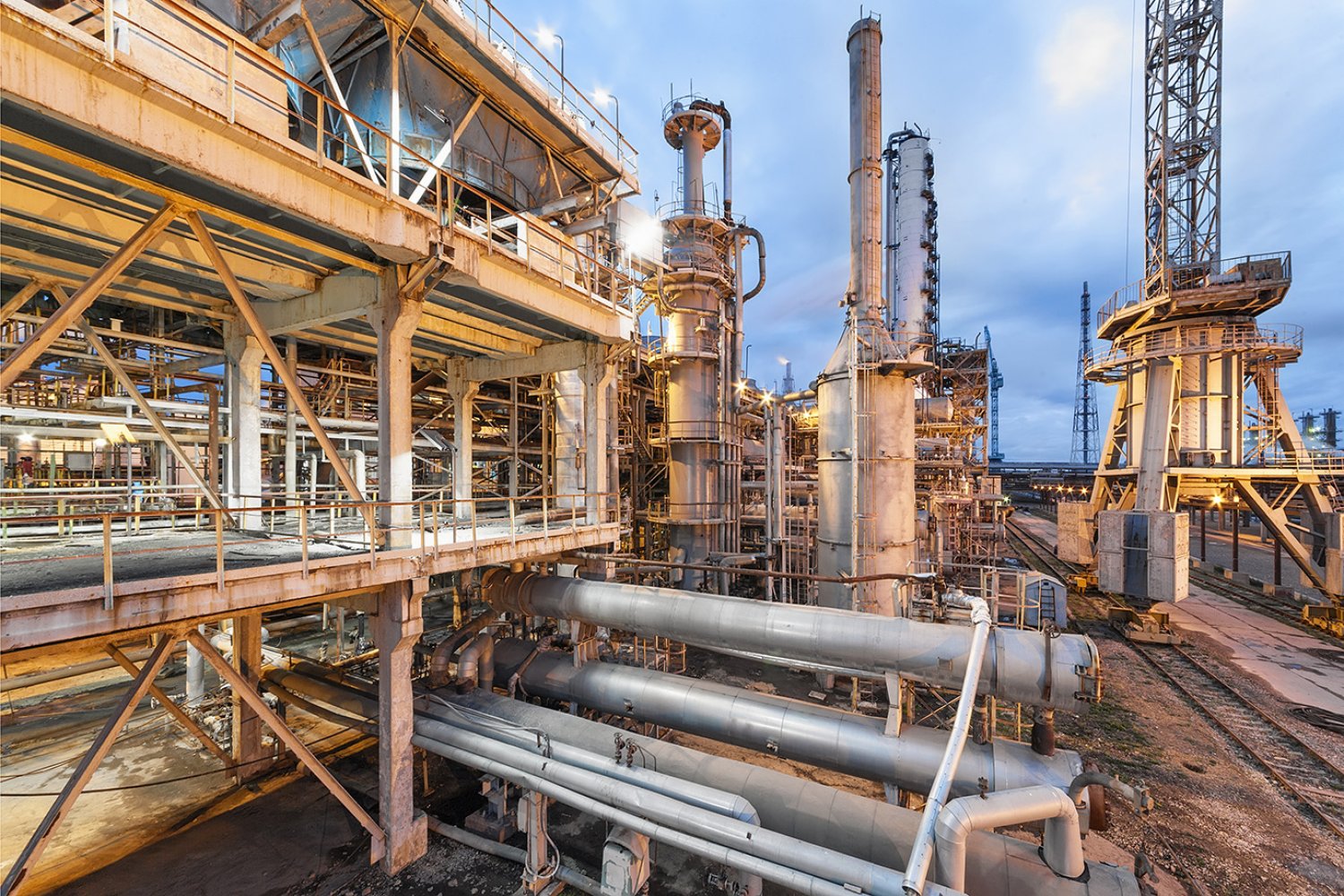
Paving the way for greener ammonia production
New MIT research could lead to better materials for a fossil-fuel-free process for making the chemical that's essential to fertilizer and other products.
Related papers
Fermi-Dirac thermal measurements: A framework for quantum hypothesis testing and semidefinite optimization
Quantum measurements are the means by which we recover messages encoded into quantum states. They are at the forefront of quantum hypothesis testing, wherein the goal is to perform an optimal measurement for arriving at a correct conclusion. Mathematically, a measurement operator is Hermitian with eigenvalues in [0,1]. By noticing that this constraint on each eigenvalue is the same as that imposed on fermions by the Pauli exclusion principle, we interpret every eigenmode of a measurement operator as an independent effective fermionic mode. Under this perspective, various objective functions in quantum hypothesis testing can be viewed as the total expected energy associated with these fermionic occupation numbers. By instead fixing a temperature and minimizing the total expected fermionic free energy, we find that optimal measurements for these modified objective functions are Fermi-Dirac thermal measurements, wherein their eigenvalues are specified by Fermi-Dirac distributions. In the low-temperature limit, their performance closely approximates that of optimal measurements for quantum hypothesis testing, and we show that their parameters can be learned by classical or hybrid quantum-classical optimization algorithms. This leads to a new quantum machine-learning model, termed Fermi-Dirac machines, consisting of parameterized Fermi-Dirac thermal measurements-an alternative to quantum Boltzmann machines based on thermal states. Beyond hypothesis testing, we show how general semidefinite optimization problems can be solved using this approach, leading to a novel paradigm for semidefinite optimization on quantum computers, in which the goal is to implement thermal measurements rather than prepare thermal states. Finally, we propose quantum algorithms for implementing Fermi-Dirac thermal measurements, and we also propose second-order hybrid quantum-classical optimization algorithms.
TabularQGAN: a quantum generative model for tabular data synthesis
A novel quantum generative model for synthesizing tabular data by proposing a quantum generative adversarial network architecture with flexible data encoding and a novel quantum circuit ansatz for effectively modeling tabular data is introduced.
Iterative tensor network transformations for element-wise evaluation of elementary and filtering functions
Tensor networks are powerful formats for compressing large-scale data. However, their application to general data processing has been limited by the difficulty of performing nonlinear operations. Here, we introduce iterative tensor network transformations (ITNTs), a general algorithmic framework for the element-wise evaluation of elementary and nonlinear filtering functions on data encoded as tensor trains (TTs), a class of tensor networks. Our approach operates entirely in the compressed domain, enabling efficient computation on exponentially large datasets while maintaining a controlled computational cost. We demonstrate its power in two key areas: (I) evaluating highly nonlinear elementary and filtering functions on a 3D reactive flow field, enabling high-fidelity reaction rate computation and region filtering, and (II) finding extrema in complex optimization problems, such as solving Max-SAT instances on spaces up to $2^{70}$ configurations. These results establish ITNT as a foundational tool that provides tensor network methods with the capability for general-purpose data science and large-scale optimization.
An End-to-End Hybrid Quantum--Classical Sampling Workflow for Discrete Markov Random Fields: A Reproducible Case Study
Sampling from discrete Markov random fields (MRFs) is a hard problem. We study amplitude-encoded i.i.d. sampling for small MRFs where $2^n$ target probabilities are precomputed classically. This removes quantum exponential speedup but allows a clean comparison against classical MCMC based on independent circuit samples ($\tau \approx 1$). Across 60 instances spanning five graph families (1k-step burn-in, 3k retained samples), the mean ESS ratios of Quantum to Single-Site Gibbs, Block Gibbs, Tuned-Block, and Parallel Tempering are $16.35$, $7.29$, $1.82$, and $1.79$, showing modern classical samplers substantially close this gap. Amortizing $O(2^n)$ preprocessing into wall-clock time, exact inverse-CDF sampling yields $17.7\text{M}$ ESS/s versus $488\text{K}$ ESS/s for the quantum sampler ($36\times$ mean rate, $153\times$ per-instance), confirming no wall-clock advantage. We characterize MCMC autocorrelation costs and benchmark amplitude-encoded state preparation at $n \in \{8,10,12\}$. An MPS scaling study ($n \le 40$) shows bond dimension $\chi=32$ achieves $F=0.721\pm0.059$ at $n=40$. Finally, a matched-budget VQC vs. MPS comparison at $n \in \{8,10,12\}$ shows VQC fidelities fall far below MPS: $(F_{\mathrm{VQC}}, F_{\mathrm{MPS}}) = (0.31, 0.99), (0.21, 0.96), (0.17, 0.88)$ at compressions $10.7\times$, $34.1\times$, and $113.8\times$.