Human face-to-face conversation requires coordinating speech, gestures and expressions across both speaking and listening. We present ELLSA 2, an end-to-end full-duplex dialogue model that jointly optimizes speech interaction and streaming gesture-expression generation. An autoregressive, chunk-wise synthesizer combine...
Si-Yin Wang, Wen-Yi Yu, T. Chiba et al.· 0 citations
Aerial vision-language navigation (VLN) agents built on large vision-language models are expensive to query. Executing a complete predicted action chunk before replanning amortizes this cost, reducing model inference from 195 to 42 ms per executed waypoint for our policy. It also moves the states at which the policy is...
Understanding video content requires reasoning at multiple levels of granularity, from identifying objects to interpreting their interactions and localizing when specific actions occur. This thesis studies three query-guided grounding tasks that answer where key objects are (object-level grounding), how they interact (...
Multimodal document retrieval-augmented generation (RAG) has focused largely on retrieval, yet its answers depend on how well a vision-language model reads the retrieved pages. We find that evidence in retrieved pages remains underused even when the correct pages are retrieved. On SciEGQA oracle pages, five prior metho...
Eunchan Jo, Seounghyun Jang, Sangwoo Mo· 0 citations
Reach audiences
Advertise in front of researchers, engineers, and readers.
Continuous video and clinical records provide complementary information for understanding how patient behavior evolves over a hospital stay. A central challenge is how to represent behavior across the entire stay while preserving access to fine-grained visual and clinical evidence. We introduce TRACER, a training-free...
Zane Durante, Paul Tang, Keshigeyan Chandrasegaran et al.· 0 citations
We identify a theoretical incompatibility between 3D point cloud masked autoencoding and SE(3)-equivariant networks. We prove that standard masking triggers a topological collapse, effectively forcing the model to hallucinate orientation without a reference frame. To resolve this, we introduce SIEVE (Scalar Invariant E...
Jongann Lee, Sun Woo Park, Yun Young Choi· 0 citations
Diffusion models are notoriously expensive to train, requiring large-scale datasets to learn how to gradually reverse the noise from images over multiple small denoising steps. Current approaches focus on distilling the number of diffusion steps, neglecting potential redundancies of the training data. In this paper, we...
Andrei Jarca, Vlad Hondru, Florinel-Alin Croitoru et al.· 0 citations
Negation is a fundamental aspect of language understanding and it is important vision-language models (VLMs) are able to process it effectively. We investigate how VLMs process negation by analysing attention patterns of different models. We draw comparisons between human gaze and attention in models when processing af...
Beth Pearson, Michael Wray, Martha Lewis· 0 citations
Image-to-text (I2T) understanding and text-to-image (T2I) generation are dual tasks in unified multimodal models (UMMs). Reconstructive post-training couples these tasks, but existing reconstruction-based methods remain perception-centric and provide limited supervision for reasoning about structure, intent, and transf...
Fei-Ze Wu, Zhi-Yuan Yan, Yuri Hong et al.· 0 citations
Humans interpret multimodal observations of the world and forecast how it will evolve. Recent multimodal generative systems have demonstrated similar capabilities: they can integrate multimodal context and synthesize visual outputs that depict changes in the world. To characterize this emerging trajectory, we organize...
Wenhao Yan, Haodong Li, Xiaotong Li et al.· 0 citations
ARTIFICIAL INTELLIGENCE (AI) has demonstrated its potential across a wide range of humanitarian tasks, offering scalable and data-driven solutions to some of the world's most pressing challenges. For instance, in addressing climate change, AI-powered models are being used for faster and more accurate global weather for...
Noora Al-Emadi, Muhammad Imran, Yin Yang et al.· 0 citations
Multimodal long-document question answering requires models to seek sparse evidence across pages and modalities, understand heterogeneous document content, and reason over the collected evidence. Even advanced vision-language models (VLMs) can overlook sparse evidence and struggle with cross-modal reasoning in a single...
Zhuo-Wen Liang, Xiao-Tian Lin, Yu-Yu Luo et al.· 0 citations
Exploring how generative AI could make machine vision more accessible to businesses. The post GenEye in a Box: Making Machine Vision Something You Can Just Ask For appeared first on GPT-Lab.
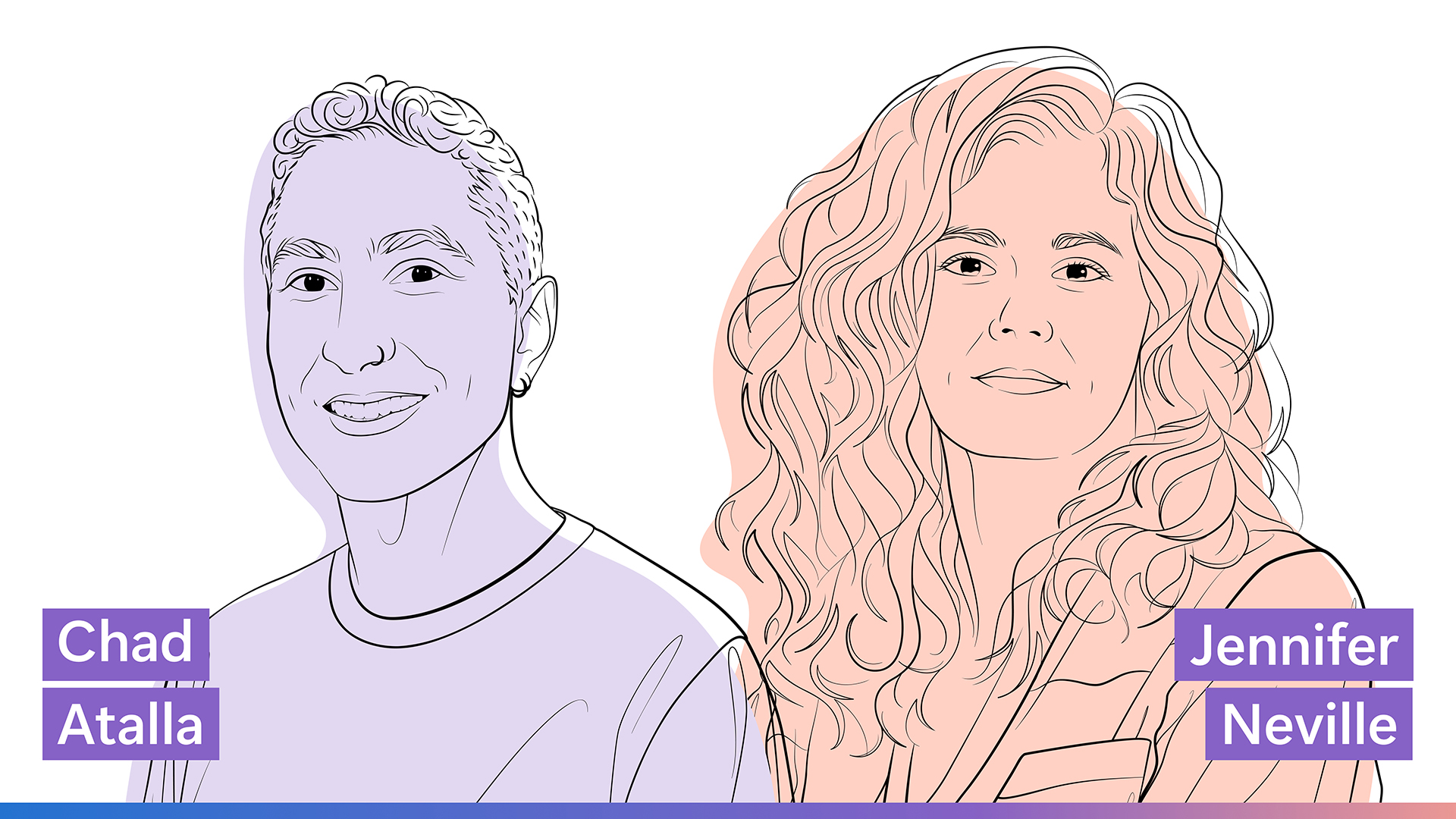
Jennifer Neville did not want to go into computer science—but that’s exactly where she landed. Neville discusses the starts and stops that led to her professional sweet spot and her work identifying “surprising failures” making it hard for AI to handle complexity. The post What AI gets wrong and what failure teaches us appeared first on Microsoft Research.
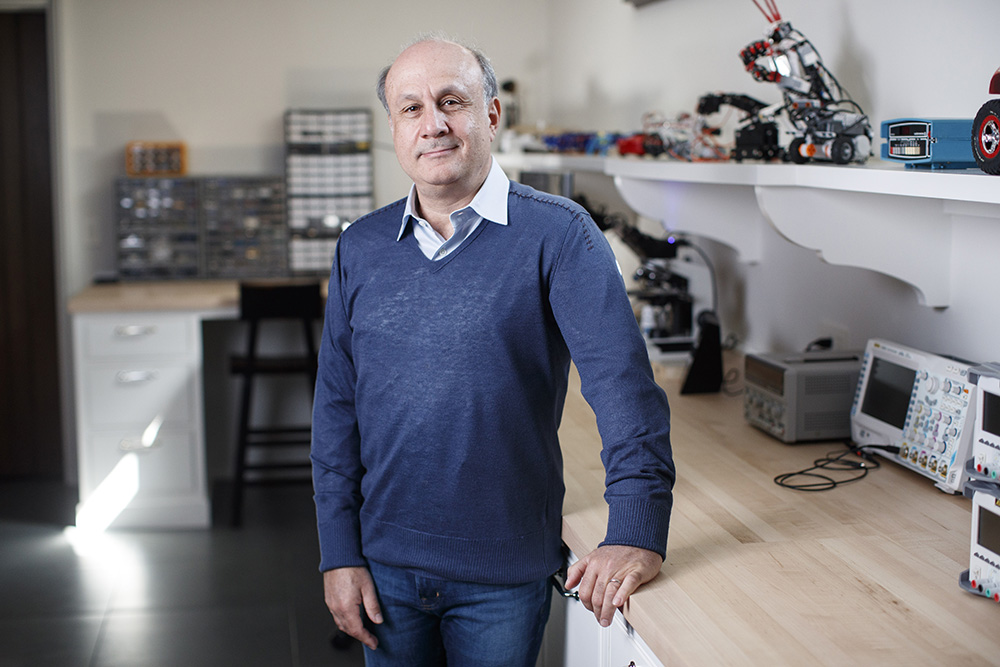
Computer scientist, entrepreneur, and philanthropist will collaborate with the MIT Schwarzman College of Computing to advance AI and scientific discovery.