Vision-language models must reconcile conflicting text and images. Prior work has characterized the resulting behavior in terms of modality biases--e.g., a "blind faith in text"--but why preferences vary across models, domains, and input conditions remains unclear. We develop a predictive account from a Bayesian perspe...
Josh Barua, Kyle Mahowald, William Rudman· 0 citations
LIME is proposed, a vision-language camera-motion generator that combines an autoregressive observation-gain output with a continuous flow-matching pose head that learns intent-conditioned camera motion from passive egocentric video, turning ordinary human recordings into supervision for a reusable active-perception pr...
Bo-Yang Sun, Jiajie Li, Yung-Hsu Yang et al.· arXiv.org· 3 citations
A comprehensive benchmark of 20 teachers from 11 well-known ViT families reveals that Attention Transfer is not universally effective, and identifies architectural mismatch between the pre-trained teacher and the standard student as the primary mechanism.
Huai-Yuan Qin, Mu-Li Yang, Gabriel James Goenawan et al.· arXiv.org· 3 citations
Vision-language models have shown strong performance, but they often generalize poorly to specialized domains. While semi-supervised vision-language learning mitigates this limitation by leveraging a small set of labeled image-text pairs together with abundant unlabeled images, existing methods remain fundamentally pai...
Junwon You, Mihyun Jang, Sangwoo Mo et al.· 0 citations
Reach audiences
Advertise in front of researchers, engineers, and readers.
Uncertainty-aware flow matching (UA-Flow) is proposed, a lightweight extension of flow matching that predicts the velocity field together with heteroscedastic uncertainty that tracks sample fidelity more consistently than element-wise baselines and that these signals also carry information about data-manifold support.
Cardiovascular disease arises from interactions between inherited risk, molecular programmes, and tissue-scale remodelling that are observed clinically through imaging. Health systems now routinely generate large volumes of cardiac MRI, CT and echocardiography together with bulk, single-cell and spatial transcriptomics...
Minh H. N. Le, Tuan Vinh, Thanh-Huy Nguyen et al.· 0 citations
Low-rank Decomposition and Adaptation (LoDA) performs a task-driven decomposition to build general and truly task-specific LoRA subspaces by solving two energy-based objectives, decoupling directions for knowledge sharing and isolation.
Ling-Feng He, De Cheng, Huai-Jie Wang et al.· arXiv.org· 12 citations· ⚡2
Wall-to-wall biomass density estimation from NASA's GEDI mission requires interpolating sparse LIDAR observations across heterogeneous landscapes. While Random Forest and XGBoost are widely used, they predict each location independently from satellite features, without adapting to the varying difficulty of heterogeneou...
Multimodal code intelligence connects the symbolic world of programs with the visual world their execution creates. Interest in this capability is burgeoning, as models are increasingly asked to produce charts, webpages, animations, and semi-structured documents. Recently, proprietary models have pushed far ahead, prod...
Qiushi Sun, Jingyang Gong, Yang Liu et al.· 0 citations
A multimodal agent must decide whether visual evidence is worth acquiring, which candidate or resolution to query, and when further interaction can no longer change its decision. We study this problem under a strict free-metadata/paid-observation boundary, stochastic vector costs, and a frozen execution trace, and trea...
Miao-Bo Hu, Shu-Hao Hu, Xiao-Bo Guo et al.· 0 citations
Generative super-resolution (SR) can recover sharp detail in computed tomography (CT) images from severely downsampled observations, but the missing high-frequency content is not uniquely determined by the low-resolution input. Consequently, visually plausible reconstructions may contain anatomically unsupported vascul...
Hairong Ni, Jiahe Huang, Minghao Guo et al.· 0 citations
Context can improve large language model performance, but these gains may be lost after context removal. Inspired by biological systems consolidation, we formulate Memory Consolidation (MC) as internalizing these gains while preserving non-target capabilities, connecting context-specified editing, skill learning, and b...
Jintian Zhang, Feng He, Xinnian Liang et al.· 0 citations
Exploring how generative AI could make machine vision more accessible to businesses. The post GenEye in a Box: Making Machine Vision Something You Can Just Ask For appeared first on GPT-Lab.
Jennifer Neville did not want to go into computer science—but that’s exactly where she landed. Neville discusses the starts and stops that led to her professional sweet spot and her work identifying “surprising failures” making it hard for AI to handle complexity. The post What AI gets wrong and what failure teaches us appeared first on Microsoft Research.
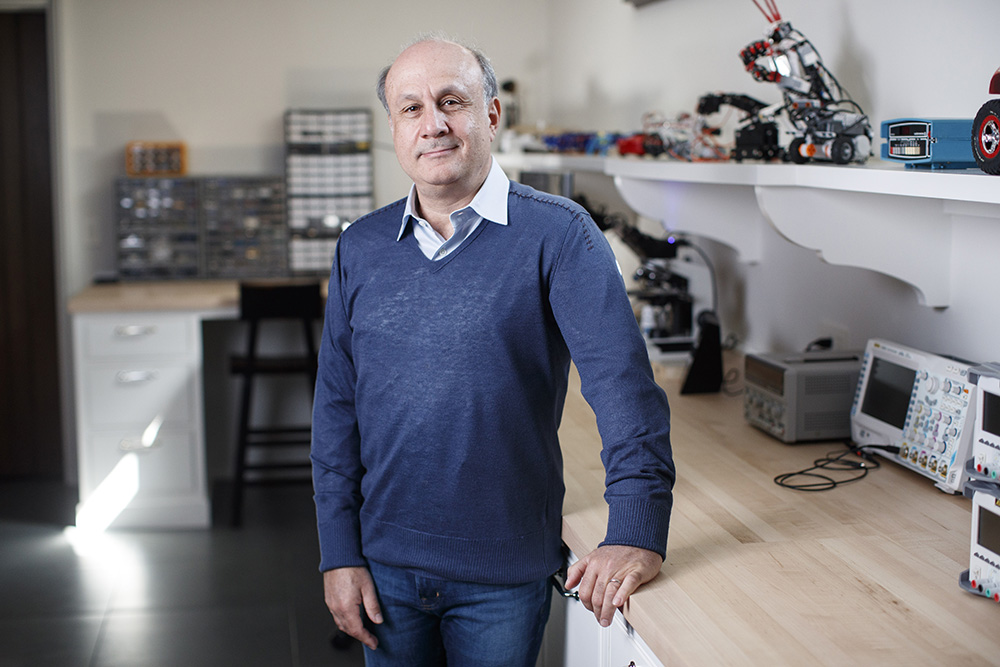
Computer scientist, entrepreneur, and philanthropist will collaborate with the MIT Schwarzman College of Computing to advance AI and scientific discovery.