CF-NODE outperforms all four methods with statistically significant improvements over the second-best method, improves AUC on every target domain, and attains the highest average AUC and macro-F1, delivering stronger grade discrimination together with more balanced recognition across DR severity levels.
Sketching is one of the most natural ways for people to express visual ideas. Unlike the text prompts that most generative systems rely on today, a sketch captures spatial structure and intent directly, including where a designer wants highlights and shadows to appear. Yet current sketch-to-3D pipelines have no input f...
Ahmet Ne\c{c}irvan Do\u{g}an, Eren Acar Ba\c{s}aran, Metin Sezgin et al.· 0 citations
Despite their advanced reasoning capabilities, state-of-the-art Multimodal Large Language Models (MLLMs) still lack a core component of human intelligence: the ability to "read the room" and assess deception in complex social interactions. To rigorously evaluate this limitation, we introduce Multimodal Interactive Dece...
Caixin Kang, Yifei Huang, Liangyang Ouyang et al.· 0 citations
Recent advances in Omni Language Models (OLMs) provide a unified solution for audiovisual video captioning. Nevertheless, existing approaches predominantly treat captioning as an unstructured text generation process, neglecting the inherent semantic structure of videos and leading to suboptimal fine-grained audiovisual...
Jiapeng Shi, Qiuxia Hou, Jiaqi Leng et al.· 0 citations
Reach audiences
Advertise in front of researchers, engineers, and readers.
Vision Transformers deployed in medical imaging exploit spurious correlations, yet the internal mechanisms remain unidentified and impossible to fix. We apply mechanistic interpretability to locate one such mechanism in ViT-Base 16: a single attention head (L8H10) that functions as a dedicated annotation-reader on ches...
Detailed captions transfer visual information into vision-language model supervision, but quality is easily conflated with length: long single-pass outputs still miss small objects, text, and spatial relations or promote uncertain observations into confident claims. We formulate fine-grained captioning as recoverable v...
Hao Shi, Jia-Feng Wang, Yu-Zhuo Fu et al.· 0 citations
Existing long-document QA benchmarks rarely combine large-scale human-authored questions with detailed visual evidence annotations, limiting diagnosis of evidence localization and interpretation failures. We present VELD-QA, a large-scale benchmark for Visual Evidence grounding and question answering in Long Documents....
Zhivar Sourati, Marianne Menglin Liu, Rong Wang et al.· 0 citations
Recent advances in large vision-language models have led to impressive performance in visual question answering and multimodal reasoning. However, it remains unclear whether these models genuinely perform grounded visual reasoning or rely on superficial patterns and dataset biases. In this work, we introduce MagiC, a c...
Chengfei Wu, Ronald Seoh, Bingxuan Li et al.· 0 citations
Modern healthcare generates increasingly complex medical reports that challenge clinical professionals in terms of time and interpretive burden. Manual review processes are slow, error-prone, and difficult to scale. This paper presents MeddeX, a Medical Report Analyzer that combines a QLoRA fine-tuned LLaMA-3 (8B) mode...
Rajdeep Pandhare, Rohit Kundaikar, Yakub Kojar et al.· 0 citations
Results indicate that strong benchmark performance of a single channel does not transfer to realistic use, and that multimodal fusion provides the robustness required of a tool that supports psychological evaluation.
The modality gap is intrinsic to multimodal alignment, where embeddings from different modalities remain partially separated in a shared representation space. In continual learning, CLIP-based vision-language models (VLMs) not only suffer catastrophic forgetting but also experience modality gap drift that disrupts the...
Tiantian Peng, Yuyang Liu, Shuo Yang et al.· 0 citations
This work introduces a novel approach to compute a universal upper bound on the Bayes error rate (BER) from classifier-output samples, which serves as a Bayes-error-related performance criterion for the underlying classification task. We show that the bound is tight in the binary case and characterize the max-sum gap t...
Mohammadreza Tavasoli Naeini, Ali Bereyhi, Morteza Noshad et al.· 0 citations
Exploring how generative AI could make machine vision more accessible to businesses. The post GenEye in a Box: Making Machine Vision Something You Can Just Ask For appeared first on GPT-Lab.
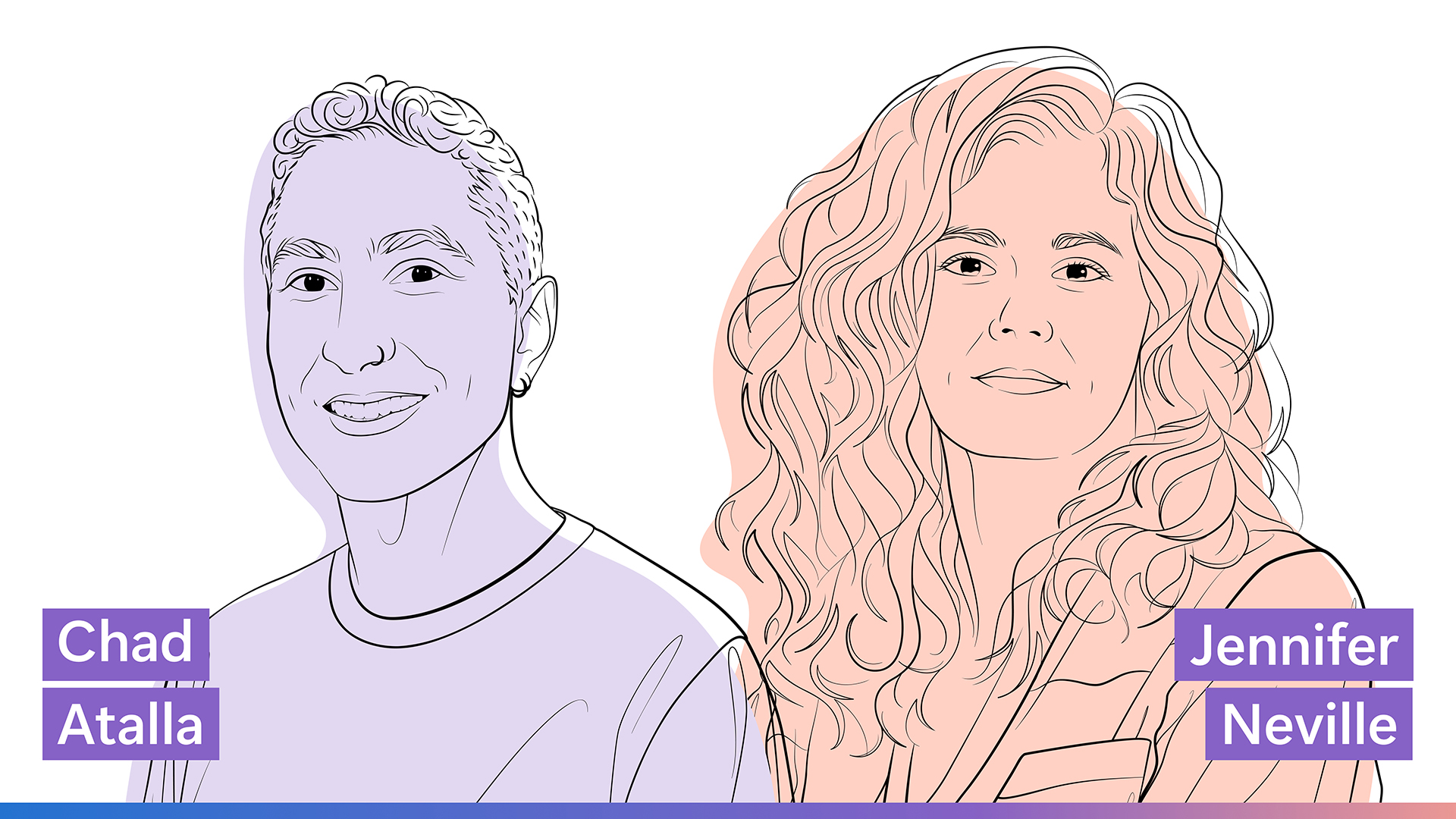
Jennifer Neville did not want to go into computer science—but that’s exactly where she landed. Neville discusses the starts and stops that led to her professional sweet spot and her work identifying “surprising failures” making it hard for AI to handle complexity. The post What AI gets wrong and what failure teaches us appeared first on Microsoft Research.
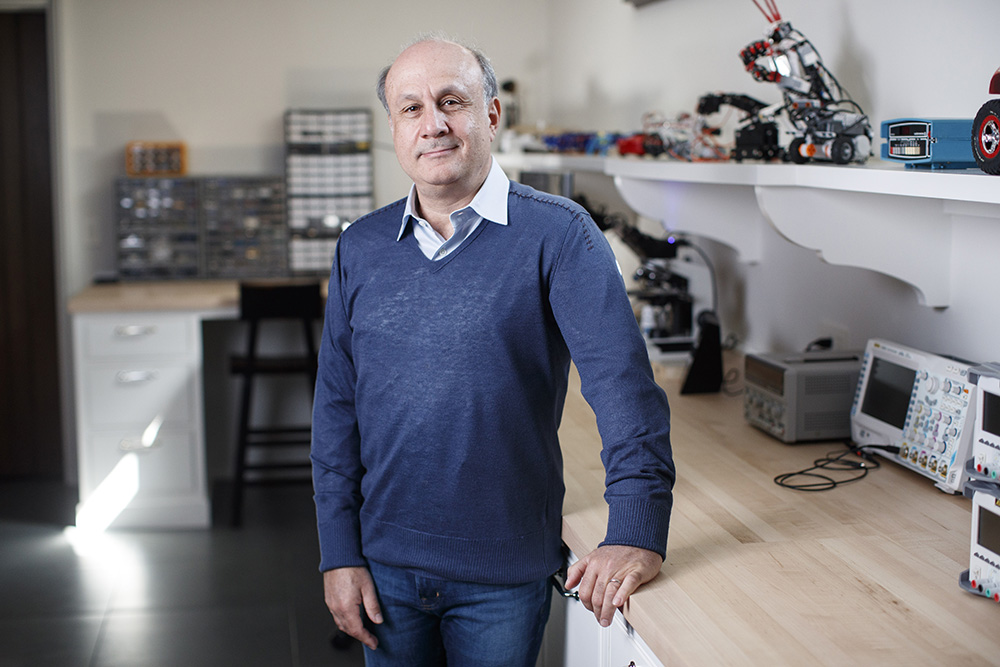
Computer scientist, entrepreneur, and philanthropist will collaborate with the MIT Schwarzman College of Computing to advance AI and scientific discovery.