Debris congestion and collision in low Earth orbit have become a major point of concern due to the rapid expansion of activities in that region. In this work, an AI-driven framework is developed and deployed to predict, analyze, and optimize collision risk across the altitude inclination space. Local debris object popu...
Emad Alkhazraji, Mohamed E. Yahia, R. Tolba et al.· Scientific Reports· 0 citations
This paper introduces XAI2CSI, a framework that leverages eXplainable Artificial Intelligence (XAI) to analyze DL-based CSI sensing systems and employs SAGE, a model-agnostic explainability method, to quantify temporal, spectral, and spatial CSI contributions to HAR decisions under nominal and cross-context evaluations...
Idio Guarino, Alfredo Nascita, Domenico Ciuonzo et al.· 0 citations
This paper proposes a framework for achieving explainable artificial intelligence (XAI) by integrating deep learning with symbolic reasoning. The core claim is to translate the predictions of deep learning models into interpretable symbolic rules and then leverage these rules for symbolic reasoning. This framework util...
Jincheng Zhang· Zenodo (CERN European Organi...· 0 citations
This research guide is for the course Current Issues in English Language Education. It focuses on English language testing and assessment in the AI era. Students work in small research teams. Each team has two students and one lecturer. All teams use one shared questionnaire, but each team has a different research topi...
Abdul Syahid· Zenodo (CERN European Organi...· 0 citations
This paper proposes a novel approach to explainable artificial intelligence (XAI) by leveraging causal intervention methods. The core idea is to model systems using causal graphs and then employ techniques like do-calculus for precise intervention and control. Traditional intervention methods often lack interpretabilit...
Jincheng Zhang· Zenodo (CERN European Organi...· 0 citations
Machine learning research routinely treats a behavioral description as if it were a demonstrated internal mechanism, calling something "intention" or "preference" and then reasoning as though that label had been independently established rather than just applied. This paper draws that boundary formally: an observed beh...
Carolina Johnson· Zenodo (CERN European Organi...· 0 citations
Food safety incidents pose significant public health risks globally, necessitating robust predictive frameworks for identifying high-risk contamination notifications. This study presents an explainable artificial intelligence framework for food safety risk prediction that integrates SHAP-based feature attribution, temp...
Shinyclimensa C, P. A.· Discover Food· 0 citations
A sealed, dated research record: an AI factory reached from the other end, one operator and one consumer GPU against an eleven-layer governed stack, with a receipt for every claim. Compiled from the maintained sources of the living record at https://osintelligence-llc.gitbook.io/osintelligence. Every chapter carries it...
Jamey Kistner· Zenodo (CERN European Organi...· 0 citations
Deep neural networks have achieved remarkable success in various domains, including image recognition, natural language processing, and game playing. However, their inherent complexity often leads to a "black box" problem, where the reasoning behind their predictions remains opaque to humans. This research investigates...
Jincheng Zhang· Zenodo (CERN European Organi...· 0 citations
Research Manager Mike Walker reflects on a career spanning hacker culture, cybersecurity, and AI, sharing lessons about trust, teamwork, leadership, and why solving difficult problems requires curiosity, judgment, agility—and an understanding of the rules. The post Learn the rules: The hacker mindset appeared first on Microsoft Research.
Is your company’s AI sovereign? A practical guide for CIOs on AI vendor lock-in, EU Data Act switching, cloud sovereignty, and testing your exit plan before you need it. The post Sovereignty Is the Option to Leave appeared first on GPT-Lab.
MIT News · Artificial Intelligence· news.mit.eduNov 2, 2026
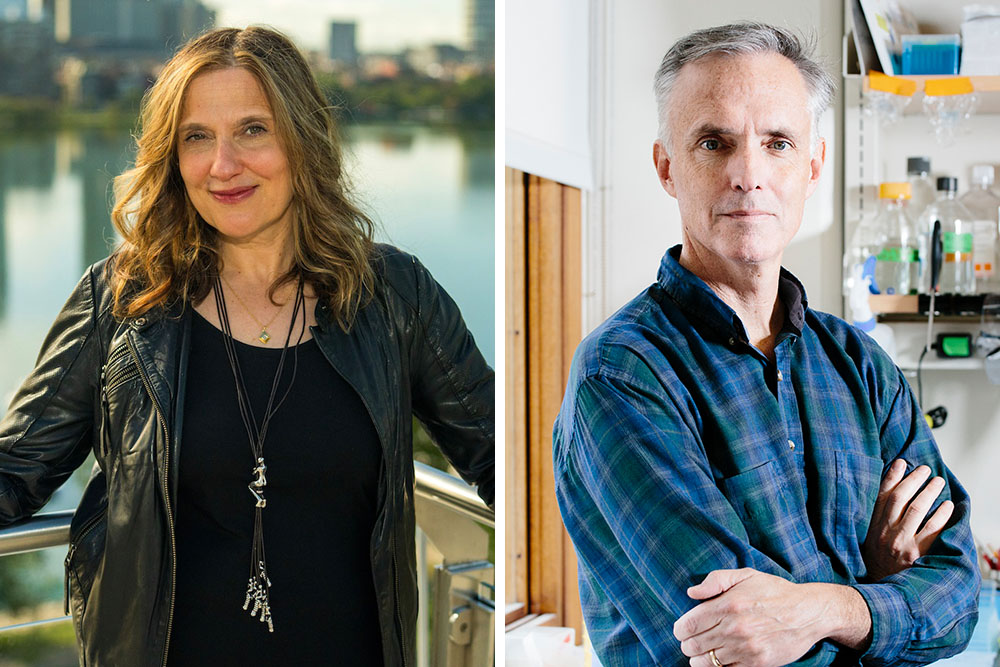
The MIT professors collaborated to identify the first AI-discovered antibiotic, a scientific breakthrough that is widely recognized as a milestone in AI-driven drug discovery.
MIT News · Artificial Intelligence· news.mit.eduOct 30, 2026
MIT professors Adam Berinsky and Chara Podimata discuss a new project to track how AI chatbots are responding to questions about the 2026 U.S. midterm elections.
We use cookies to run the site and, with your consent, for analytics and to show ads.
See our Cookie Policy.