In this era of climate change and global environmental challenges, the role of sustainability in the latest industrial revolution, Industry 5.0, is becoming increasingly relevant. The changing trends of Industry 5.0 represent an era of human–machine collaboration and sustainable AI in manufacturing, built on the connec...
Sneha H. Dhoria, Tara Sasanka C, R. Rahul Sai et al.· Generative Artificial Intell...· 0 citations
Accurate melanoma detection is essential for early-stage dermatological diagnosis, as it significantly improves treatment outcomes and patient survival rates. This study proposes a robust stacked ensemble framework that combines transfer learning (TL) with particle swarm optimization (PSO) to enhance melanoma classific...
Achin Jain, Nitin Jain, Aman Anand et al.· Discover Computing· 0 citations
Pre-registration No. 3 of a series (No. 1: doi:10.5281/zenodo.21893592; No. 2: doi:10.5281/zenodo.21890749). The registration text is frozen at deposit; any clarification will be issued as a separately deposited supplement, never as an edit. Rotation curves of field disk galaxies show the external field effect (EFE) of...
Artificial-intelligence agents increasingly participate in the production, interpretation, circulation, and reuse of claims on which organizations act. This paper develops AI-nterprise, a nascent design theory and normative reference model for the human-agent enterprise: an organization in which people and artificial a...
Ottaviano De Cicco· Zenodo (CERN European Organi...· 0 citations
Reach audiences
Advertise in front of researchers, engineers, and readers.
This paper introduces a novel framework for knowledge representation and reasoning that synergistically combines the strengths of neural networks and symbolic logic. The core claim is to construct a system capable of both learning intricate patterns from data using neural networks and performing precise reasoning and i...
Jincheng Zhang· Zenodo (CERN European Organi...· 0 citations
Background Artificial intelligence (AI) and digital health technologies are increasingly shaping how public healthcare services are planned, delivered, and governed. In Egypt, national digital health reforms have created an urgent need to assess whether public healthcare institutions have the administrative readiness,...
Mohamed Abbas El-Naggar, Dina Helmy Al Nashily, Hiyam Ahmed Abdulrahim et al.· Frontiers in Digital Health· 0 citations
Artificial-intelligence agents increasingly participate in the production, interpretation, circulation, and reuse of claims on which organizations act. This paper develops AI-nterprise, a nascent design theory and normative reference model for the human-agent enterprise: an organization in which people and artificial a...
Ottaviano De Cicco· Zenodo (CERN European Organi...· 0 citations
This paper explores a novel approach to reasoning about temporal relationships by integrating temporal logic with neural networks. The core idea is to train a neural network to understand and apply the rules of temporal logic, thereby enabling it to reason more robustly and reliably about events and their temporal depe...
Jincheng Zhang· Zenodo (CERN European Organi...· 0 citations
Abstract Neurosymbolic AI and Zero Trust Architecture (ZTA) are increasingly proposed together as a combined approach to securing cloud-edge IoT continuums in federal and critical infrastructure sectors, on the premise that neurosymbolic systems can supply the explainable, robust threat detection that continuous-verifi...
Michel Brumley· Zenodo (CERN European Organi...· 0 citations
A structured narrative review using predefined searches of Web of Science Core Collection and Scopus to synthesize empirical XAI applications across six water-research domains, with emphasis on method selection, model and data compatibility, explanation reliability, and operational implementation.
Abstract Cloud-edge Internet of Things (IoT) continuums increasingly rely on artificial intelligence to detect intrusions and enforce zero-trust policy at scale, yet purely neural detectors remain difficult to audit and purely symbolic engines struggle to generalize across noisy, heterogeneous telemetry. Building on a...
Khan Zhang· Zenodo (CERN European Organi...· 0 citations
AI systems are designed to decline certain requests to avoid providing harmful or inaccurate information. However, refusals can unintentionally reduce users’ impressions of and trust in AI. Prior work has examined what an AI should explain when refusing a request, but offers no guidance on which AI should deliver the e...
Kohei Yamamoto, Chi-Lan Yang, Takuji Narumi et al.· Proceedings of the 26th ACM...· 0 citations
Research Manager Mike Walker reflects on a career spanning hacker culture, cybersecurity, and AI, sharing lessons about trust, teamwork, leadership, and why solving difficult problems requires curiosity, judgment, agility—and an understanding of the rules. The post Learn the rules: The hacker mindset appeared first on Microsoft Research.
Is your company’s AI sovereign? A practical guide for CIOs on AI vendor lock-in, EU Data Act switching, cloud sovereignty, and testing your exit plan before you need it. The post Sovereignty Is the Option to Leave appeared first on GPT-Lab.
MIT News · Artificial Intelligence· news.mit.eduNov 2, 2026
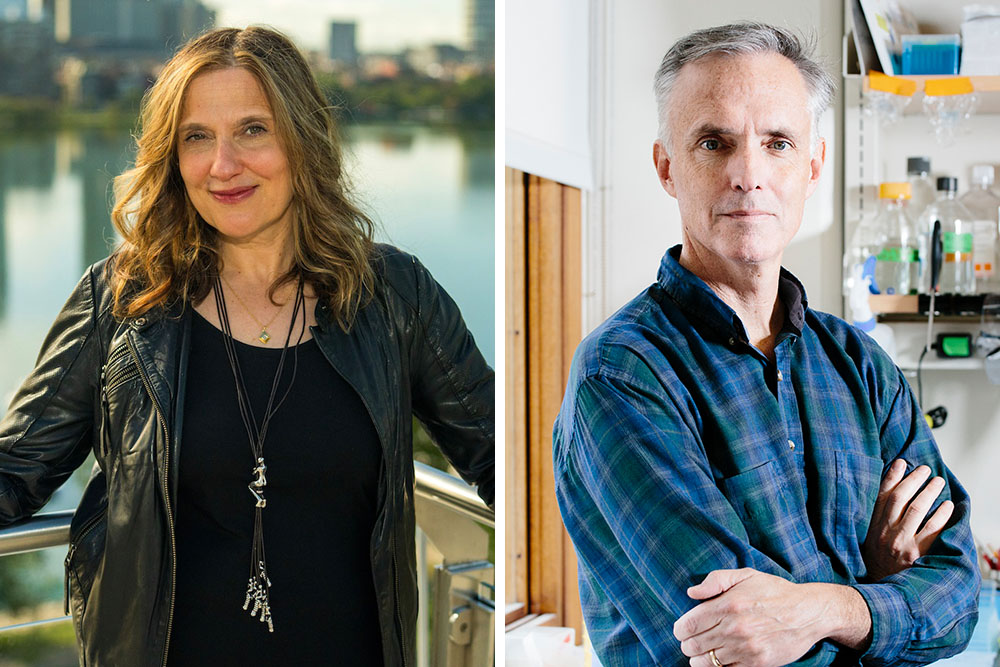
The MIT professors collaborated to identify the first AI-discovered antibiotic, a scientific breakthrough that is widely recognized as a milestone in AI-driven drug discovery.
MIT News · Artificial Intelligence· news.mit.eduOct 30, 2026
MIT professors Adam Berinsky and Chara Podimata discuss a new project to track how AI chatbots are responding to questions about the 2026 U.S. midterm elections.
We use cookies to run the site and, with your consent, for analytics and to show ads.
See our Cookie Policy.