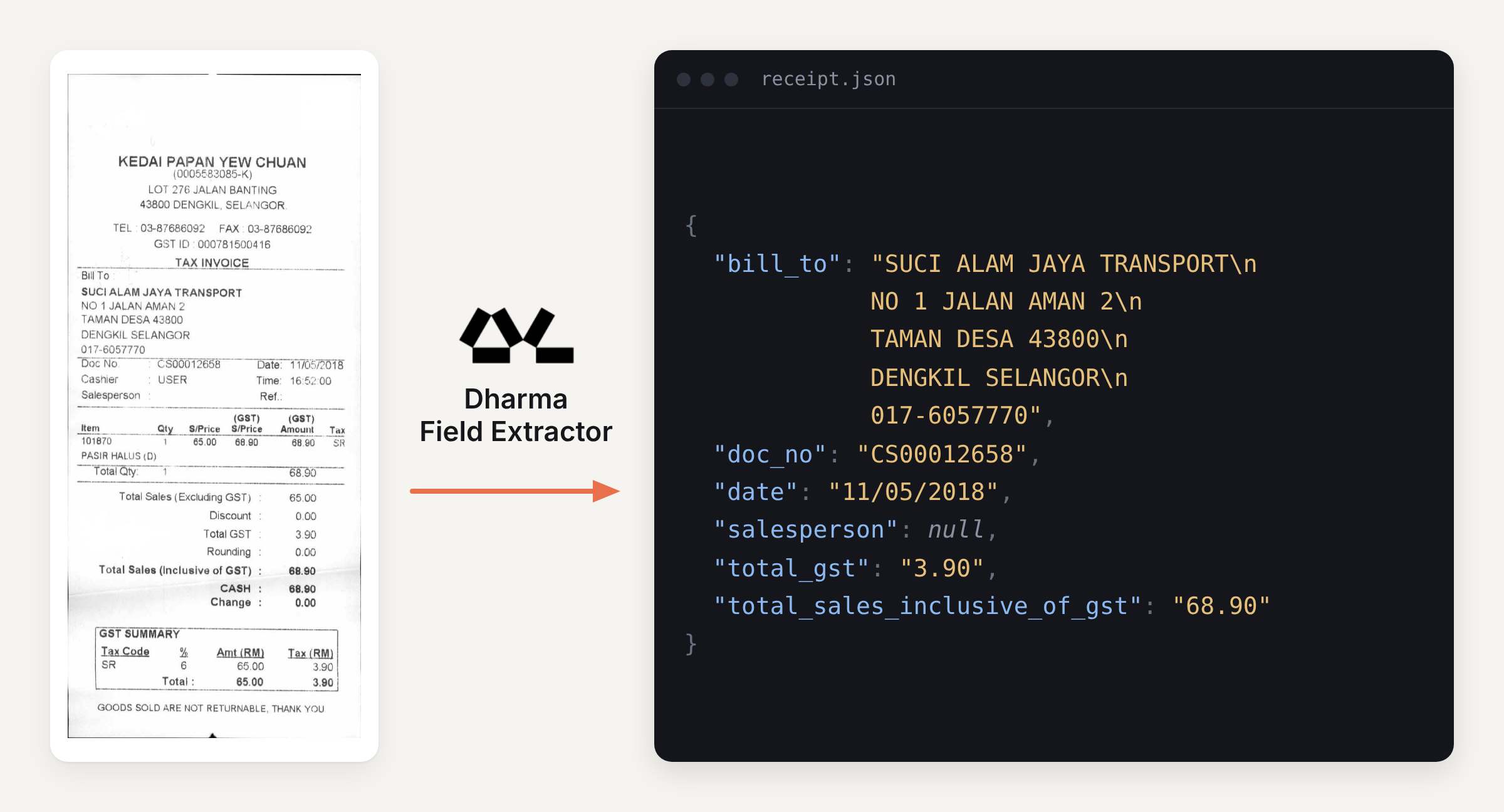
A robust and explainable cybersecurity framework for IoV in IIoT Cyber-Physical Systems (CPS) is proposed, in which implementation and validation using the RT-IoT2022 (Real-Time Internet of Things) dataset is performed.
T. Zhukabayeva, Zulfiqar Ahmad, N. Karabayev et al.· Discover Artificial Intellig...· 0 citations
This work distil ten recurring gaps into an impact-feasibility matrix and proposes EPA-CarbonNet, a six-layer architecture that fuses market series with policy text by cross-attention and calibrated intervals alongside policy-attributed explanations.
Summaiya Unnisa Begum, Mohammed N. Ullah, Mohammed Abdul Ghani Khan· 0 citations
A self-referential retrosynthesis framework for explainable AI provenance forensics under a fixed-generator setting that leverages a jointly optimized encoder-decoder pair to implement a self-embedding mechanism that enables round-trip consistency verification.
Yi-Jie Lin, Ching-Chun Chang, Isao Echizen et al.· 0 citations
This paper introduces contrastive explanations for Quantitative Bipolar Argumentation Frameworks (QBAFs), one such formalism, and introduces a general form of contrastive attribution functions (CAFs) and establishes a set of general properties they should satisfy.
Xiang Yin, Nico Potyka, Antonio Rago et al.· 0 citations
Reach audiences
Advertise in front of researchers, engineers, and readers.
The results identify user evaluability as a planning-relevant dimension of AI assistance, complementary to generation quality and preference inference, complementary to generation quality and preference inference.
Yi-Fan Zhu, Sammie Katt, Samuel Kaski· 0 citations
Abstract Here is a very popular view on what user rational trust in AI requires: the Explanation View of AI Trust, whereby user rational trust in AI requires an explanation of why the AI has reached the conclusion it has. The authors of this chapter think that the Explanation View of AI Trust is wrong. It is not true o...
Mona Simion, Christopher Willard-Kyle· 0 citations
Abstract: Digital transformation has emerged as an important strategy for financial institutions to enhance operational efficiency and enhance customer experience in the digital business environment. This study aims to examine the relationships of Electronic Customer Relationship Management (E-CRM), Artificial Intellig...
Aisha Putri Suhendro, Anisa Amelia, Evelyn Djunaedi et al.· Zenodo (CERN European Organi...· 0 citations
Abstract. As enterprise AI moves from answering questions to taking actions, the question of human oversight sharpens. Regulation for higher-risk uses requires that systems be overseen by people who can understand, intervene in and if necessary halt them. In deployed practice this duty is often satisfied by assertion:...
Micky Irons· Zenodo (CERN European Organi...· 0 citations
This chapter develops a human-centered, leadership-driven framework explaining how education contributes to sustainability in AI-augmented societies. It addresses three research questions on leadership as a driver of sustainability, its mechanisms of influence, and its role in employability, inclusion, and resilience....
Raed Atef· Advances in computational in...· 0 citations
Generative Artificial Intelligence (GenAI) is becoming an integral part of travel planning. This fundamental transformation is changing the definition of travel decision delegation, calling for fresh research into responsible AI in tourism. Drawing on agency theory, trust theory and decision delegation framework, this...
Sanjit K. Roy, Gaganpreet Singh, S. Mostafa Rasoolimanesh et al.· Tourism Management Perspecti...· 0 citations
Abstract Current research on explainable and white-box artificial intelligence faces prominent issues: conceptual disarray, divergent perspectives, and a disconnect between theory and practice. The foremost priority is therefore to return to the field’s purest objectives and explore its most fundamental questions. To t...
Wen‐Xuan Wang, Yu-Die Zhang, Xin-Ting Li et al.· Zenodo (CERN European Organi...· 0 citations
Artificial intelligence is increasingly performing administrative, analytical, coordinating, monitoring, communication, and decision-support functions historically associated with managers and business administration. This transformation does not imply the disappearance of organizations, management, managers, or busine...
Research Manager Mike Walker reflects on a career spanning hacker culture, cybersecurity, and AI, sharing lessons about trust, teamwork, leadership, and why solving difficult problems requires curiosity, judgment, agility—and an understanding of the rules. The post Learn the rules: The hacker mindset appeared first on Microsoft Research.
Is your company’s AI sovereign? A practical guide for CIOs on AI vendor lock-in, EU Data Act switching, cloud sovereignty, and testing your exit plan before you need it. The post Sovereignty Is the Option to Leave appeared first on GPT-Lab.
MIT News · Artificial Intelligence· news.mit.eduNov 2, 2026
The MIT professors collaborated to identify the first AI-discovered antibiotic, a scientific breakthrough that is widely recognized as a milestone in AI-driven drug discovery.
MIT News · Artificial Intelligence· news.mit.eduOct 30, 2026
MIT professors Adam Berinsky and Chara Podimata discuss a new project to track how AI chatbots are responding to questions about the 2026 U.S. midterm elections.
We use cookies to run the site and, with your consent, for analytics and to show ads.
See our Cookie Policy.