An assurance-specific framework answering three questions: for which sustainability-assurance procedures AI creates analytical value, which risks arise when AI influences assurance work, and which decision rights and controls should govern that influence is developed.
Radosveta Krasteva-Hristova, Vanya Georgieva· Accounting and Auditing· 0 citations
Artificial intelligence changes what organizations can do; human leadership must decide what should be done, what remains accountable, and what must never be surrendered to machines. This working paper presents FILE: The Five Intelligences of Leadership Evolution as a human-centered management theory and diagnostic fra...
The rapid integration of Artificial Intelligence (AI) into healthcare software introduces profound complexities when combined with Agile Software Development (ASD) and User-Centered Design (UCD). Instead of a cohesive triad, this landscape exhibits partial intersections and fragmented literature. This Systematic Litera...
Emanuel Vicente, Gustavo H. S. Alexandre, Wilamis Kleiton Nunes da Silva et al.· Figshare· 0 citations
Analysis code, derived result tables, figures and validation-cohort inputs for a study of non-extensive (Tsallis) statistics in the glioblastoma transcriptome. Expression deviations of each sample are fitted with q-Gaussian laws by maximum likelihood. In a longitudinal GLASS cohort (230 libraries from 115 IDH-wildtype...
Sérgio Assunção Monteiro, Fabrício Alves Barbosa da Silva· Zenodo (CERN European Organi...· 0 citations
Reach audiences
Advertise in front of researchers, engineers, and readers.
By using an axiomatic method, this manuscript identifies the first structural law ever formulated in International Relations. It introduces a new ontology of global order and shows that the post-1945 system obeys a geometric constraint that permits only two true Poles. Appendices 1-3 focus on method which is new and he...
Nguyen, Cong· Zenodo (CERN European Organi...· 0 citations
Developed search query sets informed by conspiratorial and non-conspiratorial information-seeking practices of online forums are developed, using the chemtrails and 15-minute cities conspiracy theories as case studies.
K. Kasianenko, C. Gardam, Katherine M. FitzGerald et al.· Media International Australi...· 0 citations
The increasing availability of construction data and advances in artificial intelligence (AI) have accelerated the adoption of time series forecasting across construction management. However, a comprehensive understanding of the field’s knowledge structure, methodological evolution, and future directions remains limite...
Jun Wang, Rui Zhang, Qi Gu et al.· Buildings· 1 citation
An explainable deep learning model was developed and evaluated, which predicted survival during the first year after radiotherapy with discrimination and calibration comparable to those of a Cox proportional hazards model, indicating that this prognostic information can be provided as a simple bedside score rather than...
Yui Watanabe, T. Tomoda, A. Iwata et al.· Current Oncology· 0 citations
A socio-technical, governance-centered model examining how AI professional competency, organizational AI support, perceived value of AI and perceived AI-related risk relate to communication effectiveness among public relations professionals in the United Arab Emirates concludes that institutional enablement is the prin...
Khayrat Ayyad, A. F. Radwan· Journal of Communication Man...· 0 citations
Research Manager Mike Walker reflects on a career spanning hacker culture, cybersecurity, and AI, sharing lessons about trust, teamwork, leadership, and why solving difficult problems requires curiosity, judgment, agility—and an understanding of the rules. The post Learn the rules: The hacker mindset appeared first on Microsoft Research.
Is your company’s AI sovereign? A practical guide for CIOs on AI vendor lock-in, EU Data Act switching, cloud sovereignty, and testing your exit plan before you need it. The post Sovereignty Is the Option to Leave appeared first on GPT-Lab.
MIT News · Artificial Intelligence· news.mit.eduNov 2, 2026
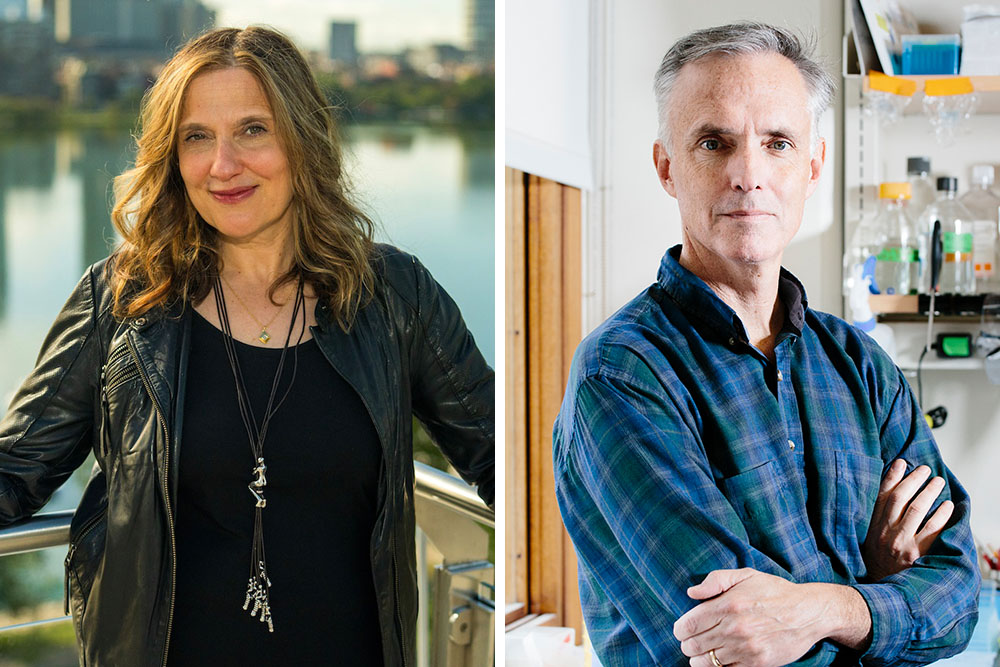
The MIT professors collaborated to identify the first AI-discovered antibiotic, a scientific breakthrough that is widely recognized as a milestone in AI-driven drug discovery.
MIT News · Artificial Intelligence· news.mit.eduOct 30, 2026
MIT professors Adam Berinsky and Chara Podimata discuss a new project to track how AI chatbots are responding to questions about the 2026 U.S. midterm elections.
We use cookies to run the site and, with your consent, for analytics and to show ads.
See our Cookie Policy.