Obesity arises from intertwined and reciprocal diet-microbiome-host pathways that reshape energy balance, insulin sensitivity, and inflammation. This review synthesizes mechanistic links between microbial functions and metabolic control, charts lifestyle-related lifecourse dynamics from birth to older age, examines how...
I. Kalafati, D. Krongauz, Alice Bosco et al.· Obesity Reviews· 0 citations
MMAF-Net is proposed, a multi-branch deep learning architecture that integrates visual, pose-estimation and inertial sensor streams to extract complementary motion features, fused via a temporal attention module to classify 23 karate action types accurately.
Yong Gao, Zhao-Hui Liu· International Journal of e-c...· 0 citations
The findings suggest that AI can meaningfully enhance digital customer experience when it is implemented as a supporting technology built around personalisation, convenience and responsiveness rather than as a replacement for human interaction.
I. Allan, Sankar Singh K· International Journal of Cre...· 0 citations
This chapter looks at how AI techniques including ML, DL, NLP and RL can be used in many fields, such as finance, operations, cybersecurity, and healthcare. It shows how AI makes predictive analytics better, speeds up decision-making, and makes dynamic response systems better while also cutting down on human mistakes a...
G. Vetriselvi, V. Vijaya Kumar, Manasi Vyankatesh Ghamande et al.· Advances in computational in...· 0 citations
Reach audiences
Advertise in front of researchers, engineers, and readers.
Despite the high global prevalence of depressive and anxiety disorders, access to early clinical assessment remains limited for many. Although this field has grown rapidly, existing reviews have focused primarily on technical performance, with limited systematic attention to whether current models meet the prerequisite...
Mădălina Muntean-Codrea, Bogdan Nemeș, H. Coman et al.· Life· 0 citations
In a reproducible dual-stream benchmark, XAI improved discrimination over conventional inference by capturing clinically contextualized, complex nonlinear predictive dependencies and interactions associated with cranial and spinal surgical risk in achondroplasia using preoperative variables.
S. Gholampour, Jesse Huang, Dylan S. Keusch et al.· Annals of Biomedical Enginee...· 0 citations
An architectural approach in which free-form dialogue is turned into a controlled computational workflow: the lifecycle stage determines the AI's goal, the context available to it, and the set of tools it is allowed to use right now. The user describes a task in ordinary language, the assistant translates it into a str...
Mykola Zubii· Zenodo (CERN European Organi...· 0 citations
Artificial intelligence (AI) is transforming photovoltaic (PV) systems from passive generators into self-forecasting, self-diagnosing, and self-optimizing energy assets. This review synthesizes 170 Scopus-indexed documents published between 2020 and 2026 across six technical domains: solar resource and PV power forecas...
R. Senthil, R. Priya, S. Radhakrishnan et al.· Solar· 0 citations
This research proposes a secure, explainable, and context-aware governance framework for blockchain-based digital media contracts in multimodal artificial intelligence-enabled AIoT interactive systems. As digital licensing, NFT copyright management, royalty distribution, and cross-chain content circulation become incre...
Reinforcement learning can support sustainable and resilient urban decision-making when optimization objectives are combined with trustworthy AI principles, and the proposed framework provides a practical basis for accountable AI-based decision-support systems in smart city operations.
Žydrūnas Bautronis, R. Alzbutas· Sustainability· 0 citations
The findings indicate that deep learning, hybrid recommendation models, sequential recommendation approaches, and large language model–based systems significantly enhance recommendation accuracy and personalization in e-commerce environments.
S. G. Kurnia, Muhammad Rizki Perdana, Aldian Yusup· East Asian Journal of Multid...· 0 citations
AI agents can generate code at a scale that’s hard for humans to review line-by-line. PDD Kit helps ensure the code is doing what the developer intended by creating formal specifications and testing against them. It converts developer intent into a Verus specification, proves AI-generated code meets it for every input, and uses tests where proofs aren't practical. Developers review intent, not every line. The post Formally verifying agent-written full-stack web apps with PDD Kit appeared first o…
Research Manager Mike Walker reflects on a career spanning hacker culture, cybersecurity, and AI, sharing lessons about trust, teamwork, leadership, and why solving difficult problems requires curiosity, judgment, agility—and an understanding of the rules. The post Learn the rules: The hacker mindset appeared first on Microsoft Research.
Is your company’s AI sovereign? A practical guide for CIOs on AI vendor lock-in, EU Data Act switching, cloud sovereignty, and testing your exit plan before you need it. The post Sovereignty Is the Option to Leave appeared first on GPT-Lab.
MIT News · Artificial Intelligence· news.mit.eduNov 2, 2026
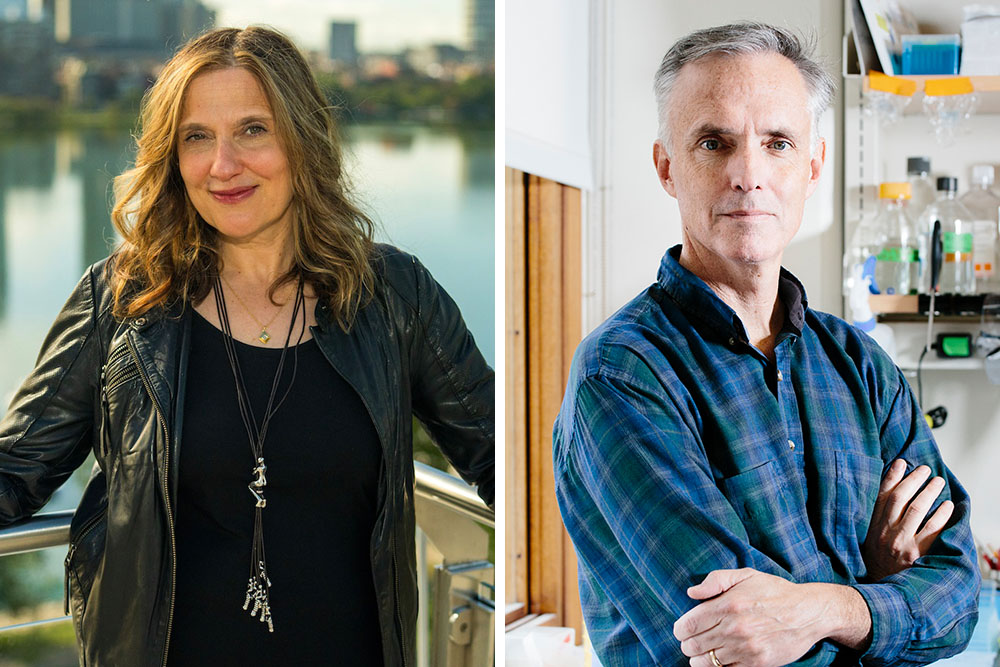
The MIT professors collaborated to identify the first AI-discovered antibiotic, a scientific breakthrough that is widely recognized as a milestone in AI-driven drug discovery.
We use cookies to run the site and, with your consent, for analytics and to show ads.
See our Cookie Policy.