#explainable ai
Aug 2026
Using Explainable AI to Identify Spanish SDOH Keywords
Ane Varela, Arantza Casillas, Maite Oronoz
· Lecture notes in computer sc... · 0 citations
Category
2,878 papers
Abstract Procedural modelling has evolved from a niche computer-graphics technique into an increasingly important infrastructure within computational urbanism, geodesign, 3D GIS, heritage reconstruction, scenario-based planning, and urban digital-twin research. Yet these computational and planning-oriented literatures...
AbstractDebates about artificial consciousness and AI welfare ask whether an artificial system can feel, deserve protection, possess private interests, or bear responsibility. Each question contains a prior pronoun: whose experience, welfare, history, action, and future? For organisms, body, developmental history, and...
FieldMaizeLeaf-8 consists of 3,975 early vegetative maize leaf images collected as a research resource for studies in maize stress classification, computer vision, deep learning, and explainable artificial intelligence. The images were collected from real field conditions in Daudkandi, Cumilla, Bangladesh, and represen...
Reach audiences
Advertise in front of researchers, engineers, and readers.
Artificial intelligence increasingly mediates information through successive transformations involving retrieval, ranking, summarization, synthesis, recommendation, and reuse. These transformations can preserve accurate conclusions while altering the relationships through which those conclusions can be independently ex...
This study examines the relationship between AI-enabled human resource management (HRM) and AI-centric Green HRM (GHRM) and how these capabilities influence sustainable hybrid performance, defined as the integration of productivity, adaptability, and environmentally responsible work practices. The study further investi...
Analysis code for a measurement-validity study of model-derived determinant rankings for childhood stunting, using two harmonized waves of the Indonesia Nutritional Status Survey (SSGI 2022 and SSGI 2024). The code does not develop or validate a deployable prediction model: a gradient-boosted tree is used solely as a m...
Total dataset
The Observational Incompleteness Framework is an AI-based research programme deriving quantum-mechanical structure from the premise that observation is a proper subsystem of a deterministic whole. The archive contains three kinds of content: Technical papers (papers/) — the authoritative technical content, the core pap...
The rapid advancement of artificial intelligence (AI) has transformed decision-making processes across various domains by enabling data-driven insights, predictive capabilities, and intelligent automation. This study aims to examine the development, intellectual structure, and emerging trends of research on AI-based de...
The rapid adoption of artificial intelligence (AI) in education is reshaping how learners access knowledge, receive instruction, are assessed, and are classified by educational institutions. Although AI can expand personalization, accessibility, and educational efficiency, its deployment may also generate new forms of...
An engineering-oriented deployment framework is proposed, integrating modality-driven model selection, structured preprocessing pipelines, multi-level clinical validation, computational feasibility assessment, and explainability, together with a clinical deployment readiness model spanning validation maturity, data div...
AI agents can generate code at a scale that’s hard for humans to review line-by-line. PDD Kit helps ensure the code is doing what the developer intended by creating formal specifications and testing against them. It converts developer intent into a Verus specification, proves AI-generated code meets it for every input, and uses tests where proofs aren't practical. Developers review intent, not every line. The post Formally verifying agent-written full-stack web apps with PDD Kit appeared first o…
Data Mining & Modeling
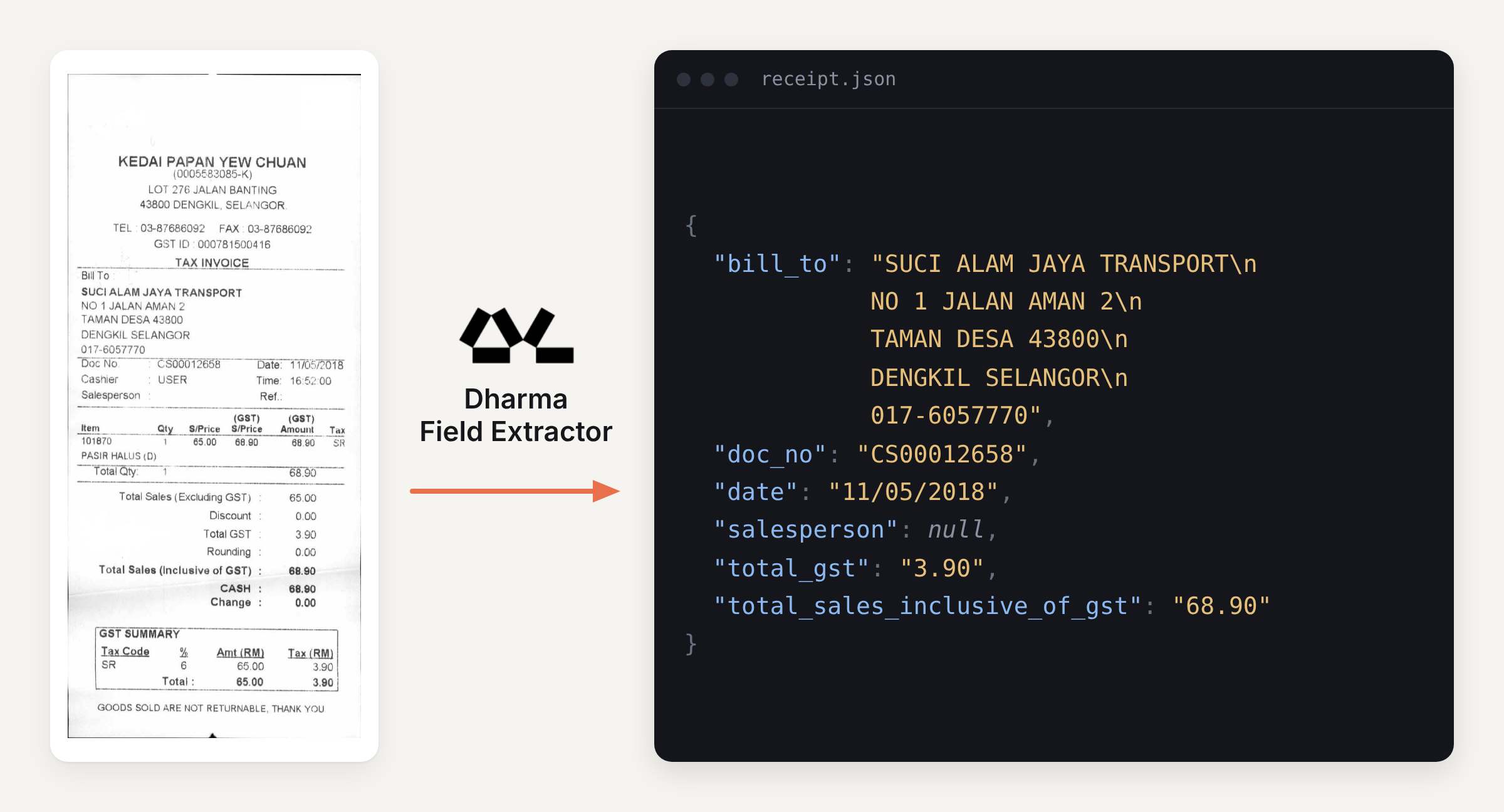
A Blog post by Dharma-AI on Hugging Face
Research Manager Mike Walker reflects on a career spanning hacker culture, cybersecurity, and AI, sharing lessons about trust, teamwork, leadership, and why solving difficult problems requires curiosity, judgment, agility—and an understanding of the rules. The post Learn the rules: The hacker mindset appeared first on Microsoft Research.
 GPT-Lab
· gpt-lab.eu
Nov 3, 2026
Is your company’s AI sovereign? A practical guide for CIOs on AI vendor lock-in, EU Data Act switching, cloud sovereignty, and testing your exit plan before you need it. The post Sovereignty Is the Option to Leave appeared first on GPT-Lab.
The MIT professors collaborated to identify the first AI-discovered antibiotic, a scientific breakthrough that is widely recognized as a milestone in AI-driven drug discovery.
We use cookies to run the site and, with your consent, for analytics and to show ads. See our Cookie Policy.