Mazkur tezis O'zbekiston tijorat banklarida kredit risklarini baholash va boshqarish jarayonini sun'iy intellekt texnologiyalari asosida takomillashtirishga bag'ishlangan. Tadqiqotda kredit portfeli kengayishi sharoitida qarz oluvchining defolt ehtimolini oldindan baholash, an'anaviy skoringni ma'lumotlarga asoslangan...
Umurqulova Rushana Aziz qizi· Zenodo (CERN European Organi...· 0 citations
AI chatbots (such as ChatGPT or Claude) sometimes state false information with confidence, a behavior popularly termed “hallucination.” In their recent perspective, de Boer et al. [1] compared these errors to confabulation in patients with memory disorders, and asked whether ChatGPT needs a psychiatrist. I argue that i...
Tweet For decades, ecology has been very good at explaining the past. We can look at a collapsed fishery, a vanished pollinator population, or a coral reef bleaching event and piece together, after the fact, what went wrong. What ecology has struggled to do, and what it needs to get better at, is predicting these chang...
Pensoft Editorial Team· 0 citations
Reach audiences
Advertise in front of researchers, engineers, and readers.
This chapter establishes that healthcare AI must not be treated as a solved technology. Persistent technical limitations generalisability gaps, explainability deficits, and actionability limitations are structural properties of current ML systems with direct strategic and patient safety consequences. The chapter in...
Plant diseases significantly threaten global food security, necessitating accurate and automated diagnostic systems. This work presents a modular deep learning framework for systematic benchmarking and comparative analysis of multiple architectures using the PlantVillage dataset. The framework integrates pretrained m...
B. Anoop, K. Sujesh, Ramyashree et al.· Discover Applied Sciences· 0 citations
Artificial intelligence agents are no longer limited to producing analyses or answering questions. In some industrial facilities, they examine alarms, search for the causes of a failure, prepare interventions, create work orders and can even act directly on the process. This development promises faster decisions, bette...
Nizar Younes Mqam· Zenodo (CERN European Organi...· 0 citations
Beyond Bulk Grade: Mineral–Flow Accessibility at the Pore Scale This release provides the code, analysis products, and reproducibility materials supporting the manuscript: Chakrawal et al., Beyond Bulk Grade: Mineral–Flow Accessibility Controls Pore-Scale Copper Recovery. Critical-mineral recovery is commonly interpret...
Abstract This paper establishes the grand unified framework of Data Physics and the paradigm of Anticipatory Entropic Coupling. Originating from applied thermal engineering in sub-3nm Direct-to-Chip (D2C) liquid-cooled AI clusters, the model resolves systemic thermal runaway by proving that in extreme-density processin...
Rajmund Olszewski· Zenodo (CERN European Organi...· 0 citations
Medical image segmentation is an important part of healthcare since it lets doctors clearly see anatomical features and diseased areas for diagnosis, therapy planning, and monitoring. CNN works fine with different types of medical images like MRI, CT and ultrasound for segmentizing it precisely. In this chapter all ava...
Artificial intelligence (AI) has been increasingly adopted in wastewater treatment to support soft sensing, effluent prediction, nutrient removal assessment, membrane monitoring, anomaly detection, greenhouse-gas emission modeling, and anaerobic digestion optimization. This critical review synthesizes approximately 5...
Wael S. Al-Rashed· Water Practice & Technol...· 0 citations
This Zenodo record is a permanently preserved version of a PREreview. You can view the complete PREreview at https://prereview.org/reviews/23197372. ## Summary This paper asks whether a language model already represents its memory needs — when to compress history, when to recall earlier evidence — in its hidden state b...
Karmendra Pandey· Zenodo (CERN European Organi...· 0 citations
Assistant Professor Benjamin Lindquist studies how engineers deliberately injected randomness into early AI, giving rise to deep-learning models that sometimes hallucinate.
Microsoft Research Blog· microsoft.comOct 22, 2026
Flint-interactive gives AI agents a language for creating interactive visualizations. Click a chart, filter data, highlight related content, and explore beyond the view the author originally chose. The post Flint-interactive: A language for creating interactive data visualizations appeared first on Microsoft Research.
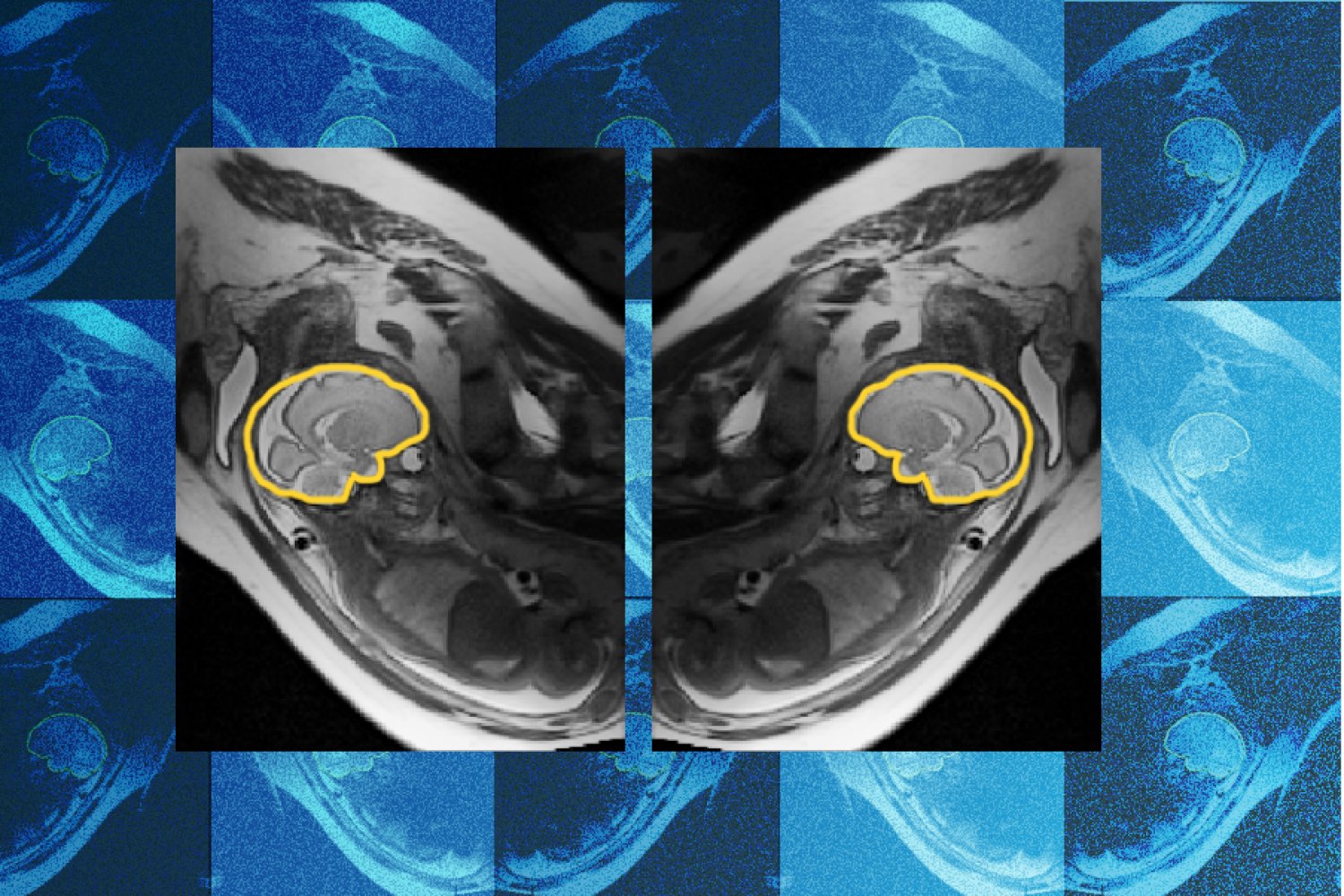
A model developed by researchers at MIT and Boston Children's Hospital adjusts scans on the fly to track fetal movement, potentially sparing families repeat hospital visits.
MIT News · Artificial Intelligence· news.mit.eduOct 18, 2026