PoSFed: stake-aware validator selection and update filtering for blockchain-coordinated healthcare federated learning
Cheng-Shun Lee, Jenn-Jier James Lien
· Scientific Reports · 0 citations
Category
1,892 papers
The El-Rakhawi Grand Theory of Regenerative Cybernetic Infrastructure and Sovereign Computing (DOI: 10.5281/zenodo.23232575) reimagines Information Technology as a **decentralized, edge-intelligent planetary nervous system** operating in cybernetic harmony with human dignity and ecological boundaries. Built on six pill...
Artificial Intelligence has emerged as a pivotal advancement in textile systems, integrating intelligent sensing, wearable computing, IoT, and machine learning applications on smart fabrics for real-time monitoring of object behavior through predictive analytics. The primary areas of application identified in the inves...
The El-Rakhawi Theory of Harmonious Algorithmic Jurisprudence and Sovereign Legal Governance (DOI: 10.5281/zenodo.23239861) bridges Japanese legal AI precision with mathematical certainty, transforming algorithmic jurisprudence from probabilistic simulation into a verifiable cognitive infrastructure. Built on five pill...
Reach audiences
Advertise in front of researchers, engineers, and readers.
The evolution of flexible and stretchable electronics has reshaped traditional textiles into intelligent wearable devices that have benefits such as sensing, communicating, computing, and making decisions in real-time. Currently, e-textile technologies are still disparate, lacking integration of the smart features of e...
The integration of Artificial Intelligence (AI) with cloud computing has emerged as an important research area for developing scalable, intelligent, and automated computing environments. Cloud computing provides on-demand access to computing resources, storage, networking, and software services, while AI and Machine Le...
Code and results for the revised manuscript "Lightweight adaptive split federated learning for patient-independent ECG arrhythmia classification" (Scientific Reports, second revision). Changes since v3.0: All methods re-run with seeds 0 to 5 (previously 0 to 2) under the inter-patient DS1/DS2 protocol of the MIT-BIH Ar...
This chapter examines federated and distributed learning as a foundation for secure, explainable cyber defense. Centralized AI models create privacy risks, single points of failure, and opaque decisions that resist interpretation. The authors combine federated learning with explainable AI techniques, including SHAP, LI...
Financial statement fraud causes systemic damage to U.S. capital markets, investor confidence, and the credibility of public company disclosures. Artificial intelligence (AI) offers promising new detection capabilities, yet its evidence base and operational readiness remain unevenly developed across the literature. Thi...
Federated learning enables cross-institutional clinical-genetics analytics without sharing raw patient data; yet, no existing framework integrates the full cryptographic stack–differential privacy, homomorphic encryption, and blockchain auditing—required for regulatory deployment. Here, we present FFT-GA-BC, a secure-b...
To investigate how blockchain technology can improve the reliability, speed and legality of federated learning, this paper concentrates on the process of model combination in federated learning. By dealing with the problems of single vulnerable points and insufficient trust in centralized combination, the paper compreh...
CONCRETE, SCIENTIFIC AND INTEGRATIVE EDUCATIONA Proposal for Reorganizing Learning Based on Reality, Investigation, Demonstration, Science, Territory, and the Integration of Knowledge Author: Cláudio Vicente da SilvaLocation: Londrina, Paraná, BrazilDate: October 8, 2026 DESCRIPTION This work presents a proposal for th...
A new machine-learning approach broke records for weather forecasting for an important time frame in emergency planning.
Learn how Google DeepMind and GovTech Singapore uses lightweight on-device Gemma models to intercept conversational scams in private chats with zero cloud data egress.
Machine-learning networks can learn without detailed instructions from a designer. Those that do may offer insight into how the brain reorganizes itself during learning.
Learn more about our approach to safety and security for Gemini 4 Argon.
StudentSim is a research system for evaluating and improving AI tutoring tools before they are tested with learners. It models how individuals may engage with tutors, giving feedback to improve tutor performance across subjects like chess, writing, and mathematics. The post Simulating student learning for better AI tutoring appeared first on Microsoft Research.
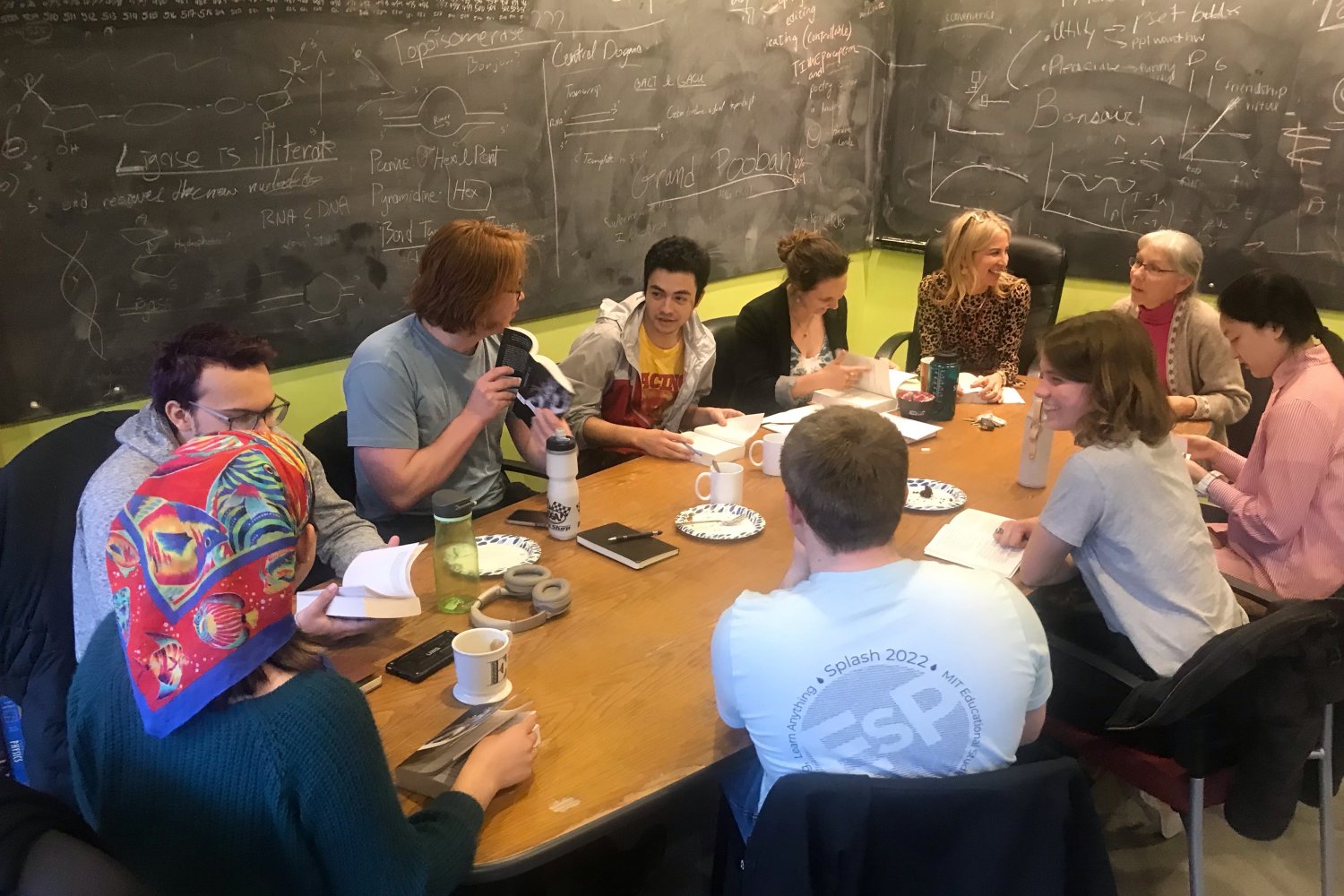
Students in MIT’s Concourse program delve deeply into the human condition, debate challenging questions, and learn to develop judgment about issues that can’t be quantified.
We use cookies to run the site and, with your consent, for analytics and to show ads. See our Cookie Policy.