A federated learning framework for Non-IID data : data feature optimization and personalization strategy
Linhai Nie, Jin Wang, Naixuan Hu
· Scientific Reports · 0 citations
 AI Networking Cookbook: Practical recipes for AI-assisted network automation and development
Category
1,892 papers
medchain v0.1.35 (2026-10-08) First public release. medchain implements reputation-driven, committee-consensus federated learning for trustworthy healthcare blockchains. This release finalises the v0.1.34 freeze candidate by completing the author and repository metadata and adding the release date required for archivin...
This chapter discusses ways decentralized metaverse classrooms promote inclusive, collaborative and learner-centered education at the same time bringing out challenges of accessibility, privacy, governance and equity. Based on contemporary literature on immersive learning, digital transformation and decentralized educa...
Conversational Large Language Model (LLM) agents, deployed quickly, have exposed unprecedented opportunities for personal information, from health data to financial information, to biometric identifiers. This critical enlightenment review investigates general privacy dangers in each of five areas: data leakage and memo...
Reach audiences
Advertise in front of researchers, engineers, and readers.
Chronic diseases such as cardiovascular disorders, diabetes, respiratory illnesses, neurological conditions, and sleep disorders require early diagnosis to improve patient outcomes and reduce healthcare costs. Recent advances in Artificial Intelligence (AI), wearable sensors, and the Internet of Medical Things (IoMT) h...
Smart textiles integrated with advanced biosignal processing technologies are transforming healthcare by enabling continuous, real-time, and non-invasive monitoring through wearable systems. These wearable platforms continuously acquire and analyze physiological signals such as ECG, EMG, EEG, respiration, body temperat...
This paper proposes VGCR-FL, a method that speeds up federated learning by filtering out client updates that deviate strongly from the rest of the cohort. The filter uses a threshold that adapts each round, plus a check on whether the update points in the same direction as the cohort. This keeps useful updates from min...
The El-Rakhawi Doctrine of Self-Governing Ubiquitous Systems presents a unified normative-theoretical framework addressing the critical gap between rapidly evolving autonomous computing technologies and inadequate legal governance structures. As ubiquitous systems transition from passive instruments to self-governing a...
The El-Rakhawi Sovereign Protocol (ERSP) (DOI: 10.5281/zenodo.23235007) is an open scientific-technical specification designed to build ethically guaranteed, ecologically sustainable, and human-centric digital systems. Analogous to TCP/IP, the ERSP provides a unified five-layer architecture for digital integrity: (1) S...
This chapter, per the authors, introduces the Decentralized Skill Exchange Network (DSEN), a unified sociotechnical framework reconstituting peer-mediated learning on Web3 foundations. Centralized learning platforms consolidate credential authority, behavioral data, and recommendation logic within single institutional...
Adds the analysis, audit and figure scripts and verified result tables (analysis/). Training notebook unchanged.
A new machine-learning approach broke records for weather forecasting for an important time frame in emergency planning.
Learn how Google DeepMind and GovTech Singapore uses lightweight on-device Gemma models to intercept conversational scams in private chats with zero cloud data egress.
Machine-learning networks can learn without detailed instructions from a designer. Those that do may offer insight into how the brain reorganizes itself during learning.
Learn more about our approach to safety and security for Gemini 4 Argon.
StudentSim is a research system for evaluating and improving AI tutoring tools before they are tested with learners. It models how individuals may engage with tutors, giving feedback to improve tutor performance across subjects like chess, writing, and mathematics. The post Simulating student learning for better AI tutoring appeared first on Microsoft Research.
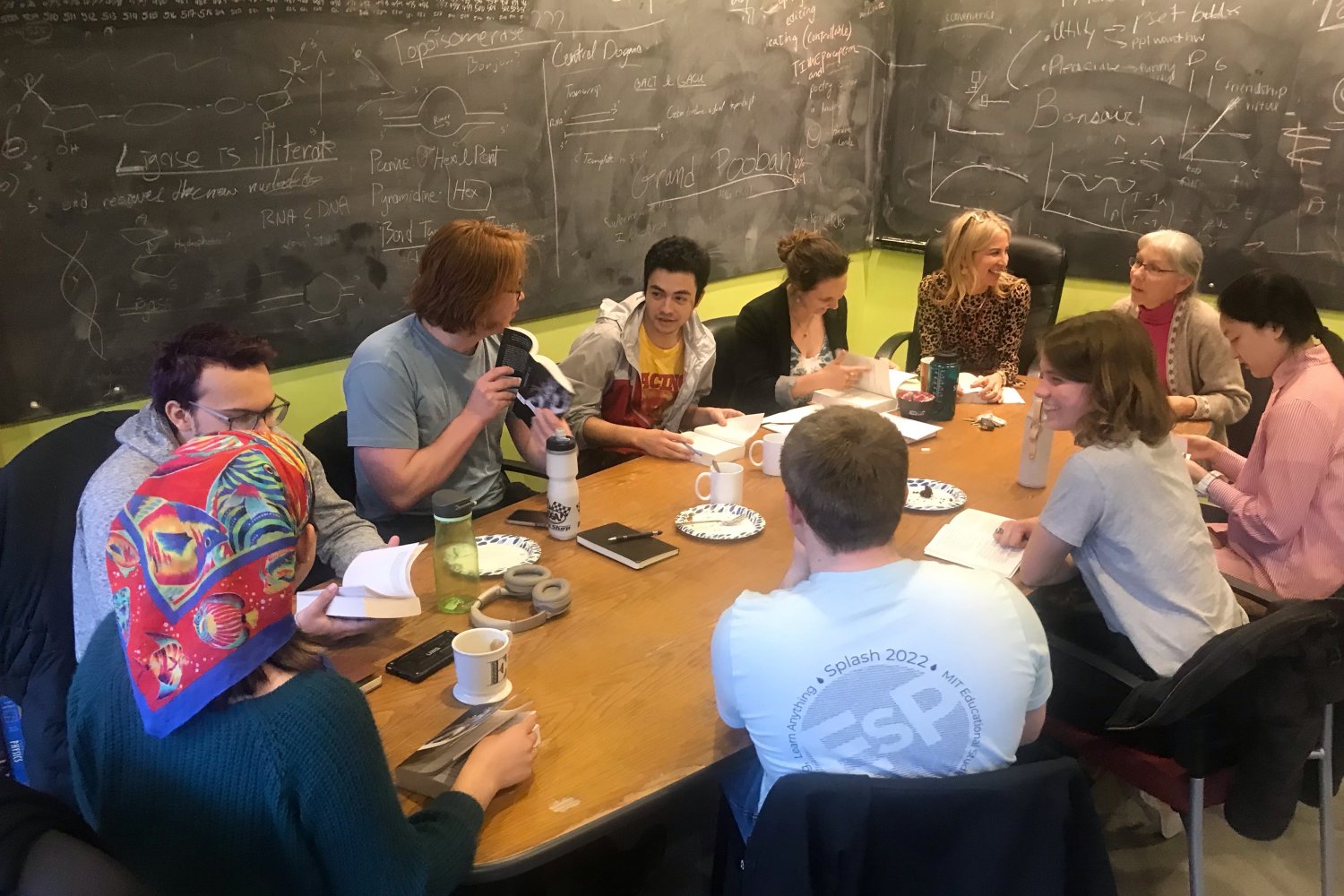
Students in MIT’s Concourse program delve deeply into the human condition, debate challenging questions, and learn to develop judgment about issues that can’t be quantified.
We use cookies to run the site and, with your consent, for analytics and to show ads. See our Cookie Policy.