Tools that use large language models (LLMs) to flag security problems in code must also explain them: which requirement is violated, and how to fix it. These explanations are only useful if they cite the right authoritative source. The common way to supply that source is vector retrieval-augmented generation (RAG), whi...
Mohammad Abdur Rehman Cheema· Zenodo (CERN European Organi...· 0 citations
Purpose This paper examines the ethical and epistemological implications of language generated by large language models (LLMs) through the lenses of speech act theory, conversational implicature and second-order cybernetics. LLMs are often presented as neutral tools, yet their outputs actively participate in shaping di...
Marko Kardum, Ines Skelac· Kybernetes· 0 citations
Promotional language in scientific and institutional documents is usually dismissed as individual failing or passing fashion. Using Bourdieu's field theory, the Sociology of Expectations and Bacchi's problem representation, we argue instead that it reflects scientific documents' structural position and institutional do...
Alessandro Zini, Alessandro Peloso, A. Giocoli et al.· Energy Research & Social Sci...· 0 citations
Recent advances in articial intelligence (AI), particularly large language models, havesignicantly improved performance in language understanding, vision, and reasoning. How-ever, a fundamental limitation remains: current AI systems still lack an explicit under-standing of the logical structure by which humans make dec...
kazutaka hayashi· 0 citations
Reach audiences
Advertise in front of researchers, engineers, and readers.
Modern condition-monitoring systems generate heterogeneous information, such as high-rate sensor streams, derived health indicators, and discrete event histories, that must be combined into actionable diagnostic statements. Large language models (LLMs) are attractive as a decision-level fusion mechanism because they na...
Agus Hasan· Mechanical systems and signa...· 0 citations
PESTO (Prior Evidence Status from Text and Ontologies) classifies the prior evidence for a gene–phenotype association as Novel, Hypothesized, Existing or Established, from the PubMed literature read by a language model and, separately, from the Open Targets Platform. This record accompanies the manuscript Large languag...
Jeremy Guez, Chiara Auwerx, Wenhan Lu et al.· Zenodo (CERN European Organi...· 0 citations
PESTO (Prior Evidence Status from Text and Ontologies) classifies the prior evidence for a gene–phenotype association as Novel, Hypothesized, Existing or Established, from the PubMed literature read by a language model and, separately, from the Open Targets Platform. This record accompanies the manuscript Large languag...
Jeremy Guez, Chiara Auwerx, Wenhan Lu et al.· Zenodo (CERN European Organi...· 0 citations
Large language models (LLMs) are increasingly being deployed in distributed settings, where different nodes may work on heterogeneous data, user populations, and local model updates. In such settings, bias can arise in an emergent fashion via local interactions and spread over the connected nodes, turning fairness into...
K. J. Sahana Devi, Nishant Tripathi, S. Santhosh Kumar et al.· Scientific Reports· 0 citations
Large-scale surveys often use cognitive test total scores to describe group differences, but the construct meaning of such scores depends on task content, administration, language experience, and opportunities to learn. The China Family Panel Studies (CFPS) word test is an oral Mandarin character reading task with educ...
Man-Hong Xing, Jin-Kai Zhang, Gina S. Rhee· Journal of Intelligence· 0 citations
"Consciousness" is a collective word. Process-Identity Theory (PIT, "Erleben = Verarbeitung") sets one axiom — experience is processing, the same thing under two names — and five definitions, and derives forty propositions from them. They separate four things that can be measured apart: whether a system experiences (ho...
Werner Baumgarten· Zenodo (CERN European Organi...· 0 citations
ABSTRACT
The availability of Biology teaching materials that connect biodiversity concepts with the potential of the surrounding environment remains a need for contextual learning in senior high schools. This study aimed to develop a Biology teaching module based on the purun plant using a Deep Learning approach for bi...
Shopia Rahmawati, Nuri Dewi Muldayanti, Ahmad Faisal Amri· SCIENCE Jurnal Inovasi Pendi...· 0 citations
Abstract This search strategy represents a hybrid methodology combining Artificial Intelligence (AI) semantic retrieval and database validation. Initially, Large Language Models (LLMs)-specifically OpenAI's ChatGPT and Google's Gemini-were queried using standardized natural language prompts focused on the intersection...
A new computational approach reveals how cells communicate to assemble into tissues. This could accelerate stem cell engineering, improve disease models, and inform therapies.
Microsoft Research Blog· microsoft.comOct 15, 2026
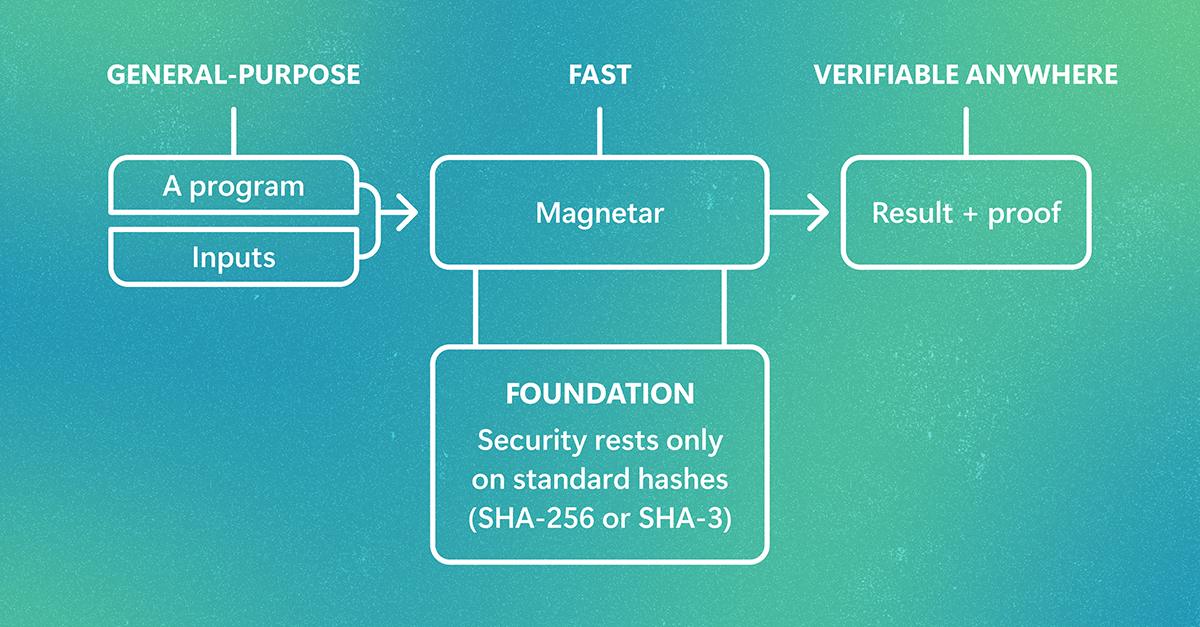
Zero-knowledge proofs can verify computing results without rerunning workloads or exposing sensitive data. Magnetar helps bring them into the mainstream with support for standard programming languages, major speed gains, and quantum-resistant security. The post Proof-based general-purpose computing with Magnetar appeared first on Microsoft Research.
Learn how Google DeepMind and GovTech Singapore uses lightweight on-device Gemma models to intercept conversational scams in private chats with zero cloud data egress.