A Mixture of Multicenter Experts (MoME) framework to address AI bias in the medical domain without requiring data sharing across institutions is proposed and validated using a multimodal target volume delineation model for prostate cancer radiotherapy.
Yujin Oh, Sangjoon Park, Xiang Li et al.· 0 citations
This work revisits this design choice and proposes a sub-center modeling framework for speaker embeddings, which improves intelligibility, increases pitch variability, achieves higher naturalness ratings, and retains strong speaker verification performance in zero-shot voice conversion.
Ismail Rasim Ulgen, J. Hansen, Carlos Busso et al.· 0 citations
These findings position ES as a distinct reasoning post-training paradigm rather than a less effective, memory-efficient alternative to GRPO, and study how hyperparameter design affects the effectiveness of ES, demonstrating that ES requires a smaller population size in a larger LLM.
Yunpeng Ba, Zhi Zheng, Yue Xie et al.· 0 citations
This work builds a test bench on 892 yield response curves from two long running UK experiments, and sweeps the nitrogen to grain price ratio to cover all price scenarios, finding that machine learning fails as a predictor and pays as a profit scored correction to standard advice.
Xulong Wang, Populasi Yang· 0 citations
Reach audiences
Advertise in front of researchers, engineers, and readers.
A neural regression model (LitEm) that enables transductive knowledge graph embedding models to predict numerical attributes within knowledge graphs and a co-training framework that jointly trains state-of-the-art transductive knowledge graph embedding models with LitEm, which improves link prediction performance mainly for bilinear models and simultaneously enables them to predict numerical attributes.
Rupesh Sapkota, Louis Mozart Kamdem Teyou, Moshood Yekini et al.· 0 citations
ContourKV, a training-free allocator built from the dropped-mass statistic, wins $93$ of $160$ paired comparisons against that state of the art and loses $22$ at the byte count of the budget-enforcing baselines, and it ties the strongest of them.
Latent world models plan by predicting how candidate actions advance learned latent dynamics. In self-predictive models, however, the encoder and predictor are optimized jointly and can co-adapt to latent transitions that are easy to predict but weakly constrained by the physical evolution of the scene. We introduce the cross-predictive JEPA (JEPA-x), which grounds latent dynamics in privileged physical trajectories. JEPA-x treats visual observations and physical states as corresponding views of the same action-conditioned trajectory, advances both through a shared predictor, and matches each prediction to the future representations of both modalities. This encourages the action-conditioned predictor to learn a common transition rule across the two views. Privileged physical state is used only during training, leaving a visual-only model at deployment. Empirical results show that JEPA-x reduces the rollout drift of a newly fitted predictor from $0.361$ to $0.104$ and increases mean control success from $53.6\%$ to $78.2\%$ on a multi-task suite spanning six evaluation subfamilies. We additionally show that direct physical-state regression improves decodability without improving forecastability or control, indicating that the benefit comes from shaping latent dynamics rather than merely encoding physical variables.
Kehan Wen, Ziming Li, Siyuan Luo et al.· 0 citations
Full-length RNAs, particularly messenger RNAs, often exceed the context lengths used to pretrain existing RNA foundation models, limiting complete-transcript modeling at single-nucleotide resolution. We present RIBOSPAN, a 1.61-billion-parameter bidirectional RNA foundation model natively pretrained with context lengths up to 10,240 nt. RIBOSPAN combines dense bidirectional self-attention, single-nucleotide tokenization, and attention-isolated sequence packing to enable high-resolution modeling of complete long RNAs. Native 10K pretraining preserves strong reconstruction at 10,240 tokens and, in a controlled long-context benchmark, maintains strong contextual responsiveness and context-specific representation separation while keeping perturbation-induced changes highly localized. Inference-time YaRN scaling recovers much of the contextual organization lost by direct short-context extrapolation, but induces substantially greater distal representation diffusion. Frozen RNA-type evaluations show that RIBOSPAN learns state-of-the-art RNA representations, with a particularly clear advantage on long RNAs. Across downstream biological benchmarks, RIBOSPAN emerges as the strongest encoder-only RNA foundation model, achieving state-of-the-art performance in both full-transcript biological property prediction and zero-shot mutation-fitness modeling. Building on the same backbone, we develop a multidimensionally conditioned discrete-diffusion framework for full-length mRNA generation and redesign, including synonymous-codon diffusion for protein-preserving CDS optimization. Together, RIBOSPAN establishes a powerful long-context foundation for transferable RNA representation learning, biological prediction, and full-transcript mRNA design.
Ziyuan Wang, Bohao Tang, Fei Zhang et al.· 0 citations
Deep-learning efforts have increasingly shifted toward foundation model approaches. In experimental physics, this allows models and learned representations to be reused beyond the experiments in which they were developed. This work evaluates the reusability of representations across experiments and detector systems using probes on frozen encoders. These probes reveal task-relevant structure before downstream adaptation, complementing fine-tuning. Together with random-weight controls, they distinguish contributions from architecture and encoder training that downstream performance alone cannot resolve. Time projection chamber (TPC) data provide a useful testbed because events from TPC systems can be represented as variable-length sparse tensors, while detector geometries, event topologies, and scientific tasks can differ substantially. We investigate whether fixed-dimensional TPC event representations can be reused across classification tasks, experiments, and detector systems. Sparse ResNet and PointNet-style encoders produce 512-dimensional embeddings for four datasets from the GADGET II TPC and AT-TPC. Randomly initialized encoders isolate the contribution from architecture before supervised training. We then train each encoder on a classification task, freeze its parameters, and train a linear or nonlinear probe for each downstream task. We find that this architecture-induced structure remains useful across experiments and detector systems. The randomly initialized PointNet-style representation is highly informative on several tasks. The two architectures organize their embedding spaces differently, but neither exhibits a large, systematic loss of utility cross-detector. These results show that architecture is a major source of task-relevant structure in TPC embeddings and should be treated explicitly when assessing representation learning and developing reusable detector models.
T. Wheeler, M. Kuchera, R. Ramanujan et al.· 0 citations
This work revisits client drift from a novel frequency-domain perspective and uncovers a critical Spectral Bias of Drift: inter-client gradient divergence is predominantly concentrated in low-frequency components which encode client-specific distributional shifts, while high-frequency components representing fine-grained features remain relatively consistent.
Liyang Yuan, Yibo Yang, Dandan Guo et al.· 0 citations
OBJECTIVE
Interpretable brain-computer interface classifiers that generalize across subjects without calibration remain an open challenge. We evaluated whether prototype-based cross-attention can provide competitive, inherently interpretable event-related potential (ERP) classification across diverse paradigms under deployment-compatible conditions.
APPROACH
We propose ERP-XTTN (ERP Cross-Attention), a cross-attention architecture that routes input electroencephalographic peaks to fixed difference-wave prototypes via query-key-only cross-attention with no value projection. Classification is based directly on prototype similarity and a separate measure of component amplitude, so that the prototype content contributes to every decision by construction. Prototypes are derived automatically from prominent extrema in the training-fold grand-average difference wave. We evaluated across three public sources (BNCI Horizon 2020, HRI Cursor, and ERP CORE) encompassing eight ERP components (ERN, LRP, ErrP, N170, P300, N2pc, MMN, N400). Evaluations used leave-one-subject-out (LOSO) cross-validation with causal filtering at a three-channel montage, compared against EEGNet, EEG-Deformer, ERP Prototypical Matching Net (EPMN), and xDAWN with Riemannian geometry (xDAWN+RG).
MAIN RESULTS
At three channels, the mean performance gap between the best baseline and ERP-XTTN was 0.025 area under the receiver operating characteristic curve (AUROC). Prototype interventions confirmed that decisions depend on the physiological content of the prototypes rather than on the routing attention pattern alone. False positives morphologically resembled true positives more than true negatives did across all datasets, indicating classification errors are neurophysiologically explicable.
SIGNIFICANCE
ERP-XTTN generalizes across diverse ERP morphologies under causal, calibration-free conditions, while retaining competitive performance and decisions that depend directly on physiological prototype content at a three-channel montage. Unlike post-hoc explanation methods for black-box models, the basis of each decision is directly observable in the trained model itself. To our knowledge, this is the first epoch-level LOSO benchmark on ERP CORE.
Charlotte Genevier Wyman, L. Hirshfield· Journal of Neural Engineerin...· 0 citations
This work presents the first model extraction attack specifically designed for graph classification under strict black-box constraints, which uses model explanation outputs to guide Monte Carlo edge sensitivity estimation toward decision boundaries, with Hoeffding concentration guarantees on estimation accuracy.
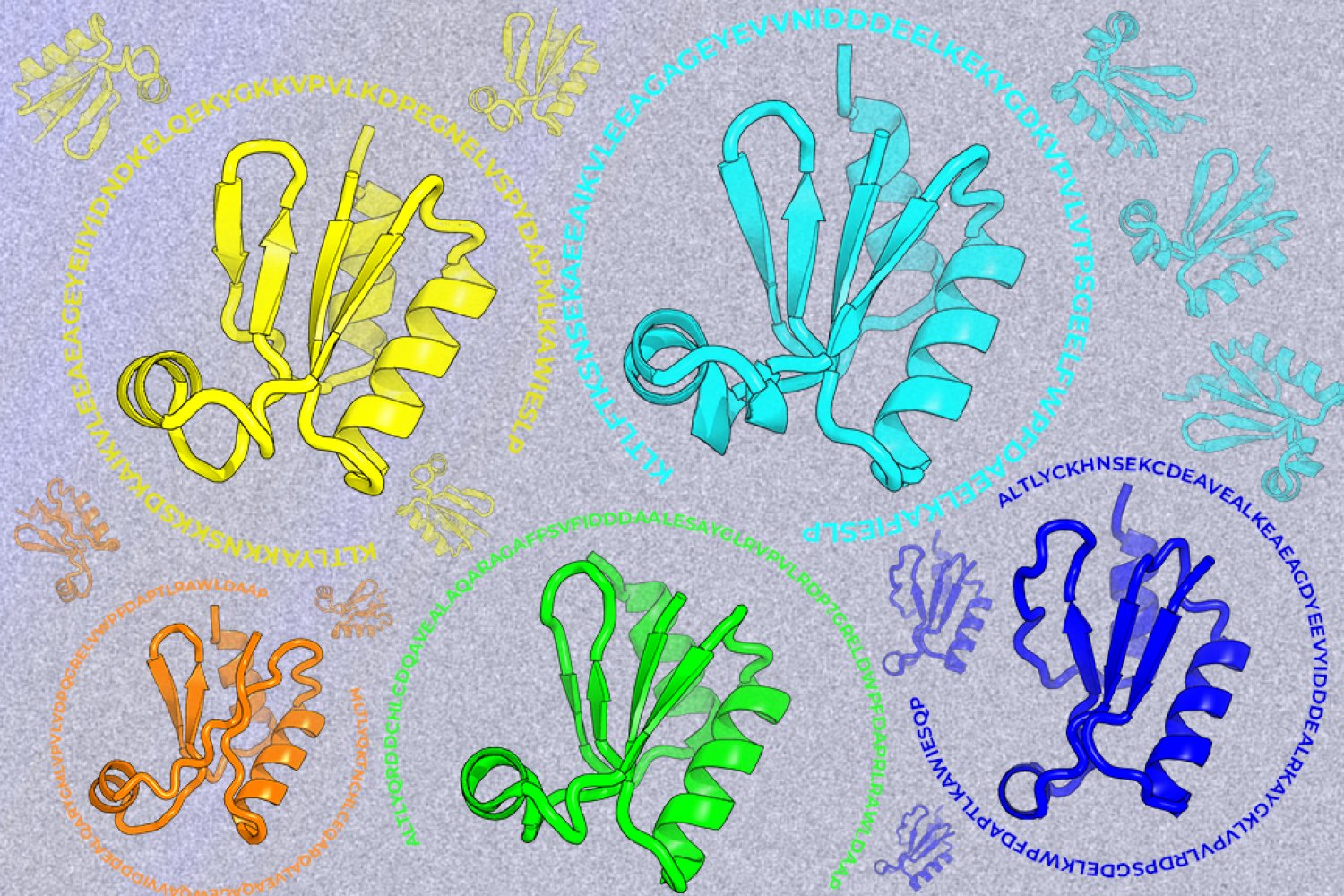
A new machine-learning framework aims to improve the success rate of computational protein design while moving away from results that reproduce sequences found in nature.
MIT News · Artificial Intelligence· news.mit.eduAug 24, 2026
A new method for surgically removing training examples from a model reveals that as datasets grow, the link between what a model learns and what it produces dissolves.