This work investigates MRI-based Microbial Density Stratification as a patient-level representation learning task, and Center Heatmap-driven Macro-micro modeling Network (CHM-Net) is introduced for this task, establishing the link between imaging phenotypes and microbial states through center heatmap-guided small-lesion response localization.
Jiaming Liang, Hao Chen, Ting Li et al.· 0 citations
Reinforcement learning (RL) post-training for large language models (LLMs) follows a efficient paradigm of "rollout then update", which inevitably results in off-policy training data. To resolve this, Importance sampling (IS) is proposed, while the token-level ratios compound over long sequences, causing severe variance exploded. A natural idea is "transferring" these off-policy token into on-policy token, so that the importance scores for correction are unnecessary. Following this idea, we propose Selective Importance Sampling (SIS), which is inspired by rejection sampling. Concretely, SIS implements by viewing off-policy model as proposal distribution, and implement a token-level rejection test: accepted tokens are viewed as on-policy, so that receive unit importance score, while rejected tokens retain the standard IS correction. Our proposed SIS is theoretically proved reducing the gap between token-level and sequence-level off-policy gradient estimators. The SIS acts as a plug-in that only modifies the importance ratio in the policy loss, adding negligible wall-clock overhead, and can be combine with a vast vary of RL post-training algorithms. Experiments on dense and MoE LLMs across math and agent benchmarks show that SIS consistently improves all objectives, while providing substantially stronger robustness under off-policy data.
Neural operators are increasingly used to warm-start Newton solvers for nonlinear PDEs, on the premise that a low test error places the initial guess inside the basin of attraction. We show that this premise is unreliable. An operator trained to the relative \(L^2\) error \(O(10^{-3})\) can still produce an initial state in which the discrete Jacobian is indefinite, because the mean-squared training controls error on average while leaving localized pointwise violations of the underlying physics. For a nearly incompressible hyperelasticity problem, we trace this to the predicted volume change: the operator disperses \(\mathrm{det} F\) well away from one, and the resulting Jacobian acquires negative eigenvalues even when the predicted field is visually indistinguishable from the reference. At a small scale, this is a nuisance; at a multi-million degree-of-freedom scale, it is disqualifying, since the conjugate gradient and other Krylov solvers needed for memory-feasible Newton steps assume a definite spectrum. We then show that a short, label-free fine-tuning phase -- penalizing the operator against the discrete energy, with no additional solution data -- shifts the Jacobian spectrum back to positive definite. Combined with an inexact outer loop, this gives a warm-started Newton method that converges across the full loading range where the unregularized operator fails, reaching up to 5.4\(\times\) wall-clock speedup over incremental continuation on a 3D problem with 6.4 million degrees of freedom.
Jaemin Oh, Youngkyu Lee, Jerome Darbon et al.· 0 citations
SEAM is presented, a shortcut-aware framework for real-time scriptedness detection that combines uniform preprocessing, seam-aware sampling, non-speech augmentation, and a compact DistilHuBERT backbone that demonstrates that robust real-time scriptedness detection depends not only on the backbone, but on shortcut-aware data design and evaluation.
Distilling Bayesian Layers into a pretrained 340M Gated DeltaNet improves RULER long-context retrieval over a matched-compute control, and improves robustness beyond the training regime in controlled collision studies, learned associative recall, and the Zoology MQAR benchmark.
Matthew Dowling, H. Jeon, Cristina Savin et al.· arXiv.org· 0 citations
A framework that dynamically splits neural network layers across the heterogeneous continuum and achieves reductions in energy and end-to-end latency is proposed, confirming the superiority of adaptive to static partitioning.
Akuen Akoi Deng, Eimantas Butkus, Alfreds Lapkovskis et al.· Lecture Notes in Computer Sc...· 0 citations
Nonlinear GENERIC-Embedded Neural Networks (N-GENNs) is introduced, a deep learning framework for discovering evolution equations of systems governed by the nonlinear GENERIC formalism, and its ability to accurately infer thermodynamically consistent models from data for systems incorporating both conservative and nonlinear dissipative dynamics is demonstrated.
Vojtěch Votruba, Zequn He, Weilun Qiu et al.· Computer Methods in Applied...· 1 citation
This paper identifies two different routes through which models can acquire geometrically separable features: they can learn them from complementary co-occurrence signals in general language data, including text-number co-occurrence and cross-number interaction, or from multi-token addition problems.
A lightweight debiasing framework for pretrained transformer-based encoders that improves prediction fairness while preserving task performance and reduces sensitive-attribute attacker accuracy, improves fairness metrics such as demographic parity difference and equalized odds, and maintains competitive task performance.
Qiaoyue Tang, Sepidehsadat Hosseini, Mengyao Zhai et al.· 0 citations
SegWithU is a post-hoc framework that augments a frozen pretrained segmentation backbone with a lightweight uncertainty head and models uncertainty as perturbation energy in a compact probe space using rank-1 posterior probes, suggesting that perturbation-based uncertainty modeling is an effective and practical route to reliability-aware medical segmentation.
Tianhao Fu, Austin Wang, Charles D. Chen et al.· arXiv.org· 0 citations
Comparing human narrative engagement with model attention mechanisms suggests explanations for degraded narrative comprehension and targets for future development.
Rebecca M. M. Hicke, Sil Hamilton, David Mimno et al.· arXiv.org· 0 citations
It is found that the original safety alignment of the underlying LLM is not consistently preserved in current unified models, and open-source UMLMs exhibit much lower safety performance than multimodal large models specialized for either generation or understanding tasks, particularly on the generation side.
Zi Peng, Yongxiu Xu, Qinyi Zhang et al.· arXiv.org· 0 citations
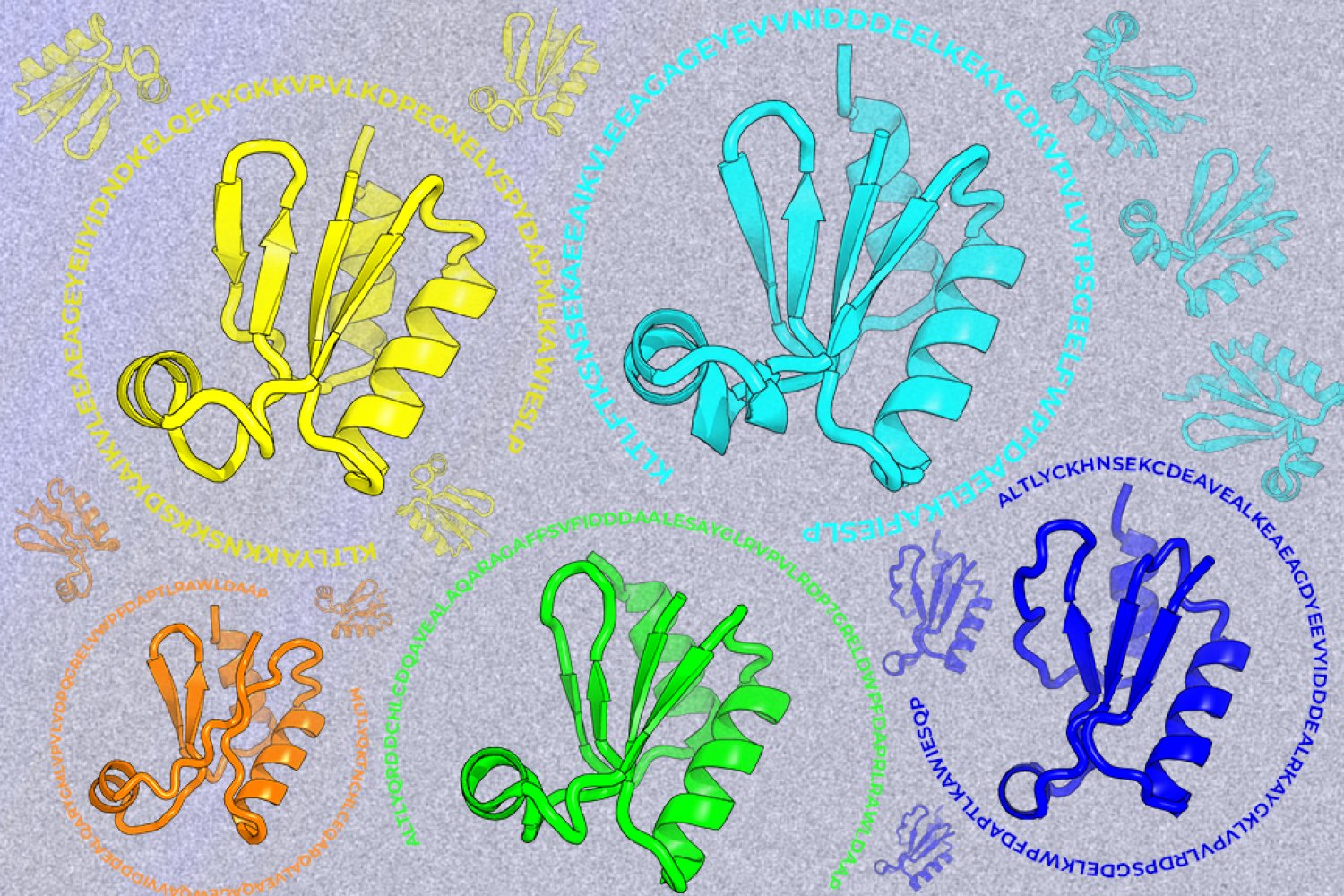
A new machine-learning framework aims to improve the success rate of computational protein design while moving away from results that reproduce sequences found in nature.
MIT News · Artificial Intelligence· news.mit.eduAug 24, 2026
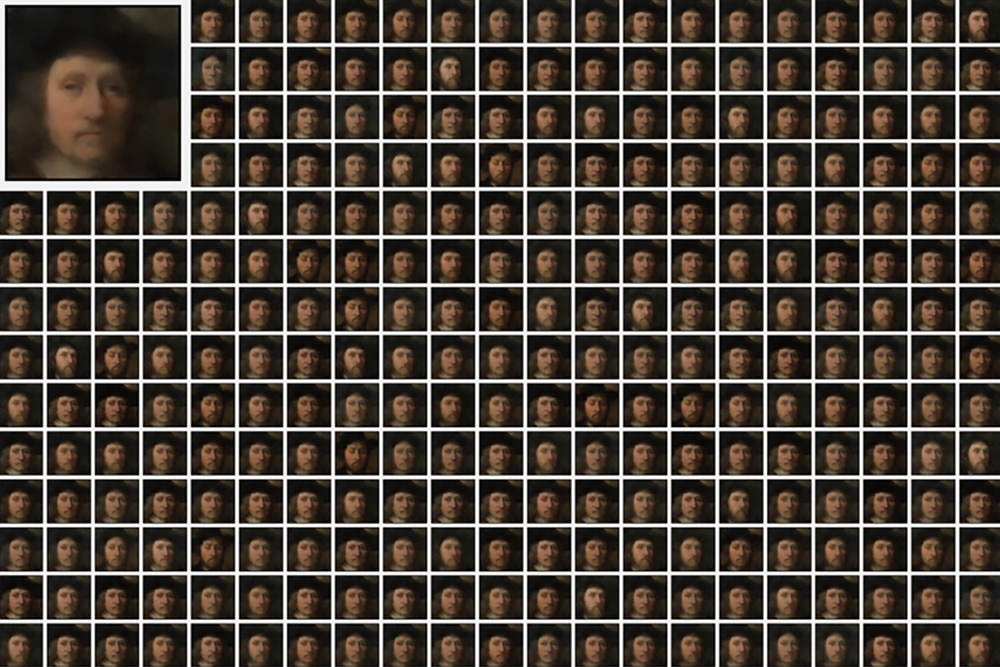
A new method for surgically removing training examples from a model reveals that as datasets grow, the link between what a model learns and what it produces dissolves.