Comparing diffusion and rectified flow objectives within the MotionGPT3 framework suggests that several known benefits of rectified flow objectives do extend to continuous-latent text-to-motion generation, highlighting the importance of the training objective choice in motion priors.
Jaymin Ban, J. Jeon, Sang-jun Jeong· arXiv.org· 1 citation
Self-distillation has emerged as an effective post-training paradigm for LLMs, often improving performance while shortening reasoning traces. However, in mathematical reasoning, we find that it can reduce response length while degrading performance. We trace this degradation to the suppression of epistemic verbalization - the model's expression of uncertainty during reasoning. Through controlled experiments varying conditioning context richness and task coverage, we show that conditioning the teacher on rich information suppresses uncertainty expression, enabling rapid in-domain optimization with limited task coverage but harming OOD performance, where unseen problems benefit from expressing uncertainty and adjusting accordingly. Across Qwen3-1.7B/8B, DeepSeek-Distill-Qwen-7B, and Olmo3-7B-Instruct, we observe performance drops of up to 40%. Our findings highlight that exposing appropriate levels of uncertainty is crucial for robust reasoning and underscore the importance of optimizing reasoning behavior beyond merely reinforcing correct answer traces.
Jeonghye Kim, Xufang Luo, Minbeom Kim et al.· 0 citations
Quantum measurements are the means by which we recover messages encoded into quantum states. They are at the forefront of quantum hypothesis testing, wherein the goal is to perform an optimal measurement for arriving at a correct conclusion. Mathematically, a measurement operator is Hermitian with eigenvalues in [0,1]. By noticing that this constraint on each eigenvalue is the same as that imposed on fermions by the Pauli exclusion principle, we interpret every eigenmode of a measurement operator as an independent effective fermionic mode. Under this perspective, various objective functions in quantum hypothesis testing can be viewed as the total expected energy associated with these fermionic occupation numbers. By instead fixing a temperature and minimizing the total expected fermionic free energy, we find that optimal measurements for these modified objective functions are Fermi-Dirac thermal measurements, wherein their eigenvalues are specified by Fermi-Dirac distributions. In the low-temperature limit, their performance closely approximates that of optimal measurements for quantum hypothesis testing, and we show that their parameters can be learned by classical or hybrid quantum-classical optimization algorithms. This leads to a new quantum machine-learning model, termed Fermi-Dirac machines, consisting of parameterized Fermi-Dirac thermal measurements-an alternative to quantum Boltzmann machines based on thermal states. Beyond hypothesis testing, we show how general semidefinite optimization problems can be solved using this approach, leading to a novel paradigm for semidefinite optimization on quantum computers, in which the goal is to implement thermal measurements rather than prepare thermal states. Finally, we propose quantum algorithms for implementing Fermi-Dirac thermal measurements, and we also propose second-order hybrid quantum-classical optimization algorithms.
Large language models (LLMs) process and predict sequences containing text to answer questions, and address tasks including document summarization, providing recommendations, writing software and solving quantitative problems. We provide a mathematical framework for LLMs by describing the encoding of text sequences into sequences of tokens, defining the architecture for next-token prediction models, explaining how these models are learned from data, and demonstrating how they are deployed to address a variety of tasks. The mathematical sophistication required to understand this material is not high, and relies on straightforward ideas from information theory, probability and optimization. Nonetheless, the combination of ideas resting on these different components from the mathematical sciences yields a complex algorithmic structure; and this algorithmic structure has demonstrated remarkable empirical successes. The mathematical framework established here provides a platform from which it is possible to formulate and address questions concerning the accuracy, efficiency and robustness of the algorithms that constitute LLMs. The framework also suggests directions for development of modified and new methodologies.
Ricardo Baptista, Andrew Stuart, Son Tran· 0 citations
Reach audiences
Advertise in front of researchers, engineers, and readers.
This work introduces SparsePixels, a framework that implements sparse convolution on FPGAs by selectively retaining and computing on a small subset of active input pixels while ignoring the rest, which aims to benefit future algorithm development for efficient data readout in modern experiments with strict latency requirements of microseconds or below.
Ho Fung Tsoi, D. Rankin, Vladimir Loncar et al.· arXiv.org· 0 citations
The embeddings consistently improve predictive accuracy across generalised linear, additive, and boosting models, while providing post-hoc explainable spatial effects and demonstrating generalisation of the fitted spatial effects to regions without training observations.
Freek Holvoet, Christopher Blier-Wong, Katrien Antonio· arXiv.org· 1 citation
This work provides an effective integrated workflow for inverse problems governed by PDEs with discontinuous parameter structures, particularly in nonstationary and heterogeneous systems.
Zhikun Zhang, Guanyu Pan, Xiangjun Wang et al.· Journal of Computational Phy...· 0 citations
SimulRAG, a simulator-based RAG framework with a generalized retrieval interface that translates between text and simulator parameters/outputs, is proposed, which improves informativeness and factuality over the strongest adapted RAG baselines, while UE+SBA enhances claim-level efficiency and quality.
Haozhou Xu, D. Wu, M. Chinazzi et al.· arXiv.org· 3 citations
We prove that, for many standard link invariants, both the proportion of distinct invariant values and the detection probability among prime alternating links with at most n crossings decay exponentially in n, with an explicit universal rate. In fact, almost every such link belongs to an invariant fiber whose size is itself exponential in n. This phenomenon applies broadly, in particular to the Jones and HOMFLYPT polynomials and integral Khovanov homology. The companion website gives a much more detailed view of the data, including complete distributions of fiber sizes, separate alternating and non-alternating data, and topological data analysis.
Abel Lacabanne, Daniel Tubbenhauer, Pedro Vaz et al.· arXiv.org· 3 citations· ⚡1
Shielding has emerged as a promising approach for ensuring safety of AI-controlled autonomous systems. The algorithmic goal is to compute a shield, which is a runtime safety enforcement tool that needs to monitor and intervene the AI controller's actions if safety could be compromised otherwise. Traditional shields are designed statically for a specific safety requirement. Therefore, if the safety requirement changes at runtime due to changing operating conditions, the shield needs to be recomputed from scratch, causing delays that could be fatal. We introduce dynamic shields for parametric safety specifications, which are succinctly represented sets of all possible safety specifications that may be encountered at runtime. Our dynamic shields are statically designed for a given safety parameter set, and are able to dynamically adapt as the true safety specification (permissible by the parameters) is revealed at runtime. The main algorithmic novelty lies in the dynamic adaptation procedure, which is a simple and fast algorithm that utilizes known features of standard safety shields, like maximal permissiveness. We report experimental results for a robot navigation problem in unknown territories, where the safety specification evolves as new obstacles are discovered at runtime. In our experiments, the dynamic shields took a few minutes for their offline design, and took between a fraction of a second and a few seconds for online adaptation at each step, whereas the brute-force online recomputation approach was up to 5 times slower.
Davide Corsi, Kaushik Mallik, Andoni Rodriguez et al.· 0 citations
This work constructs a lifted formulation that exhibits desirable stability properties under mild assumptions that neither invoke convexity nor smoothness for the lower-level problem in a sense that holds broadly.
J. Royset· SIAM Journal on Optimization· 2 citations
A stacking ensemble model with ANN and CatBoost as base classifiers and Logistic Regression as the meta-model, which demonstrated the best performance, achieving 95% accuracy, a 99.29% AUC, and balanced metrics across evaluation criteria is proposed.
Md Abrar Jahin, Saleh Akram Naife, Fatema Tuj et al.· Discover Applied Sciences· 2 citations
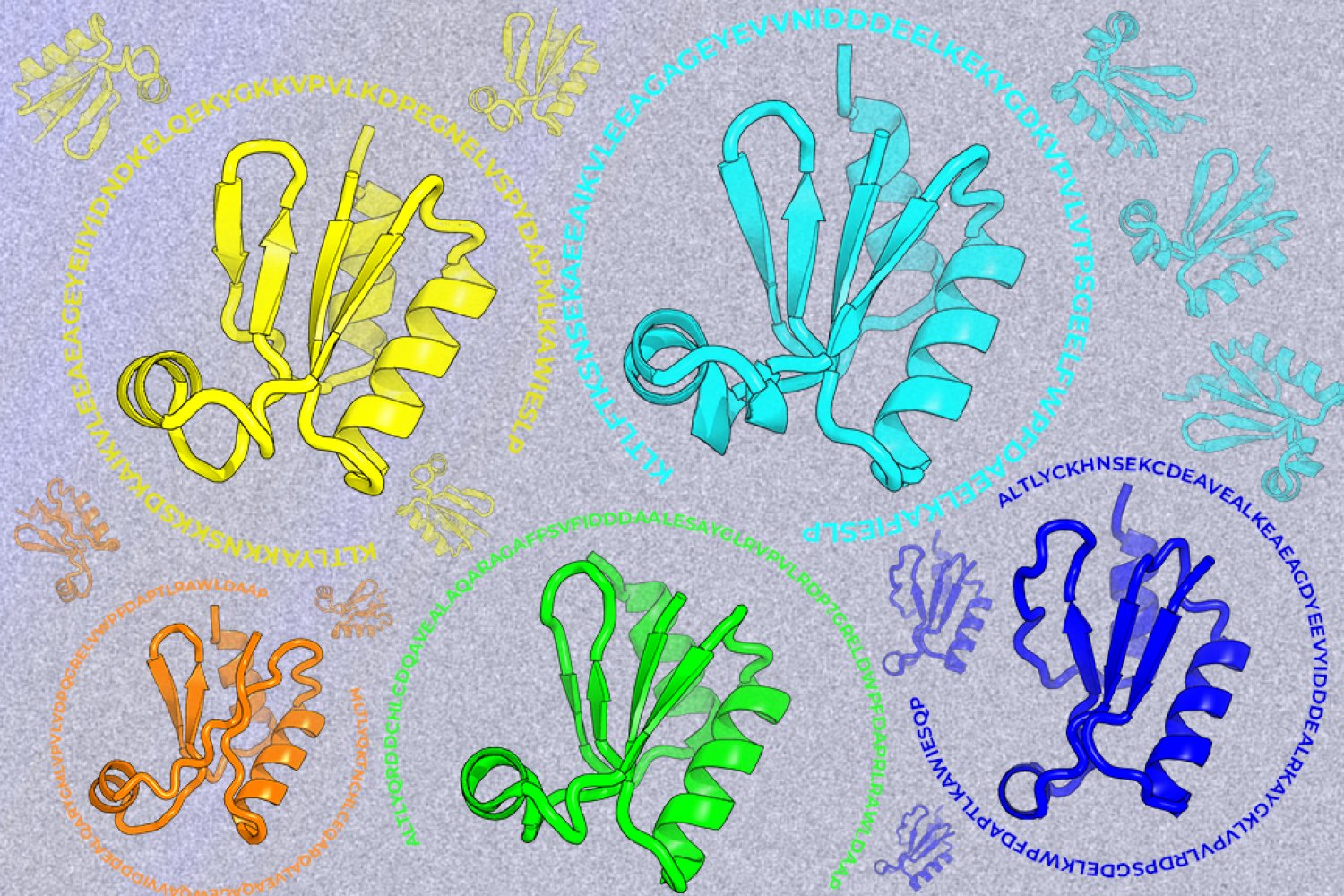
A new machine-learning framework aims to improve the success rate of computational protein design while moving away from results that reproduce sequences found in nature.
MIT News · Artificial Intelligence· news.mit.eduAug 24, 2026
A new method for surgically removing training examples from a model reveals that as datasets grow, the link between what a model learns and what it produces dissolves.