This work addresses one of the most pervasive obstacles to applying AI in real-world drug development by addressing conformal prediction framework tailored to label shift by weighting conformal scores using marginal label probability ratios and enhancing the trustworthiness of AI-driven predictions.
Hyeonsu Lee, Juyeong Kim, Erkhembayar Jadamba et al.· 0 citations
Bayesian imaging inverse problems often require sampling from high-dimensional posterior distributions. While recent score-based and diffusion models provide expressive Bayesian priors, their sampling procedures remain inherently sequential and computationally expensive for large-scale imaging applications. We propose PiX-MC, a time-parallel posterior sampling framework based on proximal Langevin dynamics and Picard iteration. The proximal-likelihood formulation exploits the fact that many imaging likelihoods admit efficient, problem-specific proximal operators, while Picard refinement exposes parallelism across discretization nodes and naturally supports multi-GPU implementation. To further improve practical scalability and sampling performance, we develop multi-block and annealed variants of the proposed framework. We establish convergence guarantees under transparent assumptions, accommodating non-log-concave posteriors, imperfect learned score models, multi-block implementations, and annealing schedules. Experiments on a diverse collection of imaging inverse problems demonstrate that PiX-MC substantially reduces wall-clock time while preserving reconstruction quality. On a $512\times512\times80$ sparse-view computed tomography (CT) problem, annealed multi-block PiX-MC achieves up to a $50\times$ runtime speedup over the standard Langevin sampler using eight GPUs.
Deliang Wei, Evan Bell, Wenhan Guo et al.· 0 citations
Elimination geometry is developed, a typed, native-loss, audit-oriented framework for studying when locally optimal objects can be realized by a shared deployment rule and derives native defects from the original objective.
We present rl-triton, an open-source library of high-performance GPU kernels for reinforcement learning credit assignment, implemented in Triton. The core contribution is a unified associative scan framework that recasts seven distinct RL estimation algorithms - Generalized Advantage Estimation (GAE), V-Trace, Retrace($\lambda$), TD($\lambda$) returns, discounted returns, eligibility traces, and episodic prefix sums - as instances of a single first-order linear recurrence solved in $O(\log T)$ parallel steps. All algorithms share the same associative scan operator, with algorithm-specific fused Triton kernels constructing their recurrence coefficients on-chip. We verify the associative operator algebraically and define the treatment of terminated and truncated episodes explicitly. Benchmarks show a 1.6-5.70$\times$ full-call speedup over a vectorized torch-compile baseline in the massively parallel simulation regime (thousands of environments, short rollouts). The reported range covers all seven algorithms on both GPUs, both with and without per-step truncation handling. For most algorithms, speedups increase at longer sequence lengths, as the baseline requires more scan stages as $\log T$ grows, each adding an intermediate HBM round-trip. The library is available at https://github.com/simonsays1980/rl-triton.
L. Zehnder· 0 citations
Reach audiences
Advertise in front of researchers, engineers, and readers.
A benchmark for EEG OOD detection is introduced, a broad range of methods are evaluated, and complementary methods for both aspects can be combined to form a robust safety net for the deployment of EEG-based machine learning models in real-world applications are demonstrated.
Pretrained molecular language models are increasingly used as molecular encoders for learning structure-property relationships. However, their practical suitability for molecular discovery within and beyond their pretraining domain remains unclear. Herein, we systematically benchmark four molecular language models across six virtual molecular libraries spanning drug discovery, organic materials, and catalysis. Native molecular language model embeddings show substantial variation in discovery performance across libraries, whereas molecular fingerprints provide a consistently strong and robust baseline. Consistent with a potential domain-representation mismatch, we show that explicit domain adaptation substantially improves representation performance. Fine-tuning molecular language model encoders on structures from the target virtual library consistently improves sample efficiency, with several adapted encoders emerging as the top-performing representations across the benchmark tasks. These results show that molecular representation quality depends strongly on the target domain and that explicit adaptation can improve the practical utility of molecular foundation models. More broadly, our findings establish domain-adapted molecular representations as a promising strategy for sample-efficient adaptive decision making in virtual screening and self-driving laboratories.
Henrik Wille, Luis-Finley Schütz, Felix Strieth-Kalthoff· 0 citations
Contrastive inverse dynamics thus provides a distribution-free anti-collapse signal that requires no target network, stop-gradient, pretrained encoder, or reconstruction objective, and it is argued that the anti-collapse pressure can instead come from the transition data itself.
EvalXRL is a benchmark in which a Large Language Model (LLM) coding agent uses different XRL methods to diagnose a held-out malfunction in an RL agent, and then repair it, and proposes the first head-to-head comparison of multiple XRL methods in closed-loop usage.
Ram Rachum, Yotam Amitai, Bálint Gyevnár et al.· 0 citations
Reconstruction of the underlying networks with high fidelity and forecasts on par with a model that is supplied with the true network are achieved, providing a step toward explainable and scalable forecasting of complex systems.
Jonas Braun, Fabian Fischbach, Daniel Köglmayr et al.· 0 citations
The results show that integrating data from general-purpose knowledge graphs and sensor networks through data fusion can enhance the prediction accuracy of traffic forecasting models, and offers a potential pathway toward improved interpretability.
Mattis thor Straten, Yannick Wölker, Steffen Strohm et al.· International Conference on...· 0 citations
Gradient Uncertainty-Aware Policy Optimization is proposed, which models each group gradient as a random variable under a Bayesian formulation and estimates its probability distribution and derives gradient uncertainty using a Dirichlet-based formulation and uses it to calibrate the contribution of each group gradient during aggregation.
Peizheng Guo, Jianqi Zhang, Xingyu Zhang et al.· 0 citations
Novelty and Surprise Prioritized Experience Replay (NSPER) is introduced, which uses novelty to capture underrepresented states and surprise to expose gaps in the agent's understanding of the environment and is extended with NSPER+R, integrating these signals as intrinsic rewards to jointly improve replay quality and exploration.
Hoda Yamani, Henry Williams, Bruce A. MacDonald· 0 citations
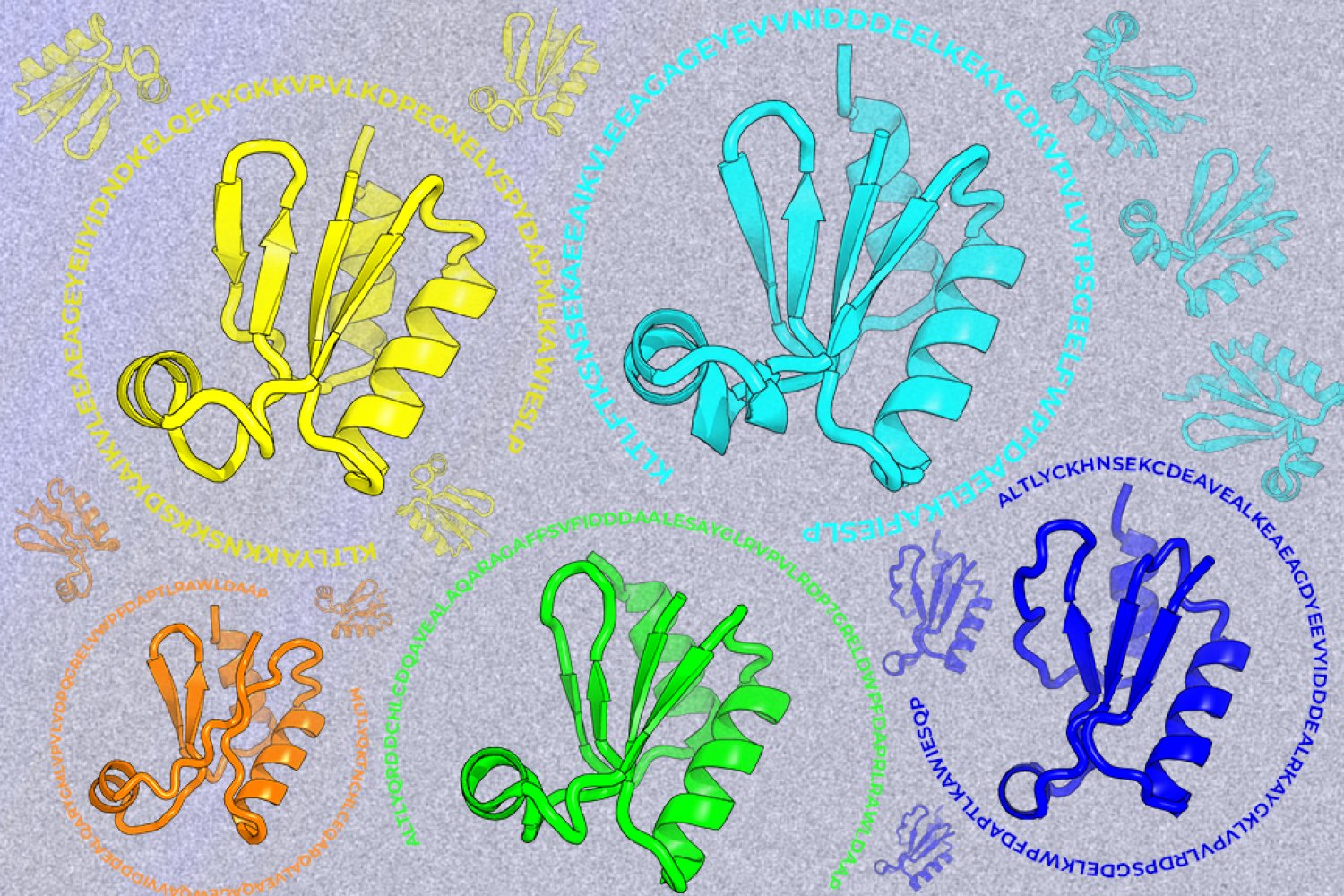
A new machine-learning framework aims to improve the success rate of computational protein design while moving away from results that reproduce sequences found in nature.
MIT News · Artificial Intelligence· news.mit.eduAug 24, 2026
A new method for surgically removing training examples from a model reveals that as datasets grow, the link between what a model learns and what it produces dissolves.