Retrieval-Augmented Generation (RAG) systems are emerging as a key approach for grounding Large Language Models (LLMs) in external knowledge, addressing limitations in factual accuracy and contextual relevance. However, there is a lack of empirical studies that report on the development of RAG-based implementations grounded in real-world use cases, evaluated through general user involvement, and accompanied by systematic documentation of lessons learned. This paper presents five domain-specific RAG applications developed for real-world scenarios across governance, cybersecurity, agriculture, industrial research, and medical diagnostics. Each system incorporates multilingual OCR, semantic retrieval via vector embeddings, and domain-adapted LLMs, deployed through local servers or cloud APIs to meet distinct user needs. A web-based evaluation involving a total of 100 participants assessed the systems across six dimensions: (i) Ease of Use, (ii) Relevance, (iii) Transparency, (iv) Responsiveness, (v) Accuracy, and (vi) Likelihood of Recommendation. Based on user feedback and our development experience, we documented twelve key lessons learned, highlighting technical, operational, and ethical challenges affecting the reliability and usability of RAG systems in practice.
M. Hasan, Muhammad Waseem, Kai-Kristian Kemell et al.· EUROMICRO Conference on Soft...· 10 citations· ⚡1
A generalized Multimodal Subspace Support Vector Data Description model with graph-embedded regularization is proposed, illustrating how relational and structural information can be systematically embedded into one-class models, enabling robust learning under complex, high-dimensional, and multimodal conditions.
Thomas Debelle, F. Sohrab, Pekka Abrahamsson et al.· Scientific Reports· 1 citation
Off-Context GRPO (OC-GRPO), a minimally modified variant of GRPO that uses guided rollouts but applies an importance-corrected objective to steer the update back toward the original unguided objective, avoiding the mismatch that destabilizes uncorrected guided training.
Priyank Agrawal, Ankur Samanta, S. Ghasemlou et al.· arXiv.org· 1 citation
Automatic feature engineering (AutoFE) for tabular learning can be naturally formulated as a program synthesis problem, where the objective is to discover predictive feature transformations from an exponentially large search space. Recent advances in large language models (LLMs) have expanded the expressiveness of AutoFE by enabling feature program generation beyond predefined operator libraries. However, existing LLM-based approaches remain fundamentally limited by stateless generation and homogeneous search: feature proposals are produced from static prompts without accumulating search experience, while single-population exploration quickly converges to dominant transformation patterns and rarely discovers complementary feature compositions across transformation families. We propose TOPOFE, a topology-aware multi-island evolutionary framework for LLM-guided feature engineering. TOPOFE combines family-specialized exploration, adaptive prompt memory, and topology-guided knowledge transfer to efficiently discover diverse and compositional feature programs. Experiments on 29 public tabular datasets demonstrate consistent improvements over state-of-the-art AutoFE methods across classification and regression tasks. Beyond predictive performance, TOPOFE discovers more diverse and transferable feature programs that generalize across multiple downstream predictors and LLM backbones.
Sha Li, Naren Ramakrishnan· 0 citations
Reach audiences
Advertise in front of researchers, engineers, and readers.
The next iteration of Nova is presented, an automated end-to-end JIT compiler that achieves absolute control over hardware mapping by synthesizing fine-grained kernels directly from the computation's structure by extending Nova's compilation pipeline to natively support full Transformer architectures.
Adwaid Suresh, Aparna A. Harshini, Jona Delcy et al.· 0 citations
Experiments show that TGSR-PINN improves parameter recovery while maintaining low field error, and ablation studies indicate that neuron target scoring, weak-adaptation estimation, layer protection, and selective soft decay jointly contribute to the observed benefits.
EvoCUA-1.5 extends self-evolving computer-use agents from offline experience learning to online reinforcement learning, where policies interact with executable sandbox environments and improve from verifiable task outcomes and provides a practical framework for scaling online RL in multi-turn computer-use agents.
Mianqiu Huang, Taofeng Xue, Chong Peng et al.· 1 citation
These findings support selecting forecasting models according to operating conditions rather than relying on a single universally preferred approach, and provide a practical framework for combining complementary statistical and machine-learning forecasts.
OMG-VLM leverages a pretrained VLM as a shared backbone and introduces structure-aware graph adapters that integrate neighborhood information while remaining compatible with the VLM's native embedding space, enabling effective learning over text-attributed, image-attributed, and multimodal-attributed graphs within a single model.
Jia-Yi Yang, Yi-Fang Chen, Yuan-Fu Sun et al.· 0 citations
This work exploits the affine state update to obtain the exact one-step conditional-mean sensitivity by differentiating normalized reaction propensities, and defines the propensity straight-through (PST) estimator, a temperature- and Gumbel-free path to scalable gradient-based learning through exact stochastic trajectories.
Kevo is a co-evolving framework that jointly learns to construct a structured knowledge base and reason over it for knowledge-intensive question answering, which leads to larger, better-connected knowledge structures with higher answer reachability, while also improving compositional factual reasoning and controllability compared to standard retrieval baselines.
Ryan Thomas Noonan, Lin-Xi Zhao, Meng-Han Xu et al.· 0 citations
DeltaGNN is introduced, to the best of the authors' knowledge, among the first scalable (featuring linear computational and memory complexity overhead) and generalizable (capable of effectively handling graphs with diverse homophily, density, and topology) architectures for long-range and short-range interaction detection.
Kevin Mancini, Islem Rekik· IEEE Transactions on Pattern...· 2 citations
A weeklong summer workshop brought higher education faculty to campus to explore how AI and machine learning materials can be adapted for their classrooms.
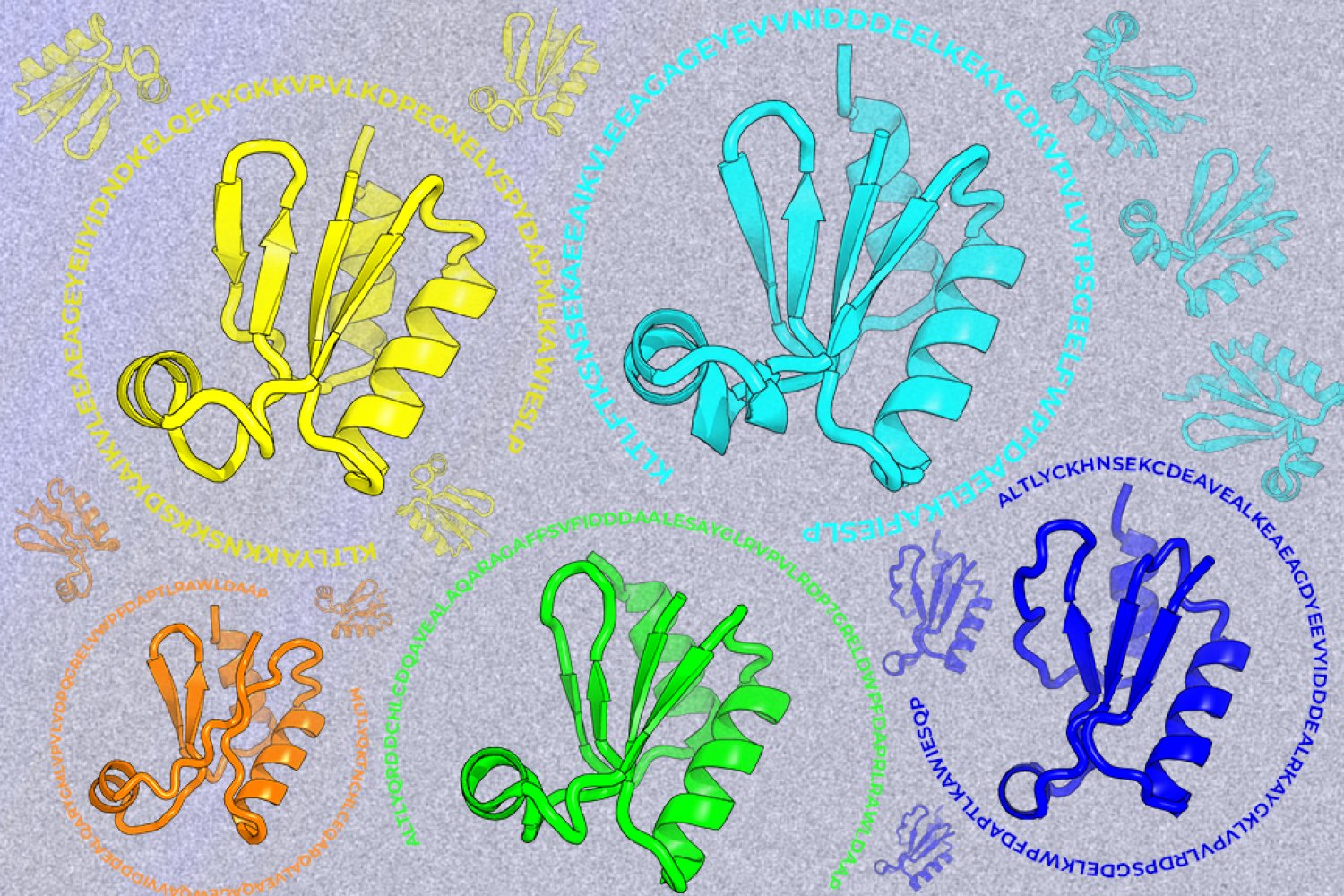
A new machine-learning framework aims to improve the success rate of computational protein design while moving away from results that reproduce sequences found in nature.
MIT News · Artificial Intelligence· news.mit.eduAug 24, 2026
A new method for surgically removing training examples from a model reveals that as datasets grow, the link between what a model learns and what it produces dissolves.
We use cookies to run the site and, with your consent, for analytics and to show ads.
See our Cookie Policy.