LLM-as-judge evaluation reduces response quality assessment to a single holistic A/B preference choice, providing no mechanism to isolate which quality dimensions drove the preference or distinguish model errors from genuine label ambiguity. We propose SESSE (Sketch, Expand, Sort, Summarize, Evaluate), a training-free framework that decomposes holistic judgment into structured sub-questions mined directly from the judge's own error cases; requiring no oracle responses, task-specific rubrics, or fine-tuning. On RewardBench (n=1,000), SESSE achieves near-parity with the chain-of-thought baseline and is competitive with RISE-Judge-32B (92.7%), a fine-tuned specialist, while remaining fully training-free. Per-criterion vote evidence provides an interpretable audit trail for diagnosing label ambiguity and judge failure modes unavailable from a single holistic output token.
Dae Lee, Mihai Delgeanu, Adel Youssef· 0 citations
The extraction of structured information from unstructured documents represents a critical component of digital transformations in all sectors. While proprietary solutions dominate commercial applications, a rapidly growing ecosystem of open-source Optical Character Recognition (OCR) engines, Large Language Models (LLMs), and Vision-Language Models (VLMs) offers accessible alternatives. However, systematic evaluations on realistic, multi-step extraction pipelines remain scarce. Responsible usage of such extraction tools require comprehensive evaluations on realistic tasks, especially as these solutions will be key components of applications in the public sector that the EU AI act categorizes as high risk. To address this gap we present a comprehensive benchmark assessing the end-to-end performance of open-source systems on a complex real-world document processing task classified as high risk: Student applications for an international study program. We conduct a comprehensive empirical evaluation with state-of-the-art OCR engines, LLMs and VLMs. Our results reveal that while VLMs generally outperform OCR+LLM pipelines, even state-of-the-art open-source models struggle to handle such tasks reliably in zero-shot settings. Only 4 of 35 configurations achieved F1 scores above 0.5, with the best OCR+LLM pipeline matching top VLM performance, though most OCR+LLM combinations performed substantially worse. Roughly 75\% of all configurations scored below 0.25. Model scale influences performance, yet the relationship is non-linear: substantially larger models do not guarantee proportionally better results. Input quality, particularly the structural preservation of OCR output, emerges as a critical factor independent of downstream model capability.
This work pre-register training of 137M MoE language models with auxiliary locality and domain router losses, under joint criteria on cache-miss reduction and perplexity, and shows training-free cache-aware rerouting stacks with trained locality are trainable.
Large Language Models (LLMs) are being increasingly used in everyday applications. A major challenge in the context of LLMs or Artificial Intelligence (AI) in general is to ensure privacy when using them, meaning that personally identifiable information (PII) is removed from any text that enters an LLM. These challenges have become more urgent with novel EU legislation. Uncertainty around LLM usage with respect to privacy concerns in EU countries can be a major blocker for the speed of innovation and transfer from research to applications. Here we present \textbf{Redakto}, a tool that can be used for anonymizing text prior to feeding it to an LLM or other downstream text processing. We provide state-of-the-art functionalities for both redaction of PII but also when used for pseudonymization. These functionalities are exposed such that they can easily be used by end-users, through the Redakto web application, and by developers and researchers, via REST APIs and model context protocol (MCP) hooks. The implementation is fully open source, requires modest compute resources, and can be readily deployed on local hardware. In contrast to prior work and in order to better assess the quality of the anonymized texts, we conduct extensive empirical evaluations on textual data from legal and medical domain with respect to both privacy and utility of the redacted texts. Our empirical results demonstrate that the texts anonymized with different redaction strategies achieve utility scores on par with the original texts, suggesting that anonymization with Redakto can be used for LLM tasks without substantial negative impact for the tasks we explored.
S. K. Saha, Tom Röhr, F. Biessmann· 0 citations
Reach audiences
Advertise in front of researchers, engineers, and readers.
This work evaluates native and retrofitted looped language models on API-Bank, BFCL, and NESTful, comparing looped and non-looped models trained under matched supervised fine-tuning recipes and varying recurrent depth at inference time to suggest that looped language models are a promising architecture for agentic systems that require reliable planning, coordination, and execution of compositional tool use workflows.
A. C. Popescu, Haitz Sáez de Ocáriz Borde, Pietro Liò· 0 citations
FraudBench is introduced, an executable benchmark built on the $\tau^2$-bench dual-control framework and the $\tau$-Knowledge banking environment that tests whether a policy-grounded banking agent safely acts when a caller manipulates identity, authorization, and trust over a conversation.
It is argued that effective governance of OWFMs requires a multi-layered approach integrating three complementary components: model cards, acceptable use policies (AUPs), and licenses, and that standard open-source licenses are not well suited for OWFMs and may weaken the enforceability of AUPs.
Sungwon Chae, Keonwoo Kim, Hoki Kim et al.· 0 citations
A weeklong summer workshop brought higher education faculty to campus to explore how AI and machine learning materials can be adapted for their classrooms.
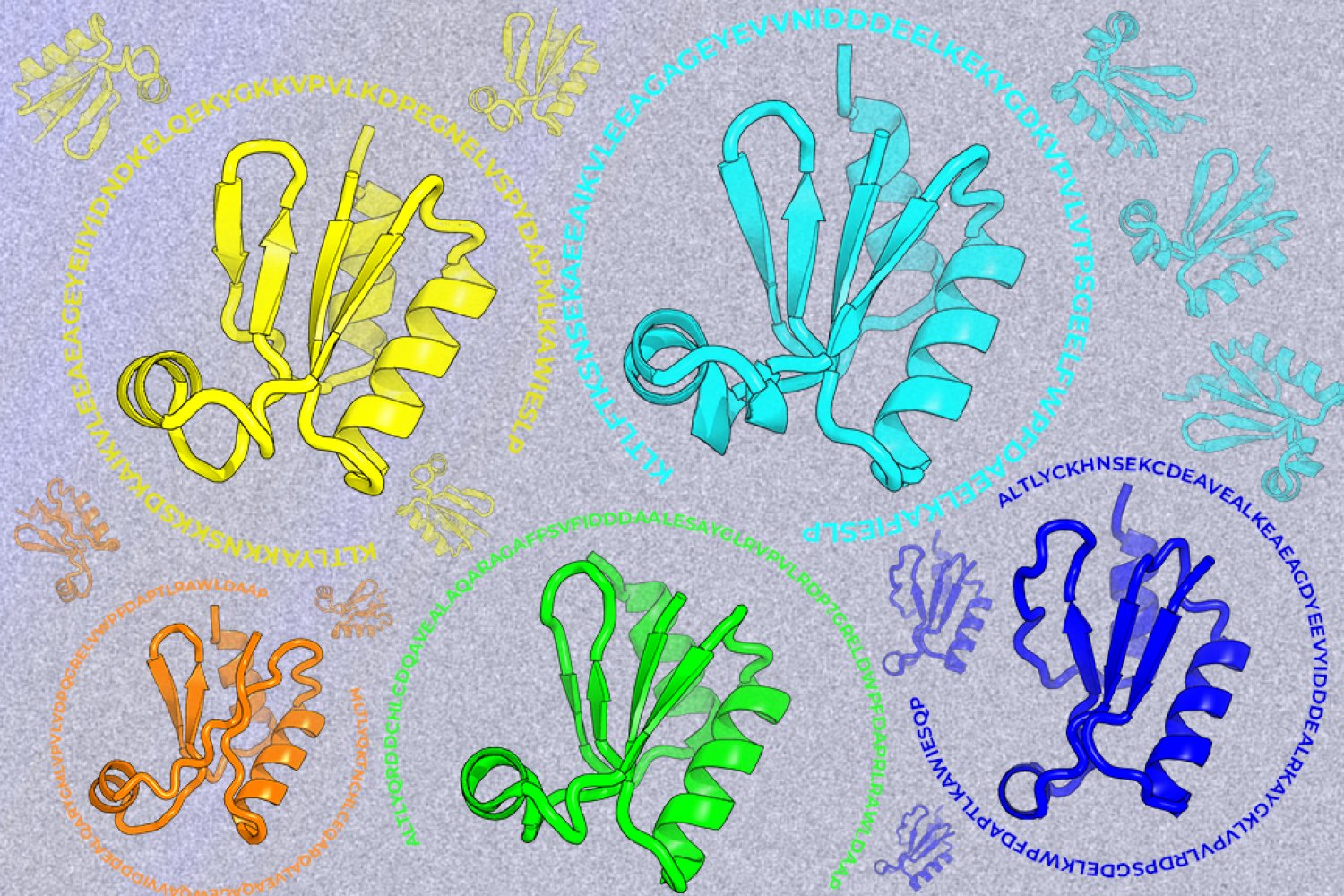
A new machine-learning framework aims to improve the success rate of computational protein design while moving away from results that reproduce sequences found in nature.
MIT News · Artificial Intelligence· news.mit.eduAug 24, 2026