Chemistry questions often demand exact computation and database lookups that a language model cannot supply from its parameters, so it must reach for external tools. Tool use here is a three-part problem: select the right tool from a large pool, fill it with correctly typed arguments, and chain calls so that each consumes the outputs of the last. CheMatAgent, a previously published system, addresses this with hierarchical evolutionary MCTS: separate policy and execution models searching tool-call trees under two learned critics, one regressed partly onto GPT-assigned scores. We show that a single policy suffices. Our model interleaves reasoning, tool calls, and returns in one left-to-right generation, trained by a supervised warm-up and then outcome-level reinforcement learning against a programmatic reward read directly off the gold call chain, which leaves no learned critic and no judge in the training loop. On ChemToolBench multiple-tool comprehensive chemistry, on both backbones CheMatAgent use, we improve Tool F1 by 5.5% and Return F1 by 9.6% on Qwen-2.5-7B, and by 3.7% and 3.9% on Llama-3.1-8B, compared with their strongest search configuration, at one model invocation per question, against a search whose cost grows with the tree; we also lead answer Pass Rate on Qwen-2.5-7B.
Armin Dariani, Sifan Wu, Bang Liu et al.· 0 citations
Closed-loop human-AI systems generate high-dimensional behavioural trajectories whose collective dynamics remain obscure. Using 297,915 learners' adaptive-tutoring histories, we define semantic order variables before model fitting and test them in user-disjoint cohorts. The state exhibits reproducible basin-like flow and operationally defined, state-heterogeneous metastable-like kinetics. A construction-matched null distinguishes normalised-memory relaxation from a reproducible excess field. A four-term conditional mechanism recovers population drift (r = 0.946; learner-bootstrap 95% CI, 0.935-0.955). Predictive event-level self-supervised learning recovers the state and learned-plane flow; null-referenced corrections retain directional, partial-amplitude excess-field structure without full calibration. Shuffled-order training reverses learned-plane flow on ordered trajectories; support-alignment randomisation selectively reduces inward transport. Both axes remain linearly accessible without state supervision. Without cross-model fitting, the models share leading population drift (r = 0.866; learner-bootstrap 95% CI, 0.857-0.875) and persistence ordering; residual directions remain model-specific. These results identify an externally anchored leading-order effective field linking empirical dynamics, an interpretable mechanism and neural computation.
Minlin Wu (Tianli Qiming AI Research Institute, Sichuan Qiming Daren Technology Co., Ltd. et al.· 0 citations
In online retailing, when a product sells out, a retailer often sees only the units sold, not how many customers would have bought it had inventory been available. However, the inventory level determines how much demand is revealed, and this information can influence subsequent decisions and future profits. We study an online selling problem in which, in each round, the seller observes a market context and then makes pricing and stocking decisions based on censored sales data from previous rounds. The challenge is to learn a context-dependent pricing and stocking policy without assuming a particular formula for demand or observing realized profit. To overcome this difficulty, we propose a Mean-Calibrated Kernel UCB (MCK-UCB) algorithm that turns each incomplete sales record into a reliable guide for both inventory and price decisions, using data from past rounds with similar market conditions. This design allows us to learn while serving customers, without a separate exploration phase or the need to recover all demand hidden by stockouts. We prove the minimax optimality of the proposed algorithm, with strictly faster rates when expected profit varies more smoothly with price. Comprehensive numerical experiments have been conducted to confirm the effectiveness of the proposed algorithm.
Zean Han, Jing Liang, Ruihan Lin et al.· 0 citations
Stream learning is commonly evaluated through predictive performance and adaptation to concept drift. However, sustained operation of a stream learner also requires predictable and bounded resource usage even on long streams. This requirement becomes even more critical when learning moves from servers to near-sensor embedded systems where memory and processing are scarce resources. In state-of-the-art stream learning, however, we perceive a strong focus on concept drift adaptation, whereas resource usage is often an evaluation byproduct. To close this gap, we benchmark seven representative stream classifiers on 13 real and synthetic streams under model-size budgets from 128\,KiB to approximately 8\,MiB. Our benchmark comprises a total of 6,463 experiments. We measure failure-aware accuracy, peak model size, time to budget exhaustion, and prediction-plus-update latency. The results reveal two distinct resource failure modes. Adaptive ensembles can exceed small budgets almost immediately because of their initial footprint, even when their size remains stable thereafter. Incremental trees can fit initially but grow throughout a long stream, with HoeffdingTrees (HT) and Extremely Fast Decision Trees (EFDT) increasing by median factors of 7.37 and 5.87. Explicitly compact methods remain the only viable option under the smallest budgets, but are usually overtaken as larger budgets make adaptive ensembles competitive. Hence, many state-of-the-art methods are only partially applicable in embedded systems or for long-running systems. We therefore call on the stream-learning community to make bounded resource usage a first-class design objective alongside drift adaptation, and propose concrete steps toward this goal, including an API through which stream learners can explicitly expose and respect resource budgets.
Sebastian Buschj\"ager, Nuwan Gunasekara, Heitor Murilo Gomes· 0 citations
Reach audiences
Advertise in front of researchers, engineers, and readers.
Agent evaluations often use one benchmark to choose a workflow and then search for task types where its advantage weakens, so both conclusions are selected from the same data. We introduce Selection-Aware Semantic Stress Testing (\SASST{}), which learns a task reweighting from pre-execution features on discovery tasks and evaluates the same paired comparison on separate confirmation tasks. The protocol checks support and stability, uses joint bounds for all planned claims, and can return no claim. We prove conditional asymptotic validity under stated cluster assumptions. A forty-cluster audit finds Gaussian undercoverage and conservative Bonferroni $t$ bounds. In one 480-episode $\tau$-bench study, a $3.75$ point discovery gain vanished on confirmation. A second-model study likewise confirmed neither a workflow benefit nor a stable stress rule.
Yang Xu, Chenang Li, Jiefu Zhang et al.· 0 citations
Spectroscopic structure elucidation is central to molecular analysis, but recent Large Language Model (LLM)-based methods mostly formulate it as direct spectrum-to-SMILES generation. Although this paradigm can leverage paired spectral data, it does not explicitly model the analytical workflow used by spectroscopists, such as diagnostic peak interpretation, fragment reasoning, formula constraints, and chemical consistency checking. In this paper, we introduce S3C-LLM, a skill-guided and code-grounded agentic LLM for spectrum-to-structure elucidation. Rather than directly predicting a molecule, S3C-LLM retrieves modality-specific spectroscopy skills, executes analysis code to instantiate these skills on the input spectra, and integrates the resulting peak-level evidence and formula constraints before generating SMILES. Specifically, we contribute a self-evolving spectroscopy skill library, a thinking-augmented skill-code trajectory construction pipeline, and a two-stage training strategy that teaches Qwen3-4B through supervised fine-tuning (SFT) followed by our proposed step-level reinforcement learning (RL). Experiments on diverse benchmarks show that S3C-LLM consistently outperforms current general LLMs and spectrum-specific models across spectra, while using less than 1/10th of SpectraLLM's training corpus.
Xuanle Zhao, Xinyuan Cai, Xiang Cheng et al.· 0 citations
Fine-tuning Low-bit models aims to adapt a quantized model while keeping the final deployed checkpoint in the same low-bit form. This setting is practically important as it reduces memory and inference cost for storage and deployment. Under this constraint, adaptation becomes an optimization problem over quantization codes and scales. Existing continuous low-bit training is efficient, but it can be distorted by straight through estimation error or by post-quantize gap; discrete search is deployment-faithful, but it is often too inefficient under a finite training budget. We propose code surrogate gradient as the first order signal in deployable code space to acceleate optimization, and performing guided search to preserve deployment faithfulness. Experiments across arithmetic reasoning, instruction following, and structured language understanding show that GradCodes consistently improves fine-tuning low-bit models across different quantization datatypes. Code is provided at https://github.com/ovo67/GradCodes.
Recent advances in large language models (LLMs) have demonstrated exceptional performance in protein-ligand interaction prediction, but state-of-the-art pipelines for large-scale virtual screening almost exclusively rely on high-end GPU clusters with hundreds of gigabytes of memory, creating prohibitive hardware barriers for small academic teams. In this work, we present a fully local low-resource framework that deploys the 175-billion-parameter DeepSeek 175B LLM on a single consumer-grade RTX 4060 laptop equipped with 32GB system RAM and 8GB VRAM, completing a full 200k-scale protein-ligand virtual screening workflow across 20 distinct protein targets. Our implementation achieves 100x throughput of an 8-card A100 cluster baseline under identical task configurations within 72 hours, with an average binding affinity prediction error of 0.88 kcal/mol across all targets, satisfying the 1.0 kcal/mol chemical accuracy requirement for preclinical drug discovery. Systematic runtime profiling reveals that heterogeneous memory management overhead accounts for 72% of total execution time, while accuracy loss introduced by model optimization contributes less than 10% to total prediction error. This work validates the engineering feasibility of running industrial-scale trillion-parameter LLM-driven biomedical computing tasks on consumer hardware, establishing a new low-barrier paradigm for AI-powered early stage drug discovery.
Training autonomous driving policies through pure self-play has recently shown promising results. Following Gigaflow and Puffer- Drive, we train driving policies in a similar self-play fashion, but extend the models from MLPs to Transformers and train on the high-definition map of a real city, where we ultimately aim to deploy them. On the CARLA and Waymax benchmarks, our policies fall short of Gigaflow, and we trace the gap to specific failure modes, including reward hacking at traffic lights and a missing incentive to stop at stop signs. We further analyze which traffic rules emerge from self-play and how closely they match human driving, and we confirm that reward conditioning yields the intended diversity of driving behaviors. A demonstration of a trained policy is available at https://laursisask-ut.github.io/eccvdemo.
Monitoring the health of heterogeneous industrial robot fleets is severely challenged by the multi-modal nature of their operational cycles and a persistent scarcity of run-to-failure data. Standard data-driven approaches, particularly deep learning architectures relying on sequential reconstruction, often struggle in this specific setting; they tend to over-smooth complex dynamics, masking early signs of degradation. To address these industrial constraints, we reframe the monitoring problem through a framework based on Phase Space Reconstruction (PSR). Instead of predicting temporal sequences, this framework transforms univariate sensor data into a geometric attractor, explicitly unfolding the mechanical states independently of their temporal occurrence. By evaluating various anomaly scoring techniques within this space, we demonstrate that discrete support estimation provides an effective and computationally frugal Health Indicator (HI). Validated on a real-world dataset of 21 heterogeneous robots over three years and a synthetic Langevin system, our approach outperforms standard deep learning baselines. We show that aligning the algorithmic bias with the geometric properties of the target system yields a pragmatic, traceable and easily deployable approach perfectly tailored to the realities of industrial constraints.
Martin Bonsergent-Brachet, Jesse Read, Dany Abboud· 0 citations
Physical learning lets a trainable material or network use its own physical response to carry error signals, reducing the need for a separately programmed backward computation. We ask what determines whether such a system follows conventional gradient descent or evolves along a genuinely different learning trajectory. Our canonical model is a directed layered transport network in which every node redistributes a fixed amount of flow, so learning preserves positivity and total mass. In this model, conservation constrains only the allowable learning directions. Within the matched response class studied here, adjoint matching gives the physical output response a symmetric form. Non-negative mode-wise feedback then produces a reciprocal closed-loop response and a reweighted gradient flow. Adding an antisymmetric boundary component makes the closed-loop response rotational: the learning path can turn while the error driving that update still decreases at that moment. Turning is not automatically beneficial. Its finite-step effect is set by local curvature, and its accumulated effect also depends on step selection and on the new states visited along the path. Numerical consistency checks reproduce the exact response structure, predict the sign of the local effect across new network families, and show how trajectory drift can negate a local advantage. These results separate the roles of conservation, reciprocity, and nonreciprocity in physical learning.
Ruiwu Niu, Xiaowen Bi, Micha\"el Antonie van Wyk· 0 citations
LLM training is increasingly vulnerable to silent data corruption (SDC), yet existing protection methods largely treat Transformer computations uniformly because their vulnerability remains poorly understood. We present the first systematic characterization of SDC vulnerability across major computation interfaces in both the forward and backward passes of Transformer training. Our analysis reveals two distinct error propagation mechanisms: forward-pass vulnerability is highly location dependent, with faults on the Q/K path producing persistent training deviations, whereas backward-pass vulnerability is largely governed by gradient exponent distributions rather than computation locations. Motivated by these observations, we propose TrainSDC, a characterization-guided protection framework consisting of Q/K-path recomputation, residual-gain monitoring, and exponent-aware gradient scaling. Experiments on Llama 3.2-1B and Qwen3-0.6B show that TrainSDC maintains training behavior close to fault-free execution under both sparse and dense fault injection while introducing only 1.65%-6.76% runtime overhead.
Zhipeng Xia, Haotian Xu, Siyu Yun et al.· 0 citations
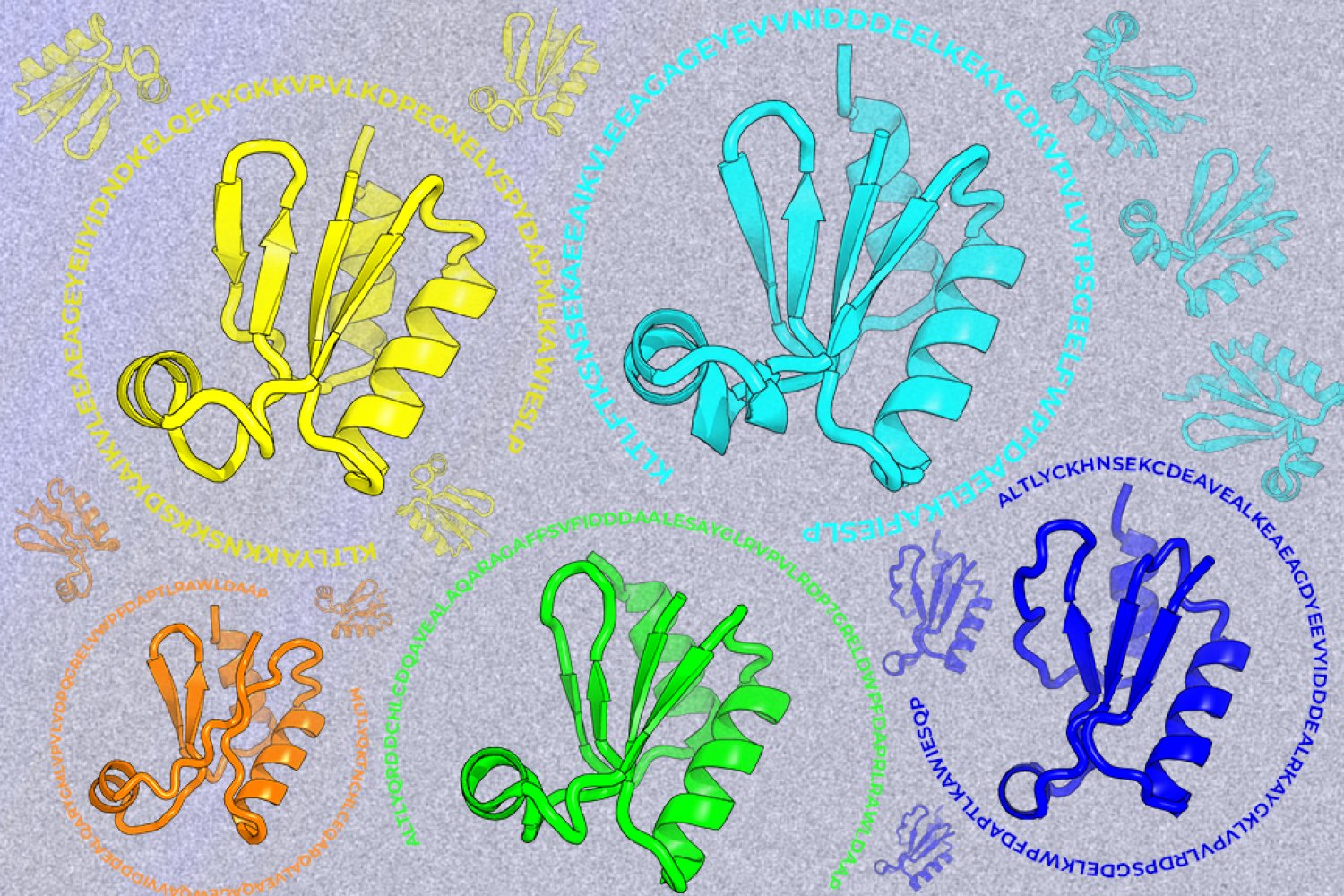
A new machine-learning framework aims to improve the success rate of computational protein design while moving away from results that reproduce sequences found in nature.
MIT News · Artificial Intelligence· news.mit.eduAug 24, 2026
A new method for surgically removing training examples from a model reveals that as datasets grow, the link between what a model learns and what it produces dissolves.