Language models can answer from precomputed memory, a model's saved reading of a body of material, reused across requests instead of read again at each. This paper maps where that practice preserves correctness and the conditions under which it fails. Across experiments on Llama-3.1-8B-Instruct using both saved key-value caches and trained compressions of them, precomputed memory degrades when assembled from separately prepared parts, stays current only through rebuilds costing a large fraction of full preparation in our measurements, and ignores corrections served beside it conditional on phrasing. If precomputed memories can be served alongside one another, be cost-efficiently rebuilt, and be superseded by new information arriving in real-time, they can serve as a way to avoid re-feeding context to a model over repeated queries. The implication of our results for a deployed system that deals with a variety of queries is that precomputed memories are best rebuilt on the cadence at which new information changes what the memory was originally computed from. Both warm-rebuilding trained compressions of key-value caches and serving specifically-phrased updates beside a memory, as pasted text or injected cache state, show particular promise for keeping precomputed memories current, the latter as an interim measure between rebuilds, and we measure the cost and name the remaining questions associated with each.
Reliable uncertainty estimation is a crucial requirement for deploying large language models (LLMs) and vision-language models (VLMs) in safety-critical settings, especially when the model parameters are not accessible (black-box). We propose BiG-SURE, an uncertainty estimator based on cross-temperature semantic agreement. The method samples low-temperature responses as stable semantic anchors and high-temperature responses as probes under meaning-preserving input transformations. It then constructs an anchor-probe Bipartite Graph (BiG) using NLI-based entailment scores and defines confidence through the normalized squared spectral energy of this matrix, with uncertainty given by its complement. This bipartite graph-based Semantic Uncertainty and Reliability Estimation (SURE) score measures whether high-temperature probes remain semantically aligned with the model's stable low-temperature belief or not. We evaluate BiG-SURE on text QA, multilingual QA, and multimodal QA tasks across multiple model families. In these experiments, BiG-SURE improves average abstention AUROC over prior black-box uncertainty estimators, while remaining simple, unsupervised, and applicable to black-box model settings.
Timely post-disaster building damage assessment from satellite imagery is a critical engineering decision support task, yet it remains constrained by class imbalance, ambiguous intermediate damage states, and limited cross-event transferability. This study presents, to our knowledge, the first application of Grassmann-Plucker (GP) token mixing to computer vision and introduces two extensions for image classification: the Quantum-inspired Grassmann-Plucker (QGP) head and the Hybrid Quantum Machine Learning Grassmann-Plucker (HQML-GP) head. The GP head represents multiscale relationships among image patch tokens by encoding subspaces formed by token pairs with Plucker coordinates; QGP enriches these coordinates with amplitude-derived probability features, whereas HQML-GP incorporates expectation values generated by a simulated quantum circuit into the geometric token representation. Paired pre- and post-event image patches from the xBD tornado dataset were processed using a frozen six-channel Vision Transformer base encoder with 16 x 16-pixel patches. The three GP-based heads were compared with multilayer perceptron and Transformer baselines under identical training, checkpoint selection, and evaluation protocols. Joplin and Moore tornado samples were used for model development and seen-event testing, while Tuscaloosa was reserved for unseen-event evaluation. QGP led both test sets in accuracy and macro-F1: 83.46% and 64.50% for the seen events, and 66.45% and 52.70% for the unseen event. Although HQML-GP obtained the highest validation macro-F1 of 65.63%, it did not surpass QGP on either test set and required substantially more training time per epoch. These results establish GP token mixing as a competitive attention-free alternative to conventional Transformer-based token mixing for paired satellite image damage classification.
Kooroush Farahkhah, Umut Lagap, Taha Rezaei et al.· 0 citations
Reinforcement learning (RL), particularly RL with Verifiable Rewards (RLVR), has recently emerged as a central paradigm for enhancing large language models' (LLMs) reasoning abilities, demonstrating remarkable effectiveness across reasoning tasks. Recent studies suggest that high-entropy tokens play an exceptionally important role in model training, since training with only the highest 20% entropy tokens yields significant performance gains. However, why such high-entropy tokens are beneficial remains insufficiently understood. In this work, we find that although high-entropy tokens within one answer tend to correlate with large gradient magnitude, entropy alone fails to consistently reflect token importance across different answers, considering the variations in the answer-level reward signals. Based on this observation, we introduce the Gradient Magnitude-based Token Selection (GMTS) method to quantify token importance, which leverages the entropy-gradient connection to approximate gradient-magnitude rankings for token selection. We find that training on the top 20% tokens ranked by GMTS consistently outperforms entropy-based token selection across three reasoning domains and various model sizes, suggesting that GMTS provides a more fine-grained estimate of token contribution for RLVR training.
Large language models are increasingly capable in general, but their utility can remain modest in niche or understudied areas. One approach to address this limitation is to specialise existing models through additional training on target-domain corpora. In this work, we investigate such continued pre-training for adapting large language models to Swedish journalism, using a high-quality dataset that we curate from millions of news articles. To evaluate the adaptation efficacy, we also construct a novel domain-specific benchmark that covers six editorial tasks. Through full and parameter-efficient fine-tuning across two model sizes, we find that continued pre-training yields benefits in the target domain, but only when paired with experience replay to mitigate forgetting. We observe consistent enhancements in the models' generation quality and factual knowledge, but not their proficiency in discriminative tasks. Exploring a training-free method to facilitate instruction following, we see further improvements, but exclusively for models trained with low-rank adaptation. Crucially, we demonstrate the importance of targeted evaluation in the adaptation process, as an existing Swedish benchmark largely fails to capture the models' in-domain performance gains.
Lukas Borggren, Jenny Kunz, Marco Kuhlmann· 0 citations
Large language models (LLMs) are used as post hoc explainers of sequential decision-making policies, producing natural-language explanations of why an action was chosen. However, LLMs often generate plausible but incorrect statements, and no existing approach systematically tests whether such explanations are faithful to the underlying environment. Two classic software testing challenges stand in the way: there is no oracle for the correctness of an explanation, and the test inputs, natural language queries about a policy's behavior, lack the structure needed for systematic test case generation. We address both. Probabilistic model checking provides the test oracle, computing exact reference results against which LLM answers are graded automatically. A taxonomy of post hoc query categories structures the input space around the environment-level facts from which policy explanations are composed; test cases generated from it are prioritized by question-specific diagnostic difficulty scores. Across seven MDP environments, the testing separates three open-weight LLMs: a reasoning model passes 85% of test cases, a mid-size model 70%, and a 1B model falls below the random baseline, while prioritization surfaces significantly harder cases than random selection. Our results indicate how trustworthy LLM-generated explanations are in model-free settings, where the same LLMs are used but no oracle exists to verify them.
Informative label missingness can change the usual efficiency ordering between completely and partially labelled classifiers because the pattern of missing labels may itself carry information about the classification model. We develop a general likelihood-based theory for this phenomenon in parametric multiclass classification. An efficient-information decomposition separates information lost through unavailable class memberships from information contributed by the missing-label mechanism. We then derive a quadratic expansion of plug-in excess risk over the active pairwise faces of the multiclass Bayes boundary, showing that classification efficiency depends on how information gains and losses align with directions that perturb the decision boundary. This yields a classification-weighted generalized-eigenvalue criterion under which informative partial classification may have smaller asymptotic classification risk without globally dominating complete classification in Fisher information. Near missing completely at random, with the marginal missing-label proportion fixed, redistribution of missing labels changes lost class-label information at first order, whereas efficient information from the missingness pattern appears only at second order. Three-class quadratic discriminant calculations, finite-sample experiments, and a semi-synthetic multiclass application illustrate the resulting regime-dependent behaviour.
Fariborz Setoudehtazang, Geoffrey J. McLachlan· 0 citations
Rapid mineral characterization is essential for applications ranging from mineral exploration to industrial ore processing. To this end, Hyperspectral Imaging (HSI) has emerged as a promising sensing modality thanks to its fine spectral resolution, enabling mineral discrimination in both close-range and remote sensing settings. However, the scarcity of publicly available datasets with reliable ground-truth labels hinders the development and evaluation of HSI-based mineral identification methods. We release Minerals in the Wild, a multi-purpose dataset comprising 1,132 rock specimens collected across Europe. For each specimen, we provide an HSI acquisition together with an elemental characterization obtained via an XRF sensor. We define the task of elemental characterization on our dataset and propose a pruning mechanism that removes distant signatures from the USGS dictionary prior to a convex optimization approach for matching HSI pixels with USGS spectral signatures. Finally, we empirically show that our approach outperforms simpler baselines.
Eleftheria Tetoula-Tsonga (Institute of Communication and Computer Systems, Athens, Greece) et al.· 0 citations
Beamforming methods in millimeter-wave (mmWave) cell-free massive multiple-input multiple-output (CFmMIMO) systems require accurate channel state information (CSI), whose acquisition entails significant training overhead. This paper shows that fully digital cell-free mmWave beamforming can be effectively learned from sub-6 GHz CSI using a graph neural network (GNN). Specifically, we represent a CFmMIMO system as a wireless graph, and the GNN is trained to approximate beamformers that maximize the downlink sum-rate based on the available sub-6 GHz CSI. A message-passing mechanism is proposed to capture inter-user interference and inter-base-station cooperation across different network topologies. Simulation results demonstrate that the proposed sub-6 GHz-assisted GNN-based beamformer achieves competitive and often superior sum-rate performance compared to classical baselines that rely on full mmWave CSI.
Sina Tavakolian, Abolfazl Zakeri, Ahmed Alkhateeb et al.· 0 citations
We present TSExplorer, a cross-platform tool for interactive annotation and exploration of time-series data. The tool enables users to inspect high-dimensional datasets through multiple complementary 2D visualizations derived from high-dimensional feature representations. TSExplorer is designed as a general-purpose research tool supporting a wide range of workflows, including exploratory data analysis, annotation of unlabeled or partially-labeled datasets, comparison of feature representations, and post-hoc inspection and refinement of existing labels with interactive visual feedback.
Einari Vaaras, Manu Airaksinen, Okko R\"as\"anen· 0 citations
The language a legislature uses to debate women's rights, even in favour of them, encodes systematic patterns of sexism that persist across two centuries. In this work, we analyse 6,531 speeches over 200 years of UK parliamentary debate (Hansard, 1803-2005) by using large language models to classify a speaker's perspective towards women's suffrage and political representation, as well as analyse sexist speech in parliament from the lens of the Ambivalent Sexism Inventory. We also release this parliamentary dataset, an organized and metadata-enriched version of the publicly available Hansard Corpus optimized for computational social science research, with 6.7 million speeches across 1.2 million debates, with 89% gender-matching for speeches by MPs from the House of Commons. We find that 54% of speeches opposing women's representation contain sexist content, compared to 21% of speeches that are for the cause, and that the two sides use fundamentally different types of sexism: anti-suffrage rhetoric combines hostile and benevolent framing, while pro-suffrage sexism is overwhelmingly benevolent. Female MPs support women's political rights at 93% compared to 70% for male MPs, a gap that closes only after enfranchisement. Our findings are evidence that benevolent and hostile sexism are used in different rhetorical contexts in a manner consistent with the theory of Ambivalent Sexism.
Mohammad Omar Khursheed, Mandira Sawkar, Ashiqur R. KhudaBukhsh· 0 citations
Object hallucination remains a persistent reliability issue in large vision-language models, where generated object mentions may sound plausible but lack visual grounding. Recent training-free detectors use internal signals such as token likelihood, attention, visual confidence, or image-text similarity to identify hallucinated objects. These signals are useful, but they are often source-confounded. They measure how strongly an object is supported inside the model without distinguishing whether that support comes from object-specific visual evidence or the generated text prefix. In difficult cases, a hallucinated object can still receive high internal support because it fits the scene, is associated with nearby visual cues, or follows naturally from the generated text prefix. We propose VisER, a training-free two-sided metric for object-level hallucination detection. VisER evaluates each generated object mention from two complementary views. Visual Evidence measures whether object-context compatibility is backed by object-specific evidence from image tokens. Visual Reliance measures whether the object is supported more by the image than by the generated prefix. Combining these views gives a more source-aware grounding score, while avoiding additional object-level verification generations. Across multiple LVLMs and benchmarks, VisER improves AUROC and AUPR over a range of baselines.
Afsaneh Hasanebrahimi, Hanxun Huang, Christopher Leckie et al.· 0 citations
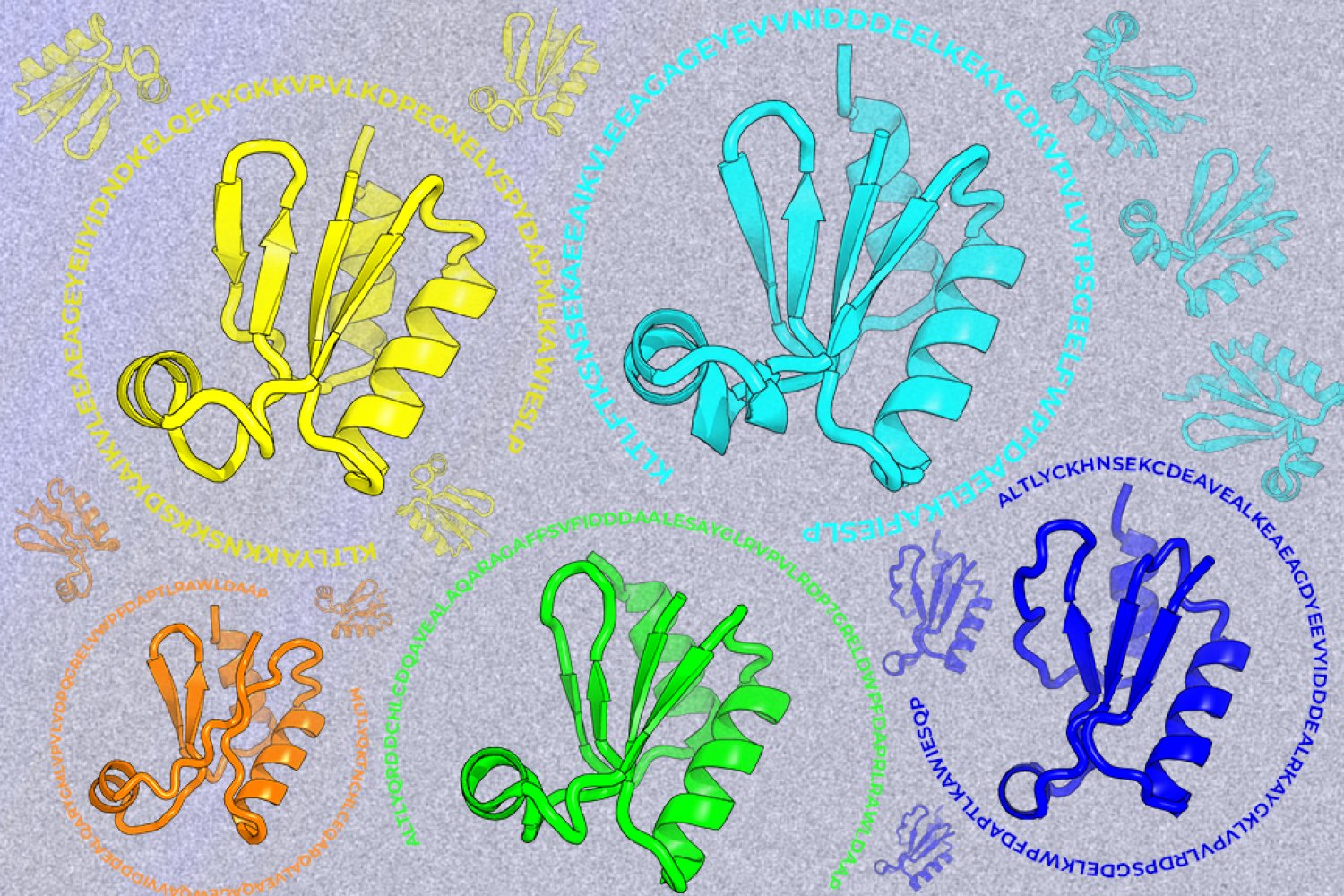
A new machine-learning framework aims to improve the success rate of computational protein design while moving away from results that reproduce sequences found in nature.
MIT News · Artificial Intelligence· news.mit.eduAug 24, 2026
A new method for surgically removing training examples from a model reveals that as datasets grow, the link between what a model learns and what it produces dissolves.