End-to-end autonomous driving models plan future trajectories from raw sensor input. While earlier driving benchmarks often measured deviation from the human trajectory, current benchmarks such as NAVSIM and Bench2Drive evaluate models with richer simulation-based metrics intended to capture safe and compliant driving. A high benchmark score should reflect that a model can understand the scene in front of it and act accordingly. But how much of that score specifically comes from reacting to the dynamic part of that scene?
To probe this, we remove a model's camera input and replace it with memories from prior drives at the same location. The retrieved memories can provide persistent scene information, including road layout and location-conditioned regularities, but not the current traffic state. Surprisingly, memory is nearly sufficient on NAVSIM, reaching or even exceeding the performance of leading end-to-end methods without actually observing the evaluated scene. Our results suggest that a high NAVSIM score does not require a planner to react to the current traffic scene and should be treated with caution. This effect is benchmark-dependent: driving from memory causes substantially larger performance drops on Bench2Drive and RealEngine. We provide our code at https://github.com/boschresearch/MemoryDrivoR .
Christian L\"owens, Thorben Funke, Alexandru Paul Condurache· 0 citations
Scientific discovery often requires reasoning over competing hypotheses that are consistent with experimental observations. For mixed-variable and combinatorial hypothesis spaces, however, constructing probabilistic representations remains challenging because both the active model components and their associated parameters are unknown. In this work, we present a framework for learning continuous latent representations of admissible partial differential equations (PDEs) by embedding a scientific inductive bias directly into the training distribution. Progressively richer structural principles (e.g., sparsity, logical dependencies, common PDE families, and physical admissibility) are used to generate a structured distribution of hypotheses from which a gated variational autoencoder learns a continuous latent manifold. Experimental results show that the resulting 11-dimensional representation accurately reconstructs a broad collection of representative PDEs, while exhibiting smooth geometric transitions both within and across equation families. Through an ablation study we further demonstrate that introducing scientific principles reduces both structural misclassifications of equation forms and parameter estimation errors when reconstructing a representative benchmark set of admissible partial differential equations. These results show that embedding a scientific inductive bias in the training distribution enables the learning of compact and geometrically meaningful hypothesis manifolds, providing a principled foundation for future inference over competing governing equations.
James Crowley, Faez Ahmed, Anton van Beek· 0 citations
Supervised fine-tuning (SFT) trains a base language model to imitate target responses, and these targets may require knowledge the base model has not robustly internalized. We study this as a source of hallucinations and frame a group of mitigation methods as \emph{knowledge-aligned SFT}: constraining SFT training targets to the base model's parametric knowledge. Under a unified setup, we compare existing generation-based and estimation-based knowledge-alignment methods and introduce two new variants: Evidence Rewrite, which verifies base-model generations using external evidence, and Recall Rewrite, which retains claims only when they can be consistently recalled by the base model. Experiments with Qwen 3 4B and OLMo 3 7B show that knowledge-aligned SFT can reduce factual hallucinations on WildHalu and Biography while largely preserving general capabilities. Recall Rewrite yields the strongest factuality gains and improves refusal behavior on UnknownBench. It thereby confirms that SFT targets beyond the base model's knowledge drive hallucination behavior.
Arthur Becker, Jakob Kemmler, David Thulke et al.· 0 citations
Joint-Embedding Predictive Architecture (JEPA) has shown strong performance in learning rich representations through self-supervised prediction in latent space. However, it typically relies on teacher--student architecture with an EMA to stabilise training, and can tend to yield uninformative representations. Contrastive learning is stable to train and produces strong global representations, but remains limited on local tasks by the global nature of its objective. In this work, we combine both into CoJEPA: a single shared backbone jointly trained with a JEPA objective on masked sequence tokens and a contrastive objective on the class token. The contrastive gradient provides stability, removing the need for an EMA teacher entirely, while JEPA enriches the sequence tokens via local predictions that contrastive learning alone cannot provide. Crucially, no extra parameters are added to the backbone: the same model is guided towards richer representations purely through the design of its training signal. CoJEPA takes the best of both worlds, outperforming or matching both individual methods across global and local MIR tasks, with a particularly strong advantage on tonal and harmonic understanding, and without any task-specific architectural changes. CoJEPA shows that combining objectives with complementary inductive biases can substitute for scale, encouraging future work to invest in smarter training objectives over ever-larger models.
Gabriel Meseguer-Brocal, Yuexuan Kong, Romain Hennequin· 0 citations
Reach audiences
Advertise in front of researchers, engineers, and readers.
Deploying a new control policy for voltage control in active distribution grids requires evidence that physical limits will be satisfied before the policy is tested on the physical grid. This assessment is difficult for two reasons. First, simulations cannot capture every disturbance, modeling error, and device interaction present in the real grid. Second, historical measurements reflect operation under existing control policies, whereas a new policy may drive the grid into different operating conditions. To address these challenges, we propose Distributionally Robust Conformal Safety Screening (DR-CSS), a policy-agnostic framework for pre-deployment, scenario-by-scenario screening of a new control policy using historical data and a nominal simulator. For each new scenario, the simulator predicts a future voltage trajectory for the whole grid; DR-CSS then constructs a conformal safety interval around this prediction using historical simulation-to-reality errors. The interval is further enlarged to account for closed-loop changes induced by the deployment of the new policy and its interactions with the remaining controllers. To the best of our knowledge, DR-CSS is the first framework in power systems to combine historical data from an existing control policy with an imperfect simulator for pre-deployment safety screening of a new policy. Experiments on the IEEE 33-bus and IEEE 141-bus systems evaluate the deployment of learning-based voltage control policies and show that DR-CSS identifies all unsafe test scenarios. To reduce unnecessary warnings on safe scenarios, we adapt the safety intervals to different operating conditions and gradually introduce new policies with recalibration after each stage. These extensions increase the informational value of the safety screening and support safer deployment decisions in active distribution grids.
Sarra Bouchkati, Petros Ellinas, Adriana Geisler et al.· 0 citations
While automatic speech recognition (ASR) models have achieved remarkable improvements in recent years, performance disparities persist across different speaker populations. One such disparity is for speakers whose first languages (L1) are from families distant from English. This paper investigates the relationship between first language background and English ASR performance. Through empirical analysis, we observe that the correlation between speakers' L1 distance and ASR error rates yields a systematic effect on English Speech, with its strength varying across datasets and models. This association is statistically significant in a follow-up analysis accounting for dataset-level variation in Tweedie mixed-effects models ($p<0.001$ across evaluated models). In addition, analysis of the latent space reveals a L1-based spatial segregation across deeper acoustic layers in the majority of evaluated architectures
Ting-Hui Cheng, Line Katrine Harder Clemmensen, Sneha Das· 0 citations
Long-context compression is essential for reducing the cost and latency of large language model inference. However, existing methods can fragment important evidence, require additional training or alignment, and often depend on the target model for effective compression. We introduce TopoCompress, a training-free and model-agnostic framework that compresses long contexts by selecting coherent semantic spans. TopoCompress first scores each span using dense and lexical query relevance together with semantic acceleration. It then constructs a hybrid graph that connects spans based on semantic similarity and sequential adjacency, and propagates the query-guided relevance scores over the graph. Across five long-context tasks-HotpotQA, 2WikiMQA, MuSiQue, Qasper, and MultiFieldQA-en-TopoCompress consistently outperforms strong compression baselines. Notably, TopoCompress achieves performance comparable to the strongest baseline while using a 4x smaller compression budget, and provides a 1.41x smaller compression time over the fastest baseline.
End-to-end weather forecasting systems produce skillful global gridded and station forecasts directly from raw Earth observations, replacing the numerical weather prediction pipeline, including data assimilation, at a fraction of its cost. These systems are deterministic and issue no uncertainty. Here we render the Aardvark Weather model probabilistic by attaching one stochastic mechanism to each component: learned, input-dependent noise at the observation encoder, capturing aleatoric uncertainty inherited from the observing system, and Monte Carlo dropout in the processor, capturing epistemic uncertainty in the learned dynamics. The resulting nested ensemble attributes forecast spread to the two sources through a law-of-total-variance decomposition, cross-checked by withholding observation streams. Probabilistic finetuning significantly improves the mean forecast, by 4.2% on average across variables and lead times. The ensemble is calibrated against ERA5 through the medium range (spread-skill ratio 0.98), keeps station RMSE within 2.4% of the deterministic model while beating it in CRPS at every lead time, and trails the operational ECMWF ensemble. The encoder branch behaves as observation-driven uncertainty. Component-attributed uncertainty makes end-to-end forecasts more transparent, a step toward observation-driven digital twins of the atmosphere.
Rodrigo Almeida, Noelia Otero, Jost Arndt et al.· 0 citations
Obtaining data from neuromorphic sensors and processing it with Spiking Neural Networks is a promising solution to lower the energy cost of artificial intelligence. The current rarity of natively neuromorphic datasets promotes the development of software tools to translate input sensory data into spikes. However, highly bio-mimetic simulators can be challenging to implement on digital hardware. In this work, we evaluate the neuromorphic encoding and subsequent classification of audio into spikes using a non-learnable, high-level, programmable encoder targeting hardware implementation on FPGA. We quantify the pipeline's efficiency with hardware-agnostic metrics based on the quantitative spiking activity. Our study focuses on the simultaneous optimisation of encoder and classifier: the first provides efficient and informative data so that the latter achieves a better performance with an overall lower energy cost at learning and inference. This work introduces the first end-to-end neuromorphic spike-encoding and evaluation of the TIMIT dataset. Our simple feedforward network reaches a classification accuracy of 99.77% on a spike-encoded Heidelberg Digits, overcoming the neuromorphic state of the art on this benchmark dataset.
Valentin M. Meunier, Am\'elie Gruel, Pierre Lewden et al.· 0 citations
Runtime guardrails are essential for reliable large language model (LLM) deployment, yet existing approaches typically rely on independent, external models that introduce additional inference cost, delayed safety signals, and a capacity mismatch with increasingly capable base models. To address these issues, we introduce SingProbe, a lightweight intrinsic runtime guard that directly reuses hidden states produced during LLM inference and operates alongside autoregressive decoding. Within a unified framework, SingProbe continuously predicts query intent, response safety, and hallucination risk at the token level with negligible additional guardrail inference overhead, offering a "free-lunch" solution. We further introduce SingStreamBench, a benchmark designed to assess whether streaming guardrails remain inactive on benign prefixes while promptly detecting emerging unsafe content. Extensive experiments show that SingProbe achieves competitive or superior performance compared with substantially larger standalone guardrails and specialized hallucination detectors, with only $\approx$2M parameters and $<0.5\%$ extra overhead. Beyond passive detection, we also show that SingProbe scores can anticipate future generation risk and guide constrained safe decoding. We further extend this paradigm to medical generation through SingProbe-Med, which selectively activates risk-directed decoding interventions only when clinically relevant risks emerge. Together, these results demonstrate that internal model representations provide an effective and efficient interface for generation-time monitoring and control.
Large language models are increasingly used as agents for multistep retrosynthesis, raising the question of how much their search policy contributes independently of the underlying reaction model. We investigate this question in a biological setting through rule-based retrobiosynthesis: a deterministic biochemical engine generates the same validated transitions for every method, searching for routes that terminate in metabolites available to an \emph{Escherichia coli} chassis, while the policy only selects which frontier molecule to expand next. Prompted and LoRA-tuned Qwen2.5-7B policies use a strict choice-only interface. The fine-tuned policy reaches $65\pm1$\% solve rate at 10 expansions on LASER versus 59\% for MCTS, and at 200 expansions reaches $78\pm1$\% versus 75\% on LASER, $88\pm3$\% versus 80\% on the RetroPath RL Golden benchmark, and $63\pm2$\% versus 45\% on the BioNavi-NP benchmark. Fine-tuning also consistently outperforms direct prompting. These results show that route-supervised frontier selection can improve budgeted search without altering biochemical generation, although performance remains dependent on frontier construction and reaction ranking.
Philippe Meyer, Guillaume Gricourt, Thomas Duigou et al.· 0 citations
Multimodal Large Language Models (MLLMs) are increasingly deployed in multi-image scenarios requiring complex reasoning across visual contexts. However, current MLLMs remain fundamentally limited by object hallucination-generating plausible yet factually inconsistent descriptions about objects. Existing benchmarks, designed primarily for single-image settings or providing only high-level multi-image assessments, cannot systematically diagnose how visual complexity and reasoning demands trigger hallucination. To address this gap, we introduce MIOH, a fine-grained multi-image object hallucination benchmark that systematically evaluates object hallucination across four foundational tasks (existence, counting, attribute, position) through three multi-image reasoning patterns (comprehensive, comparative, selective) under three controlled adversarial pressures (visual context scale, perceptual difficulty, contextual bias). Through evaluation of 29 models, we reveal that even state-of-the-art systems like GPT-5 and Gemini-2.5-Pro exhibit distinct failure patterns across different reasoning patterns and tasks. Our evaluation reveals that hallucination stems not merely from perceptual failures but from integration-stage limitations when maintaining object representations across multiple images. MIOH provides a controlled framework for analyzing multi-image object hallucination and serves as a critical evaluation tool for developing more reliable multimodal AI systems.
Joonki Min, Chaeyun Kim, Hyungwook Choi et al.· 0 citations
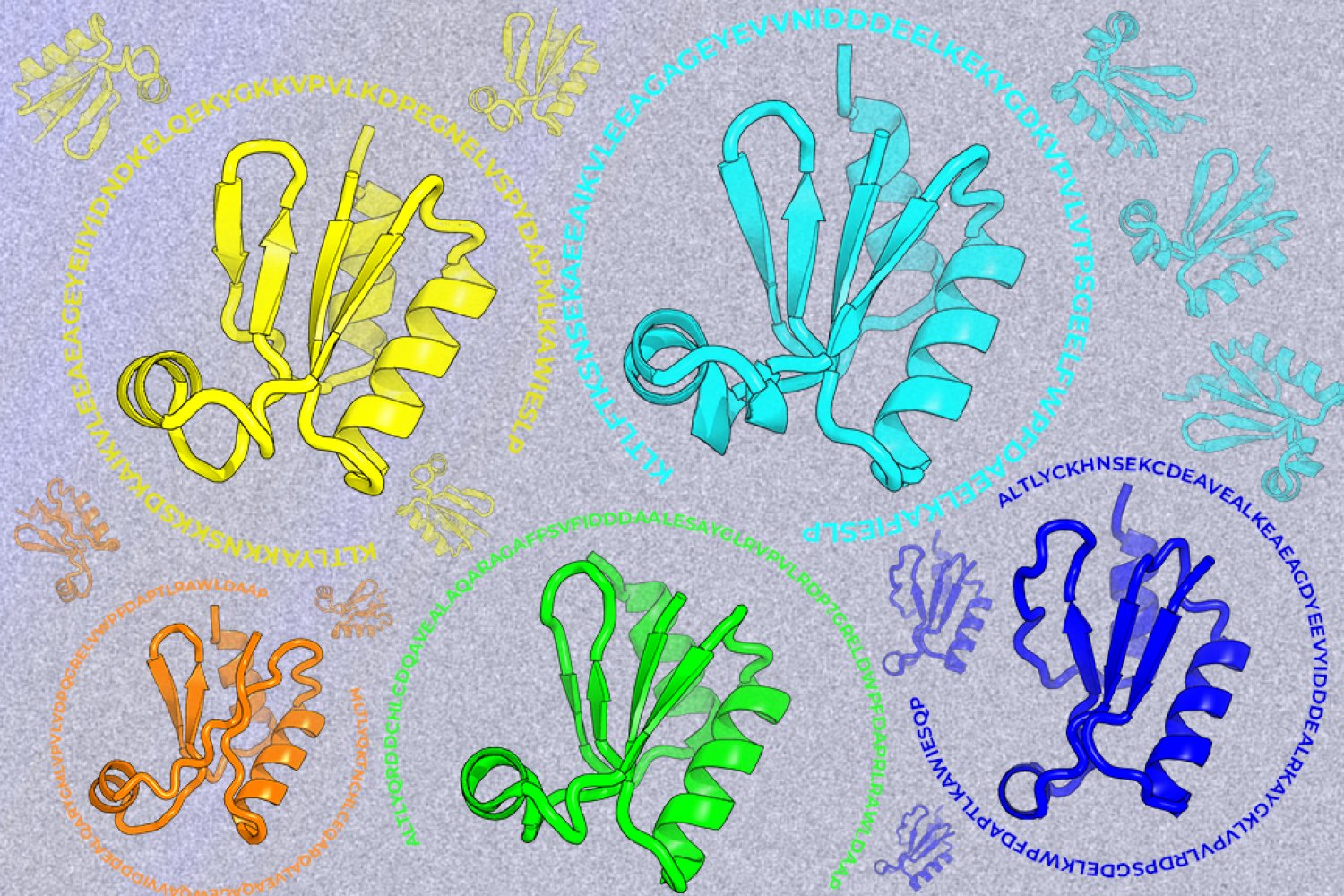
A new machine-learning framework aims to improve the success rate of computational protein design while moving away from results that reproduce sequences found in nature.
MIT News · Artificial Intelligence· news.mit.eduAug 24, 2026
A new method for surgically removing training examples from a model reveals that as datasets grow, the link between what a model learns and what it produces dissolves.