Graph positional encodings are widely used in graph neural networks and graph Transformers, yet it remains unclear when the code itself can identify nodes. We study a hybrid distance-spectral encoding that combines anchor-distance profiles with quantized low-frequency Laplacian-energy coordinates. Treating the encoding as an observation map yields a simplex-refined converse, an exact collision factorization \(\kappa_H=\kappa_D\kappa_{S|D}\), and the collision information \(I_H=-\log\kappa_D-\log\kappa_{S|D}\). On random regular graphs, the criterion is made explicit through a bounded-correlation Gaussian-wave surrogate; for actual Laplacian-energy coordinates, we give the distance-conditioned spectral collision condition sufficient for conditional actual-coordinate achievability. Experiments show that \(I_H/\log n\) calibrates localization success, and PE-only structural task probes on Universal Dependencies trees show that hybrid encodings better recover syntactic-tree geometry than distance-only or spectral-only baselines.
Systematic generalization remains a significant challenge in deep learning. In particular, combinatorial generalization - generalizing to new configurations of known factors of variation - is effortless for humans but difficult for standard neural architectures that rely on statistical correlations rather than explicit structural representations. We introduce a new architectural component that embeds structured inductive bias into deep learning: an attention mechanism operating over tensor-product representations (TPRs). Through controlled experiments on compositional tasks, we show that this TPR-attention mechanism outperforms existing architectural components in combinatorial generalization. These results highlight the value of integrating explicit compositional structure into neural attention and point toward a promising path for models capable of systematic generalization.
A supraglacial lake on the Greenland Ice Sheet ends its melt season in one of four ways: it drains rapidly through a hydrofracture, drains slowly across the surface, refreezes in place, or is buried by late-season snowfall. Which one occurs decides whether the meltwater reaches the ice bed. Satellite classifiers recover the outcome accurately but only after the season closes, and how much of a season each outcome actually requires has never been measured. We measure it directly: holding the representation and the classifier fixed, we truncate the input at $14$ cutoffs from 1 May to 31 December, retrain at each, and record the earliest cutoff at which each outcome's per-class $F_1$ reaches a fixed target. The outcomes resolve in a consistent order, two of them months early: rapid drainage by 15 July and slow drainage by 1 August, $92$ and $75$ days ahead of the earliest date a full-season pipeline can be computed at all, with buried and refreeze following at $44$ and $30$ days. Five further learners, from a majority-class floor and $54$ summary statistics to a trigger-based early classifier, leave the ordering intact: every learner that produces a per-class trajectory reproduces it despite end-of-season accuracies differing by up to $18$ percentage points, and it survives leave-one-basin-out evaluation, though not the substitution of machine labels for expert ones in an unseen season. Every feature we compute at day $t$ reads only days up to $t$, at a cost of at most $1.3$ percentage points. A monitoring system should therefore not have one release date: rapid drainage can be flagged on 15 July, three months before a full-season pipeline can be computed at all.
Bilevel mixed-integer linear optimization problems model hierarchical decision processes in which a leader anticipates the optimal response of a follower. Although expressive, these problems are computationally challenging because lower-level optimality is embedded in the leader's feasible region. Value-function reformulations replace the nested follower optimization with a constraint involving the follower's optimal value, but evaluating this value function exactly can itself be expensive. This paper introduces Graph4BiLO, a graph neural network (GNN) approach for learning bilevel value functions from variable--constraint graph representations. In contrast to fixed-length multilayer perceptron (MLP) representations, the GNN uses shared message-passing parameters and can therefore be applied across multiple problem sizes with a single trained model. The learned ReLU network is encoded exactly as mixed-integer linear constraints and embedded in an approximate single-level formulation. A repair step subsequently re-solves the follower problem for the selected leader decision to recover a bilevel-feasible follower response. We evaluate Graph4BiLO on knapsack interdiction instances with 20--100 items against the exact MibS solver and the learning-based Neur2BiLO method. Graph4BiLO obtains objective values comparable to Neur2BiLO across all tested sizes while avoiding size-specific neural networks. An additional out-of-distribution experiment demonstrates zero-shot transfer from 20-item training instances to previously unseen 40- and 60-item instances. However, embedding message passing at every graph node substantially increases the resulting mixed-integer formulation size and solve time. These results identify a central tradeoff between size-generalizable graph representations and the computational cost of embedding GNNs within optimization models.
Jessica D. Elrefaei, Kaixun Hua, Seungbae Kim et al.· 0 citations
Reach audiences
Advertise in front of researchers, engineers, and readers.
University students experience disproportionately high rates of common mental health conditions, such as depression, which can impair learning, social functioning, and overall well-being. Although lifestyle interventions such as mindfulness and physical activity can reduce the symptoms, many do not achieve symptomatic remission. Developing new approaches to identify students with poor outcomes could enable earlier and more targeted intervention. Machine learning (ML) methods have increasingly been used to predict remission in depressive patients. However, these ML models often suffer from class imbalance, where there may be an unequal proportion of people in the remitted group relative to the non-remitted group. This imbalance can reduce model accuracy and bias predictions. To address this, studies commonly employ the popular oversampling strategy SMOTE. However, SMOTE has a notable limitation: it may generate invalid synthetic minority samples. In a clinical context, these false positives can lead to incorrect risk stratification, potentially delaying necessary escalated care for patients unlikely to remit. In this paper, we introduce a novel and effective oversampling method that addresses this shortcoming. Our approach leverages the variance function of a Gaussian process to estimate the uncertainty of generated minority samples to reduce false positives. We validate our method on a depression dataset collected from university students and demonstrate that it is better than existing oversampling approaches in predicting remission (i.e., treatment outcome). By improving the reliable identification of non-responders, our method provides a robust computational tool to help clinicians rapidly pivot to adjunctive therapies, thereby personalizing and optimizing mental health care pathways.
Dang Nguyen, Arun Kumar A V, Taylor A. Braund et al.· 0 citations
Accurate detection of tomato growth stages is essential for stage-specific greenhouse management and precision agriculture. In Bhutan, greenhouse cultivation is affected by altitude variability, large diurnal temperature fluctuations, diffuse illumination, limited automation, and a scarcity of locally annotated datasets, limiting the applicability of conventional deep learning models. This work proposes Pheno-Lite + Efficient Channel Attention (ECA), a lightweight, phenology-aware object detection architecture derived from Ultralytics YOLOv5 for tomato growth stage recognition. A balanced dataset of 2,464 annotated images was constructed from locally collected greenhouse images in Bhutan and publicly available tomato images, with augmentation designed to simulate local greenhouse conditions. The dataset includes vegetative (820), flowering (824), fruiting (820), and background (26) samples. The proposed architecture introduces two customized backbone modules: C3 PhenoLite, which enhances spatial and texture feature extraction using depthwise residual refinement, and C3 ECA, which strengthens inter-channel feature interactions through efficient channel attention. The proposed model achieves 90.6% precision, 88.8% recall, and 92.6% mAP@50, with 4.0 million parameters and 10.9 GFLOPs at 640 x 640 resolution. These results demonstrate its potential for real-time and climate-resilient greenhouse deployment in Bhutan.
Understanding which training samples influence a generated image is an important problem in generative modeling. In flow matching, training samples influence the generated image through the velocity field along the generation trajectory. Removing samples to examine their counterfactual influence changes the velocity field, and the resulting effect on the final image depends on how the change propagates through the trajectory. Consequently, local changes in the velocity field do not necessarily predict the final counterfactual effect.
This work investigates attribution in flow-matching models through a hybrid analytical--learned approach, and uses it to derive trajectory-based attribution scores at the cluster level. We evaluate these attribution scores using independently retrained leave-one-cluster-out (LOO) models, and compare with several attribution baselines using two different flow-matching latent spaces. Our experiments show that semantic similarity constitutes a strong baseline, while the closed-form trajectory-based attribution is competitive in some metrics without requiring counterfactual retraining or model gradients.
Our results show that attribution in flow matching depends not only on semantic similarity to training samples, but also on the latent representation, trajectory dynamics, and how influence is propagated to the final output.
Rania Briq, Ohad Fried, Michael Kamp et al.· 0 citations
Sparse representations are often expected to make models smaller and also reduce inference cost. For Fourier Neural Operators (FNOs), these objectives are not equivalent or do not always align: removing parts of the learned operator can leave the underlying transforms and dense computations unchanged, while changing the grid on which the model is evaluated can introduce overhead of its own. We therefore distinguish sparsity in the representation, in the stored parameters, in the theoretical operation count, and in measured runtime, and present an empirical study of several routes toward sparse FNOs that tests each transition between them separately. Coarsening the execution grid reduces the theoretical cost without reducing measured latency, and adding a correction term recovers accuracy at the cost of making the model slower. Even an 83\% parameter reduction remains slower than the dense baseline under ordinary execution. These results motivate a stricter definition of useful sparsity: the deployed operator must preserve solution accuracy and map its reduced support to a genuinely cheaper execution path.
How do LLM agents come to both understand environments they act in and master tasks set within them? Through controlled experiments combining world-model training (next-state prediction) and policy training (reward maximization), we investigate this question. We dissect the resulting models through their additive parameter updates. Geometrically, we find effective world-model updates are low-rank and share an input-feature subspace with policy updates while writing to nearly orthogonal output directions, whether trained separately or sequentially. However, we find that, in projection interventions, the sequential update induces more robustness than separate policy RL when removing the world model's leading input directions, suggesting that it has learned alternative input pathways. Behaviorally, we find the sequentially trained agent explores a wider range of states and actions. Based on this, we ask: does policy training preserve world knowledge as well as it could? We probe this with training-free merging built on the geometrically motivated input basis plus an online world-model loss during policy RL, and show both improve over the untreated baseline. Our findings suggest world knowledge and task-directed ability can be learned in geometrically complementary forms, and that future post-training pipelines should consider how best to engineer the interface between them.
When does 3D Gaussian Splatting (3DGS) recover the true scene surface rather than just overfitting view-dependent appearance? We answer this by developing a mathematical framework based on a first-hit rendering abstraction that cleanly isolates geometry from appearance. We prove that geometric misalignment forcefully converts spatial textures into high-frequency angular signals via parallax. This establishes a strict identifiability window: if angular capacity is bounded, surface-consistent solutions are mathematically preferred; if unrestricted, the same images can be perfectly explained by an incorrect, opaque billboard geometry. Experiments on synthetic stress tests confirm this prediction, showing billboard failures emerge precisely at high angular capacities. Conversely, in the real-world datasets we evaluate under standard capture protocols, reconstructions remain surface-consistent even at high SH degrees, which is consistent with the prediction that rich spatial texture can push billboard solutions outside the tested angular-capacity range.
Noisy labels remain a critical challenge for training deep neural networks, since memorizing incorrect labels degrades generalization. Once noisy samples are identified after training, the standard solution is to retrain the model from scratch on the cleaned dataset, which is increasingly expensive as datasets and models grow. Machine Unlearning (MU) has recently emerged as a computationally efficient alternative, but the relative effectiveness of different MU strategies for noisy-label correction remains poorly understood. In this work, we conduct a comparative empirical study of five MU methods (NegGrad, Fine-Tuning (FT), Random Labeling (RL), SalUn, and MUNBa) across symmetric, asymmetric, instance-dependent, and open-set noise on CIFAR-10, CIFAR-100, and the real-world noisy dataset Food-101N. Our central finding is that the appropriate unlearning strategy is conditioned on the noise structure. Simple FT is a strong baseline across most closed-set scenarios; RL and SalUn are the most consistently robust methods and, under instance-dependent noise, approach retraining accuracy at a fraction of the computational cost; MUNBa shows advantages mainly under extreme symmetric noise. Under open-set noise, in contrast, we show that retraining on the cleaned subset degrades accuracy relative to the noisy baseline, so approximating the retrained model is not an adequate objective in this regime. On Food-101N, all MU methods remain competitive and achieve accuracies close to retraining despite reducing runtime by an order of magnitude. These findings provide practical guidelines for selecting MU strategies for post-training noisy-label correction.
João L. P. Santana, Filipe R. Cordeiro· 0 citations
This paper introduces a family of multiclass linear Perceptron classifiers with a multiplicative margin mechanism (MMPerc), as an alternative to standard margin-free and additive margin Perceptrons. The multiplicative formulation enforces classification confidence by requiring the true class score to exceed that of competing classes by a specified fraction of itself, rather than by a fixed additive threshold. This avoids dependence on score magnitudes arising from varied norms of data and class weight vectors. We propose several architectural and algorithmic variants of MMPerc, derive associated loss functions and mistake bounds for both linearly separable and non-separable data, and analyze key design considerations, including bias, margin threshold selection, and training modes. Extensive experiments on synthetic and real datasets show that MMPerc classifiers typically outperform the standard Perceptron, as well as classic baselines such as Support Vector Machines and Ridge classifiers. Owing to their simplicity, minimalistic design, and computational efficiency, MMPerc classifiers are promising candidates for conventional machine learning tasks, linear evaluation of Deep Neural Networks, integration with Hyperdimensional Computing / Vector Symbolic Architecture representations, and deployment in resource-constrained applications.
Dmitri Rachkovskij, Evgeny Osipov, Olexander Volkov et al.· 0 citations
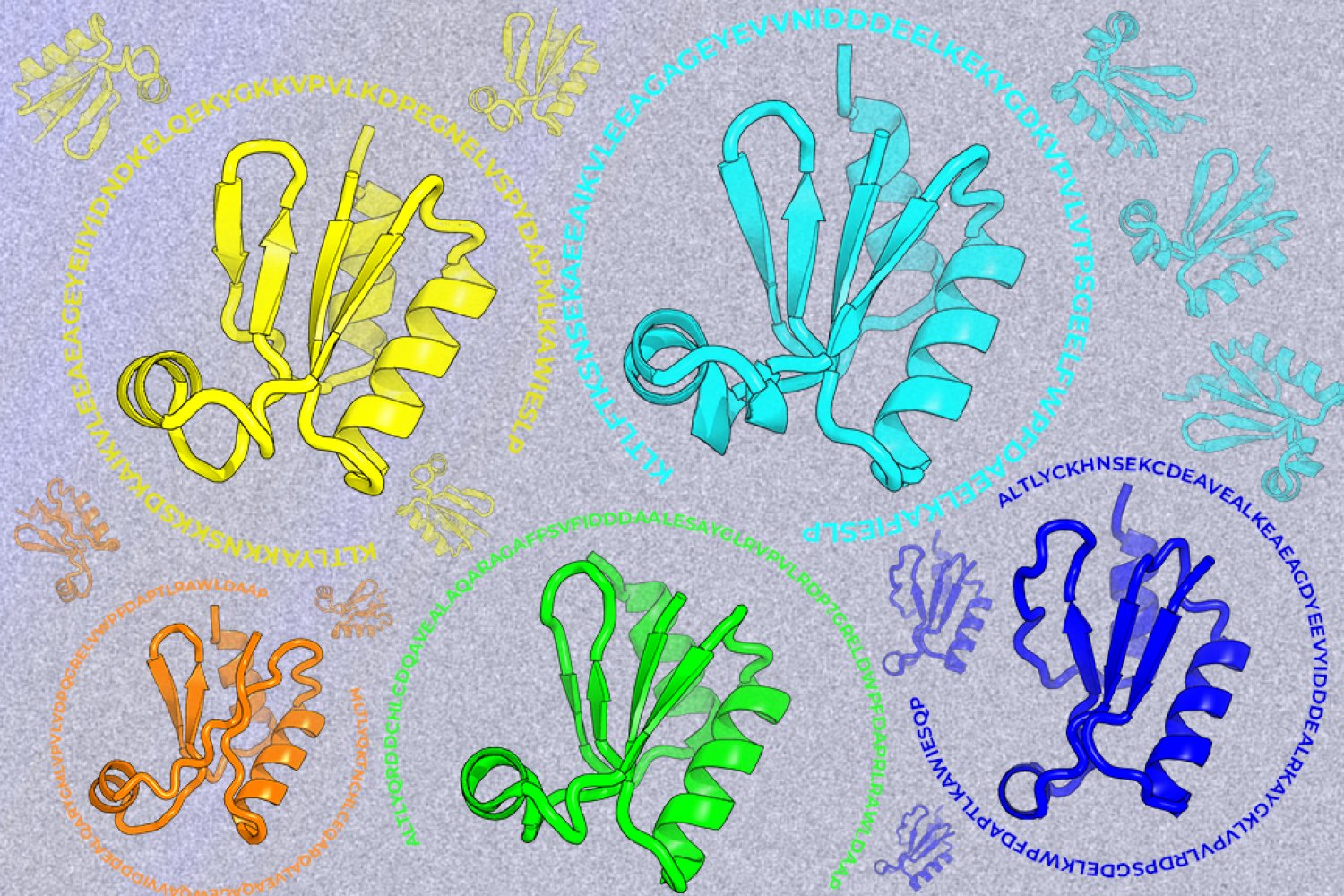
A new machine-learning framework aims to improve the success rate of computational protein design while moving away from results that reproduce sequences found in nature.
MIT News · Artificial Intelligence· news.mit.eduAug 24, 2026
A new method for surgically removing training examples from a model reveals that as datasets grow, the link between what a model learns and what it produces dissolves.