Errors in radiology reports can adversely affect patient treatment, yet automated report quality assurance remains challenging because errors are often subtle and require domain expertise to detect. Although large language models (LLMs) have recently been proposed for radiology report verification, their ability to detect clinically meaningful errors beyond chest X-ray datasets remains under-explored. To this end, we present the first systematic evaluation of language models for PET/CT report error detection, comparing compact domain-specific models with SOTA open-weight LLMs. We collected 30,633 oncology FDG PET/CT reports from 23 radiologists over 10 years. We trained domain-specific BERT models to detect clinically motivated synthetic reporting errors and evaluated alongside zero-/few-shot Qwen3-32B, Gemma-3-27B and Llama-3.3-70B on a held-out benchmark of 11,500 reports. A 15M-parameter model achieved 94.4% balanced accuracy with a 5.8% false-positive rate, compared with 84.0% for the strongest prompted LLM. Task-specific adaptation of Llama-3.3-70B closed this performance gap (94.4%) but retained substantially greater computational requirements. Our results suggest that domain-specific training matters more than model scale for PET/CT report error detection, supporting compact models as an accurate and computationally efficient approach to automated radiology report quality assurance.
Hermione Warr, Harry Anthony, Lilli J Freischem et al.· 0 citations
Planning-time intervention fidelity is a distinct, measurable property of a learned world model: whether the model's own open-loop transitions move task variables the way matched environment interventions do. In the settings we test, it is neither revealed by reward fit nor ensured by task-anchored training. Across released TD-MPC2 checkpoint sizes, episode return falls as an operator-error diagnostic on task observables grows, while reward-prediction error stays small and nearly flat, and a self-supervised world model trained without task signal preserves the same operator substantially better than a task-anchored model on the shared task. A capture-gated matched-intervention audit then localizes what fails. On Cheetah, three LeWorldModel checkpoints capture the current task query and support decodable real intervention effects; however, their imagined five-step effects are worse than predicting no effect and worse than an environment-endpoint oracle. The failure is task-direction rotation with excess gain, not feature collapse. This severe pattern is conditional: five PreJEPA seeds retain an oracle-relative deficit without it, Finger Spin experiments extend the deficit beyond locomotion with heterogeneous severity across seeds, and shared-bank effect geometry is both candidate- and support-dependent. We also test practice-side questions. In DreamerV3 the posterior distribution, not its sample, carries the current query; ensemble disagreement ranks error only near training support; and a frozen support-aware score degrades held-out error ranking in both tested transfer directions while native disagreement remains informative in both. We conclude that intervention fidelity must be audited directly, capture-first, on the model's native interface.
Broad Learning System (BLS) offers an efficient alternative to deep architectures by enabling fast learning through randomized feature mapping and closed-form solutions. However, its reliance on squared error loss makes it highly sensitive to noise, outliers, and corrupted labels, limiting its reliability in real-world scenarios. To address this limitation, we propose Wave-BLS, a robust broad learning framework that integrates the wave loss function, which is asymmetric, bounded, and smooth, enabling controlled penalization of large errors. The proposed formulation replaces the standard least-squares objective with a wave-loss-based optimization problem, solved efficiently using a Nesterov accelerated gradient (NAG)-based scheme without requiring matrix inversion, thereby improving scalability. Extensive experiments on 30 UCI benchmark datasets demonstrate that Wave-BLS consistently outperforms classical BLS and several robust variants. Statistical validation using Friedman and Nemenyi post-hoc tests confirms the significance of the observed improvements. Furthermore, robustness evaluations under controlled noise and outlier injection reveal that Wave-BLS exhibits substantially slower performance degradation compared to BLS, even in challenging contamination settings. These results establish Wave-BLS as a stable and robust alternative to existing broad learning models for learning under data uncertainty.
Mushir Akhtar, A. Varshney, A. Quadir et al.· 0 citations
Large language models (LLMs) can memorize sensitive information, raising serious privacy concerns. Machine unlearning offers a potential solution to remove such information, but it remains unclear whether existing methods truly erase it or merely hide it within the model. A key challenge is quantifying the persistence of sensitive data under a unified evaluation framework. To address this, we construct a synthetic dataset containing fake private information and propose a white-box auditing framework to systematically assess whether claimed-forgotten information is genuinely removed. Using this framework, we evaluate five existing unlearning methods and find that a simple "inverse greedy" decoding -- selecting the least likely token at each step -- can recover supposedly forgotten private information. Our results reveal that current unlearning approaches often fail to fully eliminate sensitive information, highlighting the need for more reliable methods to ensure privacy in deployed LLMs.
Shicheng Hu, Runzhi Tian, Ziqiao Wang et al.· 0 citations
Reach audiences
Advertise in front of researchers, engineers, and readers.
Future wireless systems are expected to transform the surrounding space from a passive propagation medium into a smart electromagnetic environment, where engineered surfaces control wave propagation, support wireless sensing, and create programmable electromagnetic fingerprints. A key challenge in realizing this vision is the inverse design of metasurfaces for tailored electromagnetic propagation. While forward analysis evaluates the response of a known geometry, the inverse task starts from a prescribed scattering signature and seeks a physically realizable structure that produces it. This inverse task is inherently nonlinear and often high-dimensional, while candidate solutions may be non-unique and provide no direct indication of practical realizability. Here, we introduce a conditional diffusion framework for inverse design of dielectric resonator metasurfaces from target angular scattering patterns. Trained on T-matrix simulated geometry-response pairs, the model learns a conditional distribution of geometries instead of a deterministic mapping, enabling multiple candidate designs for the ill-posed inverse problem. The best generated metasurface achieves a mean percentage error of 1.39%, outperforming CMA-ES optimization (4.1% after 10 h) while requiring only about one minute for after-training inference. The model also produces lower error distributions than deterministic neural baselines for out-of-distribution spectra, highlighting the potential of diffusion models for efficient metasurface design.
M. Tsukerman, K. Grotov, D. Vovchuk et al.· 0 citations
Electronic Health Record (EHR) prediction models in the intensive care unit must learn from sparse and irregular measurements while preserving the clinical meaning of time and supporting transparent decision-making. We present INTERVenE, a family of Transformer architectures whose input is an interval-based, knowledge-based temporal abstraction (KBTA), a token stream of named clinical concepts (states, trends, events, contexts) drawn from a curated medical ontology, rather than an unnamed bin index or a raw measurement triplet. This naming layer is what we ask KBTA to do: it makes the model's per-token attributions resolve to clinical concepts by construction. INTERVenE offers two complementary variants: an auto-regressive decoder that generates future abstraction trajectories with a per-step risk readout (localizing \emph{when} and \emph{after which events} risk rises), and a bidirectional encoder for single-pass joint risk and time-to-event prediction. Evaluated on 57,078 MIMIC-IV admissions against GRU-D, STraTS, and KarmaLego, INTERVenE-Enc reaches a support-weighted AUPRC$_w$ of 0.672, improving by 0.041 over the strongest neural baseline with non-overlapping 95\% bootstrap CIs, while also taking the best AUROC$_w$ (0.901) and length-of-stay MAE (44.4\,h). INTERVenE-Ar (AUROC$_w$ $0.854$, AUPRC$_w$ $0.587$ under the same evaluation contract - a strictly harder generative readout) provides a complementary token-level risk trajectory. An input-representation ablation confirms the lift transfers across structured discretizations, positioning KBTA-based intervals as the interpretable substrate that makes per-token attributions resolve to meaningful clinical concepts within the deployed model.
Learning solution operators for partial differential equations (PDEs) on irregular and geometry-dependent domains remains a central challenge in scientific machine learning. While spectral methods provide strong inductive biases for modeling global interactions, they are typically limited to regular domains, and existing neural approaches often require domain warping, interpolation, or costly geometric embeddings. We introduce the \textbf{Graph Spectral Neural Operator (GSNO)}, a neural operator that combines spatial graph spectral decompositions with temporal Fourier transforms through a unified space--time spectral kernel. This formulation enables globally coherent operator learning on non-Cartesian discretizations without domain warping or autoregressive rollouts. By replacing learned geometric embeddings with a graph Laplacian spectral basis, GSNO provides geometry-aware spectral learning with low parameter complexity. Across steady and unsteady PDE benchmarks on irregular and geometry-dependent domains, GSNO achieves strong accuracy with reduced runtime and parameter counts, while demonstrating robust zero-shot generalization across mesh resolutions and geometry families.
Neural operators provide fast surrogates for partial differential equation (PDE) solvers, but their reliability can degrade for high-dimensional spatial inputs and inverse or repeated inference. State-only training constrains solution values but not the learned input--output response. We study sensitivity-constrained neural operators (SC-NOs), which augment standard training with sampled solver-derived Jacobian supervision. Selected sensitivities from differentiable solvers or discrete adjoints are matched during training, allowing response information to be amortized across minibatches without imposing the full Jacobian at every update. We evaluate SC-NO on advection--diffusion and RANS--Spalart--Allmaras benchmarks, input-dimensionality scaling tests, long-horizon autoregressive rollout, and a shallow-water Tohoku tsunami source-inversion case. Sensitivity supervision improves forward prediction and yields larger gains in gradient-based inverse reconstruction of distributed fields. Scaling experiments show an improved accuracy--cost tradeoff for high-dimensional gridded inputs, while ablations indicate that state values and Jacobian information provide complementary supervision. In the tsunami case, SC-FNO reconstructs gridded seafloor deformation from sparse early gauge observations and forecasts subsequent wave propagation in a near-real-time proof-of-concept workflow. These results support sampled sensitivity supervision as a practical way to improve neural PDE surrogates when forward accuracy, inverse stability, robustness, and computational cost must be considered together.
Abdolmehdi Behroozi, Chaopeng Shen, Daniel Kifer et al.· 0 citations
Molecular self-supervised learning uses chemical structures to guide which molecular embeddings should be similar. We study whether explicitly encoding a molecule's Bemis-Murcko scaffold and using it to supervise the molecular embedding changes what the model learns. We further test whether this effect depends on the embedding geometry by comparing Euclidean and Lorentz contrastive objectives. Across two augmentation strengths, scaffold-supervised models consistently organize molecules according to both identical and structurally related scaffolds. The resulting embeddings also improve molecular property prediction on several tasks, while the exact gains depend on the predicted property. The effect of scaffold supervision on molecular organization is stronger under Lorentz objectives, but neither geometry provides a consistent overall advantage. These results show that explicitly teaching the relation between a molecule and its structural core can reliably shape the organization of molecular embedding space, while the extent of usefulness of this organization remains task dependent.
David Sulu, Lorenzo Di Fruscia, Jana M. Weber· 0 citations
Spiking neural networks (SNNs) are often regarded as energy-efficient alternatives to artificial neural networks (ANNs), yet their advantage depends critically on both network architecture and data properties. We develop an analytical framework to compare fully-connected ReLU ANNs and integrate-and-fire SNNs for time-series data with respect to their theoretical energy efficiency at matched expressive capacity. By relating an inference-energy model to theoretical bounds on representational expressivity, we derive an expressivity-normalized efficiency ratio and explicit thresholds in network width, spike sparsity, and ANN depth scaling. Our analysis characterizes the regimes in which event-driven computation offsets the temporal overhead of SNNs, providing capacity-aware principles for designing energy-efficient temporal networks. It shows that ANNs exceed SNNs in expressivity-normalized efficiency only in specific regimes.
Autoencoders are widely used for nonlinear dimensionality reduction and manifold learning. While most common implementations rely on both nonlinear encoders and decoders, we investigate the specific role of the encoder and the extent to which it can be constrained to be linear without reducing accuracy. We conduct a comparative study on four autoencoder architectures: standard fully nonlinear autoencoders (AE), linear-encoder autoencoders (Lenc-AE), linear-decoder autoencoders (Ldec-AE), and fully linear autoencoders (LAE), evaluated on synthetic manifolds, computational mechanics data sets, and real-world image data sets including MNIST. We demonstrate that imposing a linear encoder preserves most of the representational capacity of the autoencoder, provided the decoder remains nonlinear. In particular, Lenc-AE consistently outperforms both Ldec-AE and LAE, and achieves reconstruction quality comparable to fully nonlinear AE, while offering advantages in terms of parsimony and interpretability of the latent representation. These results suggest that the nonlinear decoder is the critical component for manifold learning, rather than the encoder. A geometric interpretation of this finding is developed, which identifies the precise conditions under which a linear encoder is sufficient, and the specific manifold configurations that expose its limitations.
Louen Pottier, Louis Lesueur, Anders Thorin· 0 citations
Uncertainty estimation provides promising capabilities for reinforcement learning (RL) agents. Notably, estimating uncertainty can reduce the training time and enable agents to obtain greater rewards over time by exploiting information related to whether an action would facilitate exploration of portions of an environment that are well-known versus those that are relatively unknown. In this work, we propose a novel formulation of the experience replay buffer commonly used in RL that we call uncertainty-driven replay memory (UDRM), which entails an update scheme for internally stored memories based on uncertainty estimates obtained by an RL model during training. In contrast to existing forms of RL, which typically use temporal difference error or the distribution of transitions to update the replay memory buffer and train RL controllers, our scheme biases the memory buffer to store more uncertain transitions that will improve an RL agent's generalization throughout training. Experimental results demonstrate that our proposed uncertainty-aware replay buffer enables an RL agent to obtain higher rewards during training compared to other existing uncertainty-aware RL frameworks.
Sheeraja Rajakrishnan, Alexander G. Ororbia, Travis Desell et al.· 0 citations
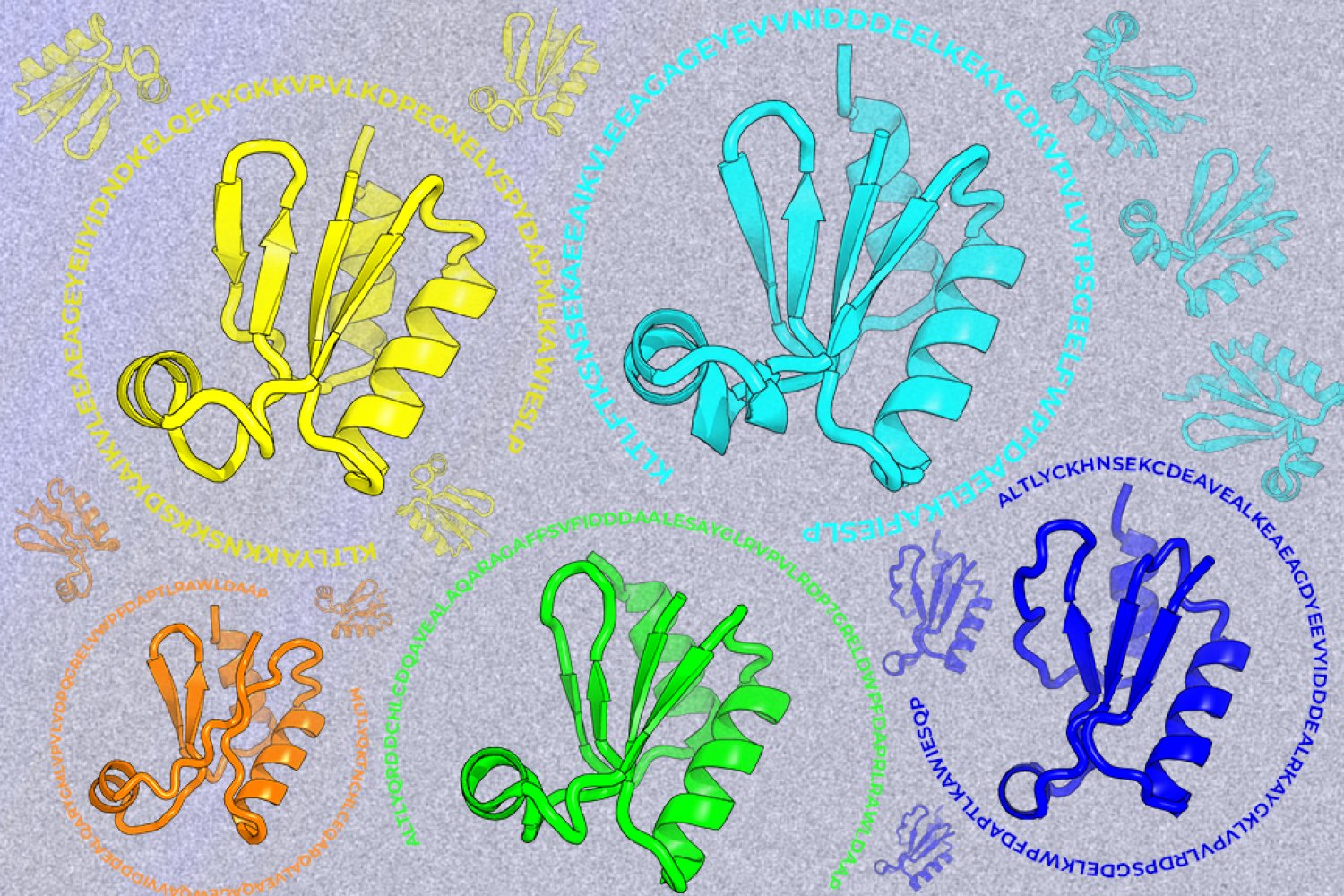
A new machine-learning framework aims to improve the success rate of computational protein design while moving away from results that reproduce sequences found in nature.
MIT News · Artificial Intelligence· news.mit.eduAug 24, 2026
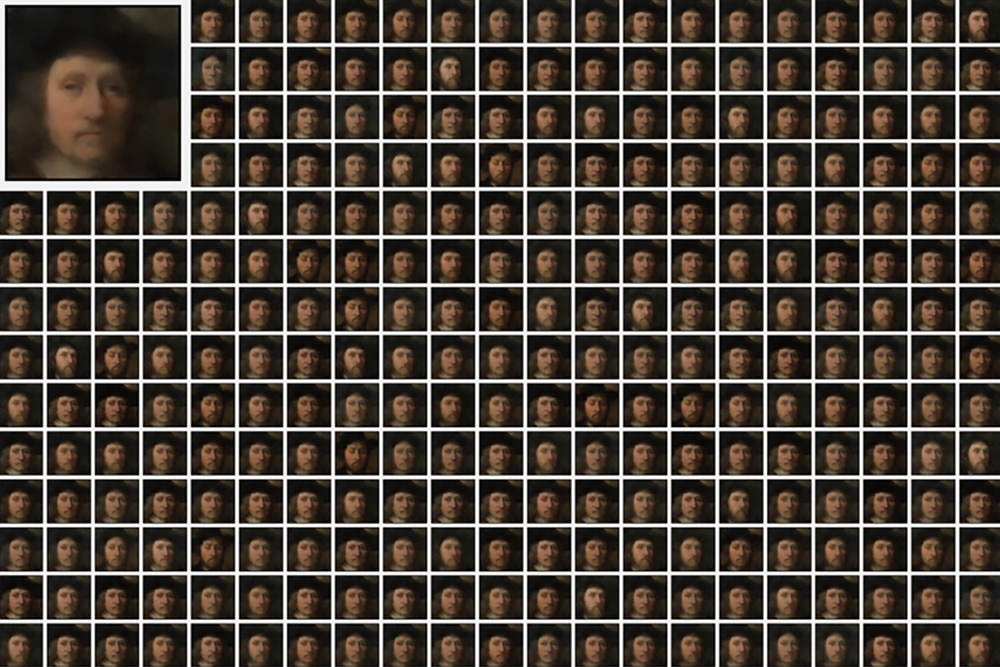
A new method for surgically removing training examples from a model reveals that as datasets grow, the link between what a model learns and what it produces dissolves.