We propose Titans-QFWP, a hybrid reinforcement learning architecture integrating a Quantum Fast Weight Programmer with Titans-style memory (Persistence, Surprise, and Forgetting) for adaptive portfolio optimization. To address high-dimensional market features, we introduce an enhanced A3C^2 framework with Hungarian-aligned K-means clustering and scaled log-return rewards. Evaluated on 468 S&P 500 stocks under an Equal-Parameter-Count (EPC) benchmark with approximately 3,000 trainable parameters, Titans-QFWP achieves strong performance (median ARR 0.4260, Calmar 8.5504, IR 0.8427). Ablation results reveal that quantum gating fundamentally reshapes memory component roles, with Persistence supporting drawdown control, Surprise contributing to return generation, and Forgetting providing additional stabilization. By stabilizing these quantum representations, the model enables defensive allocation during market drawdowns while preserving upside potential.
Ming-Kai Hung, Jun-Hao Chen, Yun-Cheng Tsai et al.· 0 citations
Chain-of-thought (CoT) reasoning traces are increasingly proposed as a mechanism for AI oversight: a monitor inspecting a model's reasoning can, in principle, detect misbehavior invisible from outputs alone. This assumes CoT surfaces what a model is instructed to do regardless of the instructions given. We test this assumption along two axes. First, we introduce the Instruction-Compliance Gap (ICG): the difference in probability that a model's CoT explicitly references a hidden system prompt directive when that directive is malign versus benign. Across 100 task pairs and 8 frontier reasoning models from 5 families, we find consistent asymmetric disclosure, a higher probability of leaking malign hidden instructions than benign ones, in Qwen3-14B (Wilcoxon $p=0.0001$, $+13.9$pp), Qwen3-32B ($p=0.0011$, $+13.0$pp), Qwen3-235B ($p=0.035$, $+5.8$pp), and similar results with MiniMax-M2.5 and DeepSeek-R1. The detector has 100% precision against two independent blinded labelling passes, and an LLM monitor reading only the reasoning trace reproduces the asymmetry in all 8 models against directive-free controls, identifying the specific directive in 82% of malign traces which the detector classifies as clean. Second, steering vectors extracted in MiniMax-M2.5 via Contrastive Activation Addition causally induce hiding from bare prompts and suppress it from prompts that would otherwise produce it, replicating in Qwen3-14B under a pre-registered design. Benign and malign-derived hiding vectors are highly similar (cosine $0.804$ in MiniMax-M2.5; $0.970$ in Qwen3-14B), implying that in these models the disclosure asymmetry arises from differential activation of a shared hiding direction rather than separate mechanisms.
Offline goal-conditioned reinforcement learning (GCRL) aims to learn policies for reaching diverse goals entirely from fixed trajectory data. Long-horizon offline GCRL remains challenging because sparse goal-reaching signals must be propagated over many steps, while execution errors cannot be corrected through additional environment interaction. Existing methods address these challenges by improving long-range value estimation or reducing the effective decision horizon through subgoals, options, and action chunks. In several hierarchical methods, however, a selected subgoal specifies where to go, while the intervening state-space path remains implicit in an endpoint-conditioned low-level policy. To address this interface, we propose PathBridger, a hierarchical offline GCRL method that explicitly connects subgoal selection to short-horizon execution. PathBridger constructs a state-space bridge toward the selected intermediate endpoint and decodes it into a short executable action chunk using an inverse dynamics model. Experiments across the evaluated OGBench tasks demonstrate strong aggregate performance, with particularly large gains on the multi-object Cube manipulation tasks. Code: https://github.com/SChoish/PathBridger
Koopman autoencoders (KAEs) seek a higher-dimensional latent representation in which nonlinear dynamics evolve linearly. However, many interesting systems have multiple basins of attraction, and both theoretical and empirical work has shown these multibasin systems cannot generally admit a single finite-dimensional global Koopman embedding under standard assumptions. We posit that encoders with a sparsity-inducing objective encouraging few active latent coefficients will provide latent supports as an inspectable basin-modeling principle for Koopman autoencoders. We use these encoders producing sparse latents in training Sparse Koopman Autoencoders (SKAEs) without basin labels or other regime annotations, and treat the learned latent supports as model-produced regime variables after training. Across a range of procedurally generated multibasin systems and chaotic flows, we show that SKAEs have superior forecasting performance compared to dense-latent KAEs. We also perform a mechanistic study that shows latent supports produced by SKAEs are both essential for the quality of the representation and useful for identifying basins on held-out basin interior states, whereas dense-latent KAEs collapse to an uninformative single family. These results identify sparse latents and their corresponding supports as label-free, interpretable regime variables for Koopman learning in nonlinear systems with multiple local dynamical laws.
Biclustering, or co-clustering, aims to discover coherent submatrices by grouping rows and columns of a data matrix simultaneously. This local two-dimensional structure makes validation more difficult than in ordinary clustering, where internal indices usually rely on compactness and separation in a single shared feature space. Existing popular internal biclustering measures such as Mean Squared Residue (MSR), and Virtual Error (VE) mainly evaluate within-bicluster coherence. Although useful, these measures do not directly assess whether the extracted biclusters are mutually distinct or whether they explain a meaningful portion of the data matrix. This paper investigates Normalised Virtual Error (NVE), an internal validation metric that extends VE using a super-bicluster normalization strategy. By comparing the VE of each bicluster with the VE obtained after merging it with other biclusters, NVE introduces a relative notion of separability and redundancy. We also study a coverage-adjusted variant, NVE\textsubscript{cov}, which penalizes solutions that obtain low error by selecting only very small submatrices. Through controlled synthetic benchmarks and yeast gene-expression datasets, we examine whether NVE and NVE\textsubscript{cov} provide information beyond standard coherence-based metrics. The results show that NVE is sensitive to redundant and poorly separated biclusters, while NVE\textsubscript{cov} changes solution rankings when low-error biclusters cover only a negligible part of the matrix. These findings suggest that NVE-based measures are useful complementary criteria for internal co-clustering validation, especially when coherence, separability, and coverage must be considered jointly.
Paritosh Tiwari, I Navin Kumar, James C. Bezdek et al.· 0 citations
Joint-Embedding Predictive Architectures (JEPAs) have shown strong potential for learning compact predictive representations, and LeWorldModel (LeWM) extends this paradigm to reconstruction-free latent world modeling from pixels. However, its deterministic autoregressive predictor generates future states through repeated one-step transitions, which can accumulate errors and remain sensitive to task-irrelevant visual perturbations. In this work, we propose Flow-JEPA (F-JEPA), a conditional flow matching dynamics model that jointly generates a sequence of future latent states conditioned on the current observation and actions. A Gaussian distribution serves as the flow source, exposing the vector field to perturbed latent trajectories as it learns to transport them toward clean future representations. This formulation retains the reconstruction-free JEPA framework while replacing point-wise transition regression with stochastic trajectory-level prediction. F-JEPA raises mean success from $86\%$ to $92\%$ under clean observations and from $67\%$ to $86\%$ under noisy conditions, suggesting that conditional flow matching provides a promising alternative to deterministic autoregressive dynamics in JEPA world models.
Wind power ramp events which are sudden, large swings in turbine output over short windows are difficult to estimate, and standard models often miss them. Hybrid forecasting approach is built which augments semantic context to ramp-event forecast. Rather than applying an extensive language model directly to predict turbine operating data, we have implemented a pipeline where turbine operating data is converted to simplified text, which is then converted to dense embeddings to be used as inputs for ensemble models incorporated with other features. Testing runs are performed at multiple intervals within the SDWPF dataset, including 10-minute, 30-minute, and 60- minute horizons, with ramp events constituting the highest change in future power output. We check robustness against autoregressive, LSTM, and GRU baselines plus several ensemble configurations, using Diebold-Mariano tests and bootstrap confidence intervals, and we vary the ramp threshold, compress the embeddings with PCA, and validate externally on Kaggle SCADA and NREL data with uncertainty-aware scoring. The semantic-context features produce negligible yet statistically significant gains over the baselines in multiple paired ensemble runs, most clearly at the 30- and 60-minute horizons where these gains hold across different ramp-threshold definitions, and PCA compression helps in some longer-horizon cases. The best context- augmented ensembles rank near the top overall, though the GRU model still posts the lowest ramp-event RMSE at 30 and 60 minutes. External tests confirm the error reduction generalizes across datasets, but the size of the gain depends on both model and dataset. Prediction intervals cover most test cases well but weaken during ramp events, pointing to a localized shift in the data distribution.
Momina Liaqat Ali, Muhammad Abid, Muhammad Abdullah et al.· 0 citations
The advances in visual information modeling and representation during the last decades are remarkable, mainly supported by Convolutional Neural Networks, Transformer-based, and Foundation Models. Despite this progress, critical challenges regarding the nature of similarity assessment and model transparency have been neglected. A primary concern is the Geometric Gap, where traditional pairwise measures fail to capture the intrinsic geometry of the dataset manifold. Furthermore, the Interpretability Gap persists, as representations often lack alignment with human cognition. Therefore, how to provide interpretability to representations while maintaining low dimensionality and high effectiveness in downstream tasks remains an open challenge. In this paper, we propose a novel unsupervised framework that integrates Manifold Learning strategies with Rank-based Interpretable Graph Embeddings. Our approach effectively bridges these gaps by first characterizing the contextual information of the dataset through manifold analysis and subsequently generating sparse, self-explainable embeddings. The proposed approach employs a flexible formulation, allowing different Manifold Learning and Representation Learning strategies. Extensive experimental evaluation across diverse datasets and features demonstrates that our Context-Aware representations not only provide intrinsic interpretability and dimensionality reduction but also maintain or enhance effectiveness in downstream tasks, specifically in image retrieval and semi-supervised classification using Graph Convolutional Networks (GCNs).
Thiago C\'esar Castilho Almeida, Gustavo Rosseto Let\'icio, Vinicius Atsushi Sato Kawai et al.· 0 citations
In a data-driven world, efficiently organizing and mapping relationships between objects is crucial. Graphs are powerful tools for modeling these connections, being widely used in social networks, telecommunications, and biology. However, graph-based methods often face high computational costs, particularly in memory and space usage. To address this, graph embedding techniques, also referred to as Network Representation Learning, encode graph information into lower-dimensional representations while preserving structural aspects. Traditional methods, however, lack interpretable dimensions. RaDE (Rank Diffusion Embedding) introduces a new approach using rank-based information, with a key step being the selection of a representative subset of nodes to provide interpretability for its dimensions and improve retrieval tasks. Despite its potential, RaDE's original proposal did not fully explore the effectiveness of representative subset selection across different classes or evaluate embeddings in tasks like classification and clustering. Inspired by RaDE, this work introduces GRaCE (Graph and Rank-based Contextual Embeddings), a fully unsupervised framework that generates interpretable embeddings by leveraging robust rank-based measures for representative subset selection and node embedding. GRaCE surpasses RaDE and Original Features across diverse datasets, including textual and image collections, excelling in retrieval, classification, and clustering tasks, considering state-of-the-art Transformer models as feature descriptors and Graph Convolutional Networks models in classification tasks.
Thiago C\'esar Castilho Almeida, Gustavo Rosseto Let\'icio, Lucas Pascotti Valem et al.· 0 citations
As air traffic volumes in the National Airspace System continue to expand, in particular in the low altitude airspaces, the need for scalable decision support tools used by air traffic controllers will also require more development. This article introduces Voice-to-Trajectory for Air Traffic Control, a joint voice communication-flight trajectory data embedding framework, that can be a component of situational awareness in congested airspaces, and assist the development of tools for ATC as they reason in real-time over Automatic Dependent Surveillance-Broadcast trajectories, or the intent expressed by pilots in natural language. We show that these data modalities are not independent and represent a common physical referent: an aircraft flying through the airspace. V2TATC maps a voice instruction and the trajectory of the addressed aircraft to nearby points in a single latent space that can be queried in both directions. It combines a self-supervised trajectory encoder, a frozen large-scale speech encoder, a contrastive joint embedding, and a bijective lifting via normalizing flows. We demonstrate V2TATC's effectiveness on the San Francisco Bay Area, for its concentration of major airports, and its mix of commercial and general aviation low altitude traffic. Lastly, we release a novel paired voice-trajectory dataset, and report experiments on cross-modal retrieval, ablations, and latent-space analysis.
Louis Brusset, Mathurin Petit, Jordan Kam et al.· 0 citations
For finite-horizon tabular CVaR reinforcement learning, prior work proves a $\widetilde{O}(\tau^{-1}\sqrt{SAK})$ leading regret bound for arbitrary normalized return laws and the sharper $\widetilde{O}(\sqrt{SAK/\tau})$ rate under a density lower bound. We show that the same Bernstein CVaR-UCBVI algorithm attains the sharper rate without continuity assumptions. The key is a selected-budget self-bound: the conditional variance of the episode shortfall is at most $\tau$ plus the value-estimation width. Substitution into the original Bernstein decomposition yields, with high probability, $\widetilde{O}(\sqrt{SAK/\tau}+(SAHK^{1/4}+S^2AH)/\tau)$ regret for arbitrary normalized return laws, including atomic, mixed, and continuous laws. The $\tau^{-1/2}$ leading term matches the expected-regret minimax lower bound up to logarithmic factors. Thus Bernstein CVaR-UCBVI is minimax-optimal over the full return-law class in the leading-order regime; the lower-order terms retain their $\tau^{-1}$ dependence.
Over the course of the last decade, neural networks have grown from an academic curiosity to moving the markets of nations. Despite this explosion in both research and deployment, relatively little is understood about how they achieve the solutions they do. This is both scientifically relevant, and pressing for society. When neural networks make decisions across self-driving, construction, law, hiring and health, there have been and will continue to be unintended consequences.
However, attempting to generalize the failures of the largest and most important production systems makes for a very difficult task. Yet signs of these failures exist at all scales of neural networks, so we should be able to study a much more tractable setting. All neural networks must undergo an optimization process, called training, to be useful. To a great degree, understanding neural networks is understanding their optimization: through what process and exposure to which data did they arrive at their results. Yet our knowledge on this topic as a field is quite imprecise. In particular, a curious phenomenon called mode connectivity, the ability to connect neural networks in the loss surface, defies explanation entirely.
This dissertation elucidates, explains and exploits this special structure in the loss landscape...
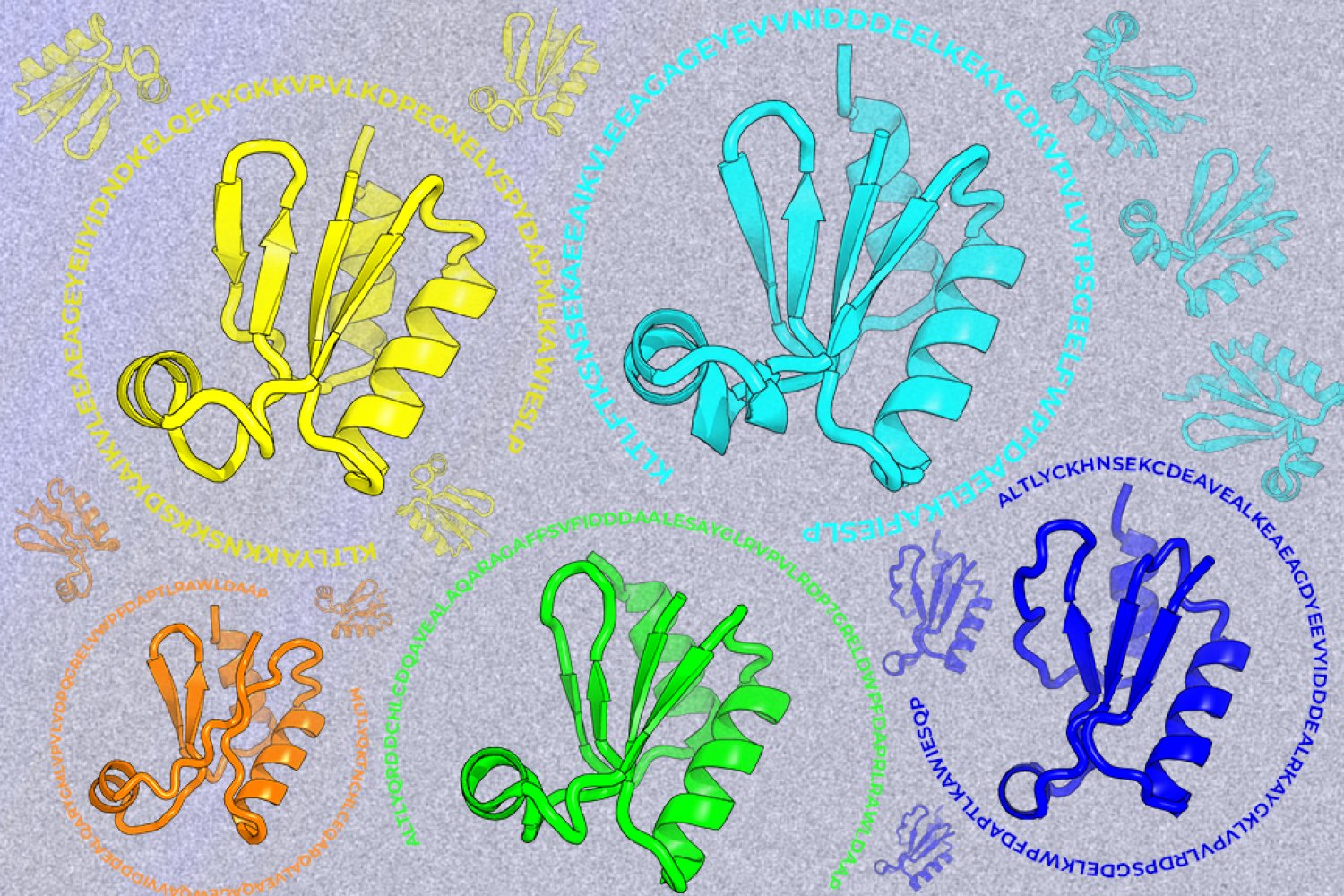
A new machine-learning framework aims to improve the success rate of computational protein design while moving away from results that reproduce sequences found in nature.
MIT News · Artificial Intelligence· news.mit.eduAug 24, 2026
A new method for surgically removing training examples from a model reveals that as datasets grow, the link between what a model learns and what it produces dissolves.