Differential privacy (DP) has traditionally been used to provide theoretical upper bounds on an algorithm's stability to changing its training data. In modern private machine learning applications, achieving strong tradeoffs between utility and theoretical privacy is challenging, and thus one may optimistically hope that existing theoretical privacy analyses are loose. Recent work on privacy auditing has adopted a dual viewpoint, instead lower bounding the true privacy of an algorithm by constructing empirical distinguishing events. The auditing literature has thus far yielded a pessimistic outlook on the looseness of theoretical privacy bounds for DP-SGD, the de facto private training method in modern ML, as nearly-matching empirical lower bounds have been achieved under various threat models [NHSBTJCT23, AC24, CBP25].
In this work, we propose the empirical privacy lower bound of an algorithm as a concrete metric to optimize for, complementary to the theoretical upper bound. We give a lightweight defense framework that generically augments optimization methods in the ML pipeline to have significantly-improved empirical privacy on standard benchmarks. Moreover, we show that our framework comes at no theoretical privacy cost when augmenting DP-SGD, unlike previously-proposed defenses against membership inference attacks. We evaluate our defense against a broad range of audit constructions, models, and datasets to demonstrate its flexibility.
Saloni Modi, Srivi Balaji, Yusong Zhu et al.· 0 citations
A login service can receive its usual number of failed sign-ins while one source grows from 2% to 30% of them. The same pattern appears in system logs when a rare event template becomes common while the message rate stays stable. These events change which categories are active without changing how many events occur. RankShift detects such changes inside the analytical database that stores the data. It compares each window's category shares with a benign reference using a Pearson score whose terms identify the categories responsible for the change. The same query returns the score, calibrated alert, and largest increasing contributions. We evaluate RankShift on HDFS, BGL, and Thunderbird. It matches the count-vector autoencoder within 0.001 AUROC on HDFS (0.999 versus 1.000) and leads on Thunderbird (0.983 versus 0.949). In a controlled fixed-volume experiment, RankShift detects rare-category shifts that are invisible to event-count monitoring, reaching 0.787 AUROC compared with 0.771 for the autoencoder. Across all three corpora, observed false-alarm rates track the requested operating levels. RankShift requires no model training or inference service, and the autoencoders deployed state is 137x larger.
The key-value (KV) cache is the dominant memory bottleneck of long-context large language model (LLM) inference, growing linearly with context length. We show that uniform KV quantization on a fractional-bit grid does not degrade gracefully: under a prespecified multi-seed statistical protocol, Llama-3.1-8B-Instruct with an affine quantizer is statistically indistinguishable from FP16 KV down to 2.322 code bits/value and collapses at 2.0 bits - a quality cliff in (2.0, 2.322] that reappears in generation-time quantization and multi-turn dialogue and transfers to Mistral-7B. The cliff reframes importance-aware mixed precision: above it, eight model-internal importance indicators are statistically interchangeable, so the benefit of mixing is grid interpolation, reaching average precisions uniform quantization cannot realize. SemKV preserves every token, ranks tokens by a model-internal score, and assigns two adjacent above-cliff precisions, achieving a measured 6.0x storage reduction with no statistically detectable quality difference from full KV (n=900, three seeds), and outperforming FP16 token pruning granted a 1.5x larger memory budget. Replacing the affine base with a distortion-optimized quantizer (TurboQuant-MSE) lowers the cliff in every protocol tested, raising the no-detectable-loss operating point to 7.9x. The recipe: measure the cliff for the target deployment setting, then interpolate above it.
Daeha Lee, Do-Hyung Kim, Jae-Hong Kim· 0 citations
Coded computing has emerged as a powerful paradigm for mitigating the impact of straggling workers in distributed computing systems. However, existing coded-computing schemes are predominantly designed for the exact recovery of highly structured computations, such as polynomial evaluation and matrix multiplication, and typically rely on strict recovery thresholds. These assumptions significantly limit their applicability to modern machine-learning workloads, particularly deep neural networks (DNNs), whose computations generally lack rigid algebraic structure and, in many applications, require only accurate approximations rather than exact recovery.
To address this gap, we revisit coded computing from a learning-theoretic perspective and introduce General Coded Computing (GCC). Rather than adopting existing algebraic tools, GCC formulates coded computing through a natural end-to-end mean-squared error loss that directly measures the discrepancy between the desired computations and their recovered estimates. By deriving suitable upper bounds and restricting the encoder and decoder to a reproducing kernel Hilbert space (RKHS) with mild smoothness constraints, we show that both the encoder and decoder admit specific representations as linear combinations of RKHS kernel functions. This representation allows the corresponding coefficients to be computed efficiently. Moreover, this framework enables us to establish theoretical performance guarantees for GCC under two complementary straggler regimes. In the worst-case setting with $N$ worker nodes, and at most $S$ stragglers, we show that the end-to-end loss decays at least at rate $O(S^3N^{-3})$ for standard configurations. We then study a probabilistic setting in which each worker independently straggles with probability $p$. We prove that the expected loss can still converge at rate $O(\log_{1/p}^3(N)N^{-3})$.
Parsa Moradi, Behrooz Tahmasebi, Mohammad Ali Maddah-Ali· 0 citations
Reach audiences
Advertise in front of researchers, engineers, and readers.
Generative recommenders increasingly emit semantic IDs (SIDs): each item is a short sequence of hierarchical discrete codes from a residual quantizer, decoded autoregressively. Before spending scarce A/B-test, a team may decide offline which decoder or reranking variants are worth testing - a job for off-policy evaluation (OPE). We ask a simple question: can the model's own SID tree serve as the action abstraction for that OPE? Our answer has three parts. (i) Under the near-argmax logging real recommenders use, per-item OPE is hopeless - as item-level effective sample size is usually small on production logs - but marginalizing items to code-prefix clusters restores estimable support and cuts error. (ii) This gain is thanks to coarsening, not to the hierarchy specifically; but the SID tree is what makes coarsening feasible in a generative system - each cluster's mass is exactly and cheaply returned by the decoder, whereas flat clustering requires enumerating item/leaf masses that a code-only decoder does not directly expose. (iii) Resolution depth is the operative knob - coarser under scarce support - and a conditional bias bound links the coarsening bias to the quantizer's worst-case reconstruction residual and the target-logging divergence.
Industrial process networks do not maintain a single effective topology while operating: streams are throttled or bypassed, and units move between idle, transition, and active regimes. Models of such systems are typically trained on measured state trajectories while the operating mechanisms that generated them remain latent, and an unconstrained graph network can fit such a trajectory without assigning stable physical meaning to the recovered routing. We address both problems with the Conservative Hybrid Graph Network (CHGN), which learns routing, regime assignment, and removal rates as data-driven surrogates and inserts them into a fixed transport equation, so that the mass balance holds by construction for any predicted routing. CHGN trained on networks of 10-20 nodes transfers zero-shot to unseen graphs of 25-40 nodes without retraining, reaching an RMSE of 2.1e-3 against 6e-2 to 9e-2 for GNN baselines under the same protocol, with a gate MAE of 7.9e-3 and regime accuracy of 94.3% (1.2e-2 and 96.4% respectively on the fixed training topology). On a fluid-mixing pilot plant, CHGN improves on a persistence baseline for held-out physical faults but does not predict manual interventions, for which the governing valve actions are unobserved. The model therefore transfers across process topologies without retraining and exposes the latent mechanisms governing plant behaviour to inspection.
Reasoning models do not stop when they know the answer. On DeepSeek-R1-Distill-Qwen-7B the chain of thought runs about twice as long as the model's own answer probability takes to settle, and how much of that excess is removable varies from problem to problem, so a global length penalty cannot take it out. We take it out by internalizing a causal interpretability finding into the weights. The mechanism is a halt vector: a difference-of-means direction at layer 18 of this model whose steering strength controls how long it thinks, while a replicated value axis does nothing. Installing that intervention in the weights is harder than it looks. Maximizing the scalar projection onto the direction corrupts the off-axis dimensions a frozen downstream reader depends on, and generation gets longer instead of shorter; what works is reconstructing the whole steered activation with those dimensions pinned to their natural values. Fit from 24 problems and no reinforcement learning, the halt removes about a quarter of the thinking at held accuracy across five unseen benchmarks, and the cut tracks each problem's own removable slack at 0.70. It also closes a non-termination pathology that grows with difficulty and that a decoding-time confidence hook makes worse. We do not claim to beat a well-tuned length penalty or decoding-time early exit on the raw trade-off; the contribution is how the halt is obtained.
Equivariant graph neural networks provide a principled way to model geometric systems, but efficient first-order architectures remain limited in how vector information can be transformed as it moves across a graph. We introduce \textsc{ESNN}, an Equivariant Sheaf Neural Network that enriches this interaction by learning directed, matrix-valued transport between neighboring vector features while preserving exact Euclidean equivariance. Rather than increasing the order of the representation, ESNN keeps scalar and vector features first-order and places the additional geometric flexibility in the edge transport itself. We characterize this transport theoretically, showing that when relative displacement is the only covariant geometric input, every linear $O(n)$-equivariant map decomposes into independent radial and tangential components, while learned covariant features enable richer feature-conditioned transformations. We also introduce controlled symmetry relaxation for systems with a preferred ambient direction, which may be prescribed or inferred from data while recovering full $E(n)$-equivariance when the directional pathway is inactive. Across particle dynamics, mesh-based simulation, point-cloud classification, and molecular property prediction, ESNN improves dynamics prediction, recovers the gravity axis when symmetry is broken, yields substantial gains on selected mesh tasks and long-horizon rollouts, and remains robust to unseen rotations. These results show that learning how geometric information is transported across edges offers a complementary route to expressive equivariant message passing without requiring higher-order representations.
Alessio Borgi, Mario Severino, Fabrizio Silvestri et al.· 0 citations
We show that smooth two-layer feed-forward networks (FFNs) expose an additional structural model extraction channel under a chosen-input raw-output oracle at the FFN branch; consider transformer FFN branches with GELU or SiLU activations under chosen-input raw-output access, without access to parameters, gradients, or internal activations; exploit a second-order leakage channel in which projected input Hessians form different mixtures of the same hidden symmetric rank-one factors induced by the FFN input weights. We formalize resulting Hessian collection as a partially symmetric decomposition to establish conditions for local identifiability and stability to exploit vector-output stencil reuse to reduce the structural query cost by a factor of 16. On independently trained CIFAR-10 vision transformers, only 16 projected Hessians, corresponding to 8193 black-box queries, recover the hidden FFN directions with average absolute cosine alignment above 0.94, with 95.1 % of GELU and 91.9 % of SiLU directions exceeding 0.90 alignment. Recovery remains high across independently trained models, repeated extraction runs, and all transformer blocks. The recovered structure supports functional extraction too. Keeping the recovered directions fixed and fitting only the remaining FFN parameters yields high-fidelity substitutes with more than 93 % top-1 agreement, while test accuracy remains within 0.90% and 0.62% of the GELU and SiLU targets. Output rounding and Gaussian noise substantially reduce recovery under a fixed attack configuration, but adapting the finite-difference step restores average alignment to 0.9603 and 0.9398. This is an end-to-end path from black-box second-order observations to hidden FFN-structure recovery and functional replacement. Under the stated oracle model, smooth FFN curvature exposes internal parameter geometry that behavioral fidelity alone cannot reveal.
Independently trained neural networks tend to encode the same data with similar latent geometries. These latent geometries are not directly compatible, yet they can be nearly the same up to some class of transformations. While there exists many methods for alignment between different latent spaces, it is typically done using a set of shared sample correspondences, known as anchors. This leaves a fundamental question: are the geometric signatures of different latent spaces representing similar data sufficient to recover an alignment between them? To that end, we introduce HGA (Hyperspherical Gaussian Alignment), a method that directly optimizes a transformation between two latent spaces by maximizing a geometric measure of "fit" between them. Since it is driven by the geometry of the latent spaces rather than paired data, HGA can operate in both an unsupervised and weakly supervised regime. On tasks such as model stitching or multilingual word embedding correspondence recovery, HGA manages to match supervised results with minimal or no supervision.
Large reasoning models achieve strong performance on complex tasks by generating extended chain-of-thought (CoT) traces via reinforcement learning with verifiable rewards (RLVR). While current RLVR methods have achieved strong results with correctness-based reward signals, they provide limited guidance on the quality of the reasoning process itself, leaving the internal reasoning structure largely unoptimized. Through empirical analysis across multiple model families, we identify a consistent pattern: correct reasoning trac es exhibit more frequent and larger token-level entropy drops within the thinking phase than incorrect ones. We propose ERR+, a two-phase RLVR framework grounded in this observation. The first phase trains with the Entropy Relief Reward (ERR), a bonus proportional to cumulative token-level entropy drops in the thinking phase, log-normalized by response length. Unlike prior methods that suppress entropy, ERR rewards the resolution of uncertainty while leaving exploratory high-entropy states unconstrained. The second phase introduces the Robust Relative Efficiency Reward, which scores each response's length against co-generated peers via a $\tanh$-transformed within-group $z$-score. We provide a formal analysis showing that joint optimization of the two objectives induces gradient conflict in early training, motivating the sequential design . Experiments on five datasets demonstrate consistent improvements in both accuracy and response conciseness across model backbones. Our code is available at https://github.com/XrkArul/err_response
Xin Jiang, Minhao Wang, Wen Wu et al.· 0 citations
Fine-grained wrist activity recognition can support applications such as procedural step guidance and context-aware assistance, yet acquiring labeled data for every new task, user, and activity granularity remains a bottleneck. We present TransfHAR, a self-supervised wrist IMU framework for on-demand, fine-grained activity recognition by learning transferable motion priors from global, unlabeled activities. We show that self-supervised pretraining on coarse wrist IMU activities (e.g., sitting, walking, exercise) learns motion structure rich enough to transfer to fine-grained manipulative, gestural, and procedural activities (e.g., snapping, stirring, waving) that are absent from pretraining. We implement TransfHAR as a real-time smartwatch application that lets users define and expand their own activity set for personalized recognition from only a few demonstrations. Across three offline cross-dataset evaluations, TransfHAR matches or exceeds fully supervised baselines that use complete label sets with equal or additional sensor channels, by 6.2 balanced-accuracy points on average. In an in-lab study with 10 participants each performing seven novel wrist activities, TransfHAR reaches 86.7% balanced accuracy across participants with five examples per class and 90.4% when updated from a single one-minute recording per class. These results indicate that broad self-supervised wrist pretraining provides an effective foundation for on-demand fine-grained activity recognition.
Aidan Bradshaw, Riku Arakawa, Xin Liu et al.· 0 citations
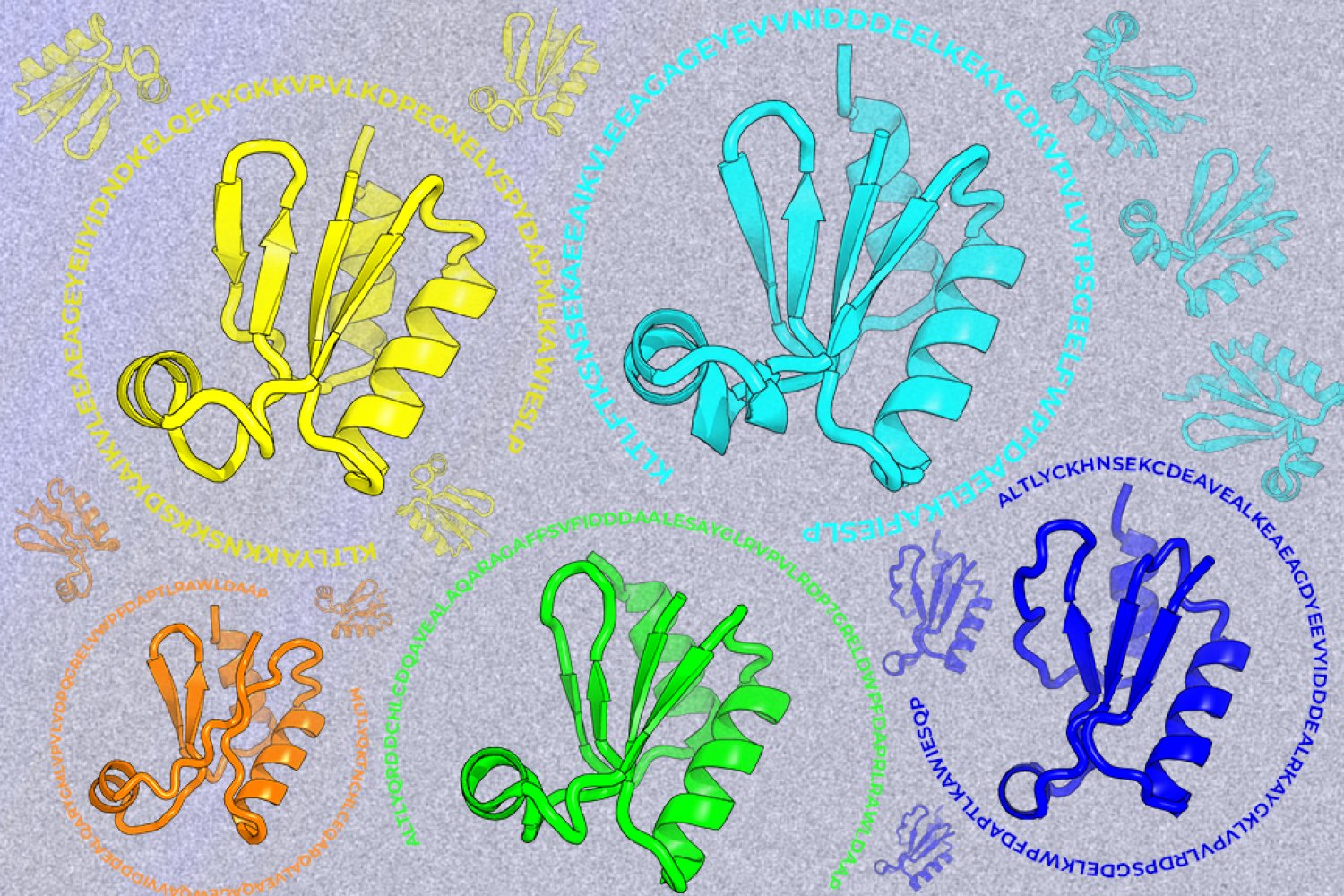
A new machine-learning framework aims to improve the success rate of computational protein design while moving away from results that reproduce sequences found in nature.
MIT News · Artificial Intelligence· news.mit.eduAug 24, 2026
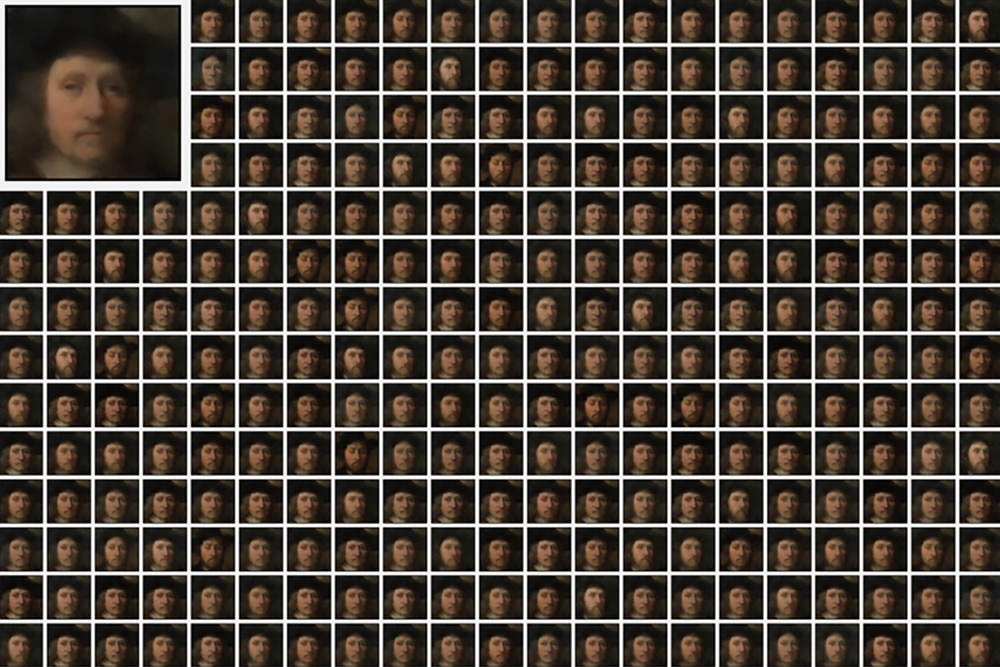
A new method for surgically removing training examples from a model reveals that as datasets grow, the link between what a model learns and what it produces dissolves.