A systematic mapping study of language models developed for Portuguese, providing a comprehensive overview of the current state of the field and analyzing the evolution and relationships among these models through a phylogenetic perspective.
J. Silva, Carlos Caetano, H. Maia et al.· 0 citations
This paper treats hallucination as a temporally extended span and detects it by sequence labeling: each token is scored from a 33-dimensional feature stream that fuses text statistics, Natural Language Inference entailment, and language model surprisal, with no access to model internals.
The results show that non-invasive brain-to-text decoding starts to operate at a level of accuracy previously thought exclusive to surgical implants, opening a path toward safe and efficient brain-computer-interfaces.
Mingfang Zhang, Jarod Lévy, Cédric Rommel et al.· 0 citations
This work studies a medical example in which a model is asked to assign resource-allocation probabilities to two people given brief clinical context, and then sees the same scenario with a single extra sentence containing contrasting patient information, showing the context-dependent effect of patient information in a sensitive medical use case.
Spencer J. Gibson, Tyler Crosse, Magnus Saebo et al.· 0 citations
Reach audiences
Advertise in front of researchers, engineers, and readers.
We investigate whether large language models (LLMs) systematically discriminate in candidate evaluations based on applicant name ethnicity and/or institutional prestige and geographic location. Three factorial experiments are reported (4,320 API calls, four LLMs, five professional domains). Study 1 (3x4 design) finds a statistically robust institution-tier gradient of +0.297 points on a 10-point scale (95% bootstrap CI: +0.175 to +0.422), while name-origin effects are negligible and non-significant (95% CI crosses zero). Study 2 (2x2 Prestige x Country design) breaks the prestige-geography confound: the prestige effect (+0.185; 95% CI: +0.093 to +0.275) exceeds the country-of-origin effect (+0.126; 95% CI: +0.037 to +0.218) by 1.5x. Study 3 (2x2 Journal x Institution design) reveals that journal prestige (Nature vs. a peripheral open-access journal) dominates institutional prestige by 5.7x: journal effect +1.937 (95% CI: +1.811 to +2.062) vs. institution effect +0.341 (95% CI: +0.184 to +0.504). A"rescue effect"is confirmed: publishing in Nature compensates for low institutional prestige more strongly for candidates from the University of Guayaquil (+2.127) than from MIT (+1.745). Results are quantified using the Neutrosophic Bias Index NBI; the I component reveals elevated evaluation inconsistency for low-prestige profiles, an epistemic disadvantage not captured by mean-only metrics. Code and data: https://github.com/mleyvaz/geo-bias-llm
This analysis reveals Qwen3-4B's default mechanism favors certainty generation through a broad coalition of shared features, while uncertainty is implemented as a sparse override mediated by a small set of dedicated features.
The DeepTCM1.0 framework was applied to the mechanistic interpretation of Guizhi Decoction from the dual perspectives of classical traditional Chinese medicine theory and modern scientific research, enabling systematic and interpretable mechanistic analysis of TCM compound formulas.
Wenxin Duan, Hanwei Wang, Zhong Peng et al.· 0 citations
The Middle East Cultural Sensitivity Score (MECSS) is introduced, a framework that turns Said's seven Orientalist operations into measurable dimensions, and the term "Said-washing" for a specific failure: a model that disclaims generalization, then reproduces the structure it disclaimed.
Fractional Decay KV-Cache is proposed, a novel algorithm that maintains a dual-channel scoring mechanism for each cached KV pair: a cumulative attention channel that tracks aggregate importance (akin to H2O), and a recency-weighted relevance channel governed by temporal decay and reinforcement-inspired updates.
This thesis addresses two critical dimensions of Trustworthy AI and Efficient Multimodal Representation Learning: security through analyzing, detecting, and designing backdoor attacks in NLP and VLMs, and efficiency through advanced multimodal representation methods tailored for clinical and medical imaging applications.
NE-BERT, a domain-specific multilingual encoder model trained on approximately 8.3 million sentences spanning 9 Northeast Indian languages and 2 anchor languages, addresses critical vocabulary fragmentation issues in extremely low-resource languages such as Pnar and Kokborok through aggressive upsampling strategies.
Badal Nyalang· Proceedings of the Second Wo...· 2 citations
A new method, called CW-Net, translates the reasoning process of an autonomous vehicle’s AI system into understandable concepts that explain its behavior.
MIT News · Artificial Intelligence· news.mit.eduAug 31, 2026
With millions of users across the world, Julia has been used to conduct cutting-edge research and to design new drugs, jet engines, heat pumps, and more.
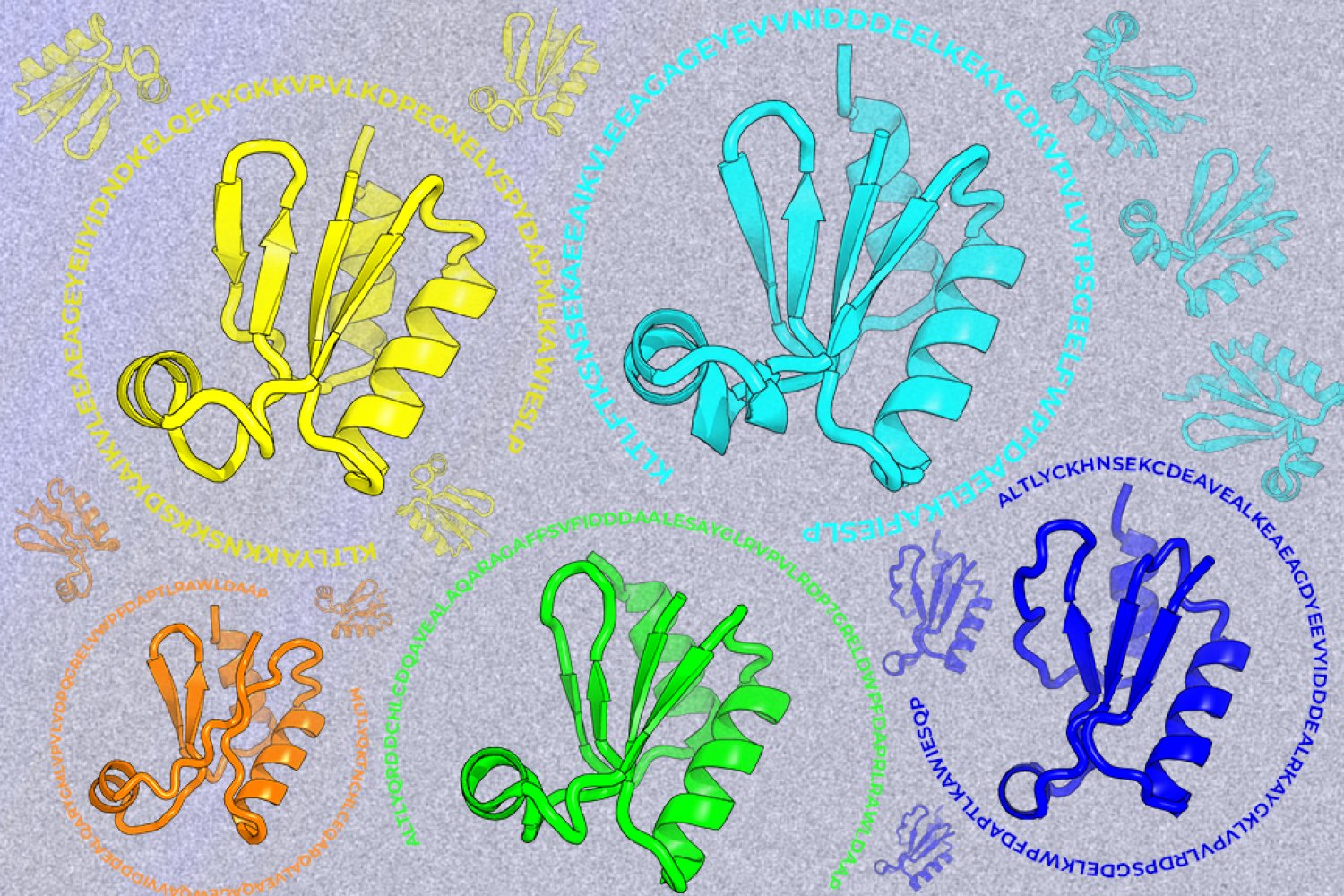
A new machine-learning framework aims to improve the success rate of computational protein design while moving away from results that reproduce sequences found in nature.
New MIT research could lead to better materials for a fossil-fuel-free process for making the chemical that's essential to fertilizer and other products.