Software Reuse and the Test Development Process: A Combined Approach
M. Karinsalo, P. Abrahamsson
· International Conference on... · 12 citations
Category
352 papers
Reach audiences
Advertise in front of researchers, engineers, and readers.
On the basis of the findings in a preliminary study, it was established that information and knowledge of shape memory alloys, SMAs, are either lacking or not available in a form that fulfills the needs of the non-specialist engineering designer. These preliminary findings have been verified in an exploratory study, which contained a literature search in combination with two surveys directed towards national and international researchers and specialists in the SMA field. The results obtained in this study form the central part of a research project with the main objective of developing tools for the design of SMA-based products. The proposal for an efficient and effective product design tool is a knowledge-based engineering system with an integrated design catalogue and a material database for the synthesis activities during the engineering design process. For the analysis activities a finite element system is chosen. For less complex analyses a general mathematics program is proposed.
This paper suggests that by operationalizing the concept of commitment in the shape of a model, a new insight is provided in improving software processes—a more human centered approach as opposed to various technical approaches available. In doing so the SPI managers/change agents are able to plan better the software process improvement initiative and benchmark successful projects (as well as failed ones). Results from five interviews with SPI professionals on the proposed Behavior-based Commitment Model are reported, together with early results from the empirical test in 14 software process improvement projects. Early results suggest that the behaviors introduced in the model are relevant in SPI initiatives, the use of model raises the awareness about the people issues in improving processes, and the model could be used aside with CMM, SPICE or other process improvement models.
Usability capability is a characteristic of a development organization that predicts the level of usability the development projects are capable of achieving. Our experiments with the existing usability capability models indicate that current process assessment methods do not discover all relevant problems that might impede effective user-centered design (UCD) in development organizations. We propose an enhanced model where the usability capability is analyzed from three dimensions: user-centered infrastructure, implementation of user-centered practices in development projects, and business management commitment to usability as a competitive asset.
The focus of the research and practice in software process improvement (SPI) is shifting from traditional large-scale assessment based improvement initiatives to smaller sized, tailored initiatives where the emphasis is on the development personnel and their personal abilities. Personal software process (PSP/sup SM/) is a method designed for improving the personal capabilities of the individual software engineer. This paper contributes to the body of knowledge within this area by reporting experiences from Denmark. The findings indicate an improvement in effort estimation skills and an increase in the resulting product quality in terms of reduced total defect density. The data shows that even with a relatively small effort (i.e., 10%) used in defect prevention activities (i.e., design and code reviews) almost one third of all defects could be removed and, consequently, the time required for the testing was reduced by 50%. On the basis of this data, the use of the PSP method in the software industry is discussed.
Several studies have revealed the fact that nearly two-thirds of all software process improvement (SPI) efforts have failed or have at least fallen short of expectations. Literature and practice have shown that commitment to SPI at all organizational levels is essential for the success of any SPI endeavor. A research model for studying the existence, development and interplay of SPI-related commitment is introduced in this paper. This study suggests that software organizations operate through strategic, operational and personal commitment nets. These nets consist of actors, drivers, concerns, actions, commitment, and outcomes. The commitment nets model is applied in a study of four industrial SPI initiatives. The results from two of these cases are reported here. The results show that SPI is driven through the formation and reformation of commitment nets. The contents of strategic, operational and personal commitment nets are laid out and implications are discussed.
Mobile phones have been closed environments until recent years. The change brought by open platform technologies such as the Symbian operating system and Java technologies has opened up a significant business opportunity for anyone to develop application software such as games for mobile terminals. However, developing mobile applications is currently a challenging task due to the specific demands and technical constraints of mobile development. Furthermore, at the moment very little is known about the suitability of the different development processes for mobile application development. Due to these issues, we have developed an agile development approach called Mobile-D. The Mobile-D approach is briefly outlined here and the experiences gained from four case studies are discussed.
With millions of users across the world, Julia has been used to conduct cutting-edge research and to design new drugs, jet engines, heat pumps, and more.
A new machine-learning framework aims to improve the success rate of computational protein design while moving away from results that reproduce sequences found in nature.
Algorithms & Theory
New MIT research could lead to better materials for a fossil-fuel-free process for making the chemical that's essential to fertilizer and other products.
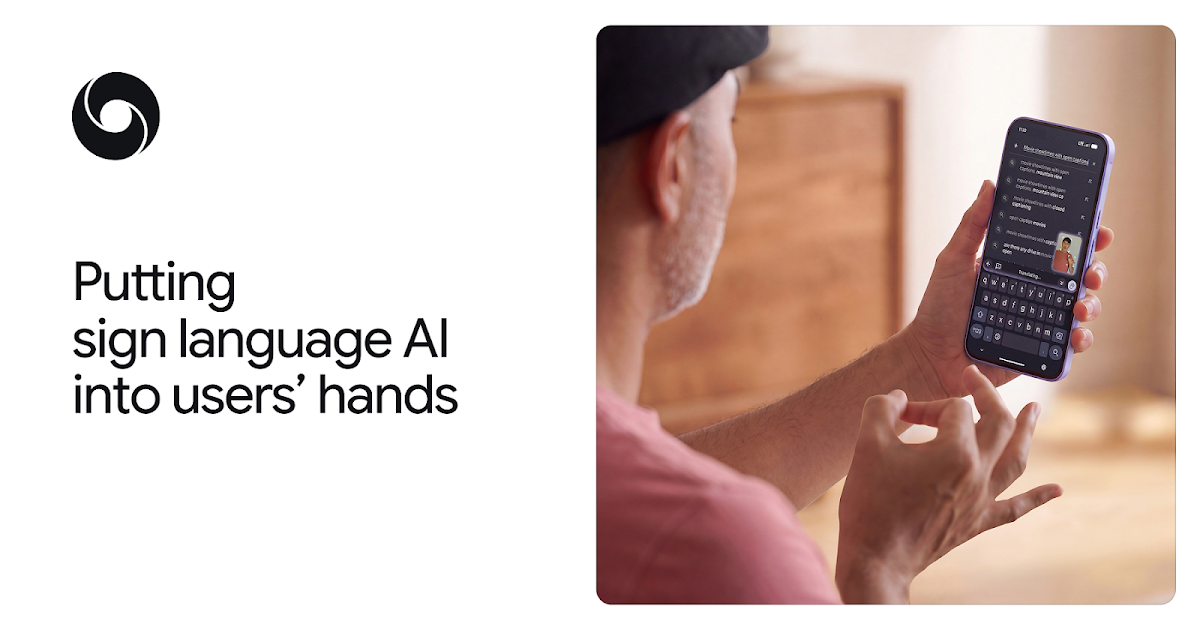
Introducing sign-language-to-text (SL2T), our breakthrough model powering new sign language features for Deaf and hard of hearing users.