Large Language Models (LLMs) often favor Western-associated entities across cultural contexts. Conventional debiasing methods aim for uniform neutrality, but cultural bias mitigation demands context-conditional behavior, preferring culturally appropriate entities when cultural cues are present and remaining neutral when they are absent. We propose CoCoA (Context-Conditional Cultural Alignment), a framework that learns this behavior through dual-context training on the same entity pairs under contexts with and without cultural cues. CoCoA combines a contrastive alignment objective with calibration and drift regularization, optimized through goal-aware gradient reconciliation. We evaluate CoCoA on CAMeL and Camellia, two entity-centric cultural bias benchmarks, across ten language settings and four LLMs. CoCoA reduces the Cultural Bias Score from 43 to 24 on average while maintaining near-neutral preferences at 50.2, with minimal impact on general performance across five standard benchmarks. These findings highlight that effective cultural alignment requires context-conditional modeling rather than uniform debiasing, and establish a new direction for mitigating entity-centric cultural bias in LLMs.
Kyungdon Lee, Wei Xu, Alan Ritter et al.· 0 citations
Pediatric serious illness communication (SIC) is critically important, yet scalable communication training for clinicians remains limited. Compared with other dialogue simulation settings, pediatric SIC poses additional challenges, including multi-party interactions, response to parental distress and strong dependence on feedback dynamics. Existing LLM-based simulators optimize generic dialogue quality rather than curriculum-contingent behavior required for effective SIC training. In collaboration with educators and pediatric clinicians, we introduce the first benchmark suite and simulation framework tailored to pediatric SIC training. Our benchmarks, PitfallBench and DialogueBench, evaluate simulators both at the turn-level and across full dialogues. We further propose SIC-Agents, a self-improving framework that generates a clinician-editable skill document to guide simulator behavior. Our experiments show that SIC-Agents outperforms static expert prompting. To support future research, we release our benchmarks for parent simulation in pediatric SIC at https://github.com/Beikewzh/sic-benchmarks
Zihan Wang, Anita Marie Slominska, Rennie Bimman et al.· 0 citations
Document question-answering systems increasingly answer questions over collections of retrieved documents rather than one clean source, so robustness to distracting context matters as much as reading ability. When such systems fail, it is often unclear whether the context was too long or the distractors were too close to the topic, because prior work tends to conflate these two effects. We present MUDDLE, a controlled benchmark that separates them. MUDDLE uses 270 human-annotated questions, each tied to a single source document, and instantiates every question in five conditions: the source alone, the source with two or four topically similar hard negatives, and the source with two or four random distractors. The random distractors are matched to the hard negatives in length and provenance, so an accuracy gap between the two arms reflects topical similarity rather than length. All five conditions are rendered in markdown, page images, and raw PDF, but the distractor sweep reported here is run in markdown, since a source plus its distractors exceeds current image and PDF input limits. We score answers with an LLM judge across three model families. In the complete markdown sweep, hard negatives lower accuracy more than length-matched random documents at both context sizes for gpt-5-mini, while random documents stay near the no-distractor baseline. The effect is small but directionally consistent, and for gpt-5-mini hard negatives significantly underperform length-matched random distractors when pooled across context sizes. We release the data and evaluation code for a reproducible study of context degradation.
Jason Luo, Saibilila Abudukelimu, Judy Song et al.· 0 citations
Chain-of-thought (CoT) monitoring assumes that reasoning traces faithfully record the information that shapes a model's answer. Existing faithfulness tests often place explicit bias cues in the user message, while agents may encounter preferences through tool returns or raw artifacts. We introduce FACE-Eval (Faithful Attribution of Cue Effects Evaluation), a 5,100-sample evaluation that varies cue location (user message or tool return) and explicitness (direct summary or raw artifact). We measure verbalized commitment among cue-following answers and unverbalized adoption among all cued samples. We evaluate 15 open-weight models from eight families, with total parameters ranging from 4B to 1.60T. Every model has lower verbalized commitment for tool-return than user-message cues and for implicit than explicit cues. Unverbalized adoption is higher for tool-return cues on all 15 models and for implicit cues in 28 of 30 model-channel comparisons. A source-attribution prompt narrows the channel gap on seven models, sometimes by increasing user-channel unverbalized adoption, while telling models that their reasoning will be monitored does not reliably close the gap. We also use two transcript monitors (GPT-5.6-Luna and GPT-4o-mini) to detect preference adoption in the largest model of each family. Across 32 model-channel-explicitness cells, higher unverbalized adoption is associated with lower detection ability for both monitors (Pearson r=-0.54 and r=-0.78, respectively). These results suggest that CoT monitoring may be less reliable when preference information arrives through tools or must be inferred from raw artifacts, within the single-call, prefilled-tool setting tested here.
As AI becomes increasingly integrated into clinical practice, it is playing a growing role in medical decision making. Medicine, however, is a high stakes and evidence based field, where decisions can directly affect patients' lives. It is therefore important to understand whether AI can maintain objective judgment when others try to persuade it. In this paper, we study how easily AI can be persuaded through controlled experiments. We find that professional authority, national background, institutional affiliation, claimed past performance, multiple physicians, supported clinician views, and repeated pressure can all affect AI decisions. Surprisingly, the same persuasive input changes about 10% more cases when it comes from a senior clinician than from a medical student. Simply claiming a better performance history consistently makes the physician more persuasive. More strikingly, a plausible clinician view can persuade AI away from a correct decision even when it is fabricated to support an incorrect answer. This indicates that AI can be strongly influenced by convincing support without reliably determining whether this view from the clinician is correct. Together, these findings suggest that AI can be easily persuaded by what people say, who says it, and how the opinion is presented. Therefore, it is essential for AI to maintain sound judgment under persuasion, enabling its safe and reliable use in high stakes medical decision making.
Jiayuan Zhu, Jiazhen Pan, Fenglin Liu et al.· 0 citations
Judgments about psychological distress are socially situated: what counts as concerning hinges on community norms around emotional expression, vulnerability, and help-seeking. Yet large language models (LLMs) used for distress detection are typically aligned to a single, undifferentiated standard. How well do these models capture the perspectives of the communities whose language they assess? We address this question through a perspectivist annotation study in which 321 participants provided 9,587 judgments on 1,198 Reddit posts spanning six identity-based communities, yielding community-specific labels. Raters in the contextualized in-group condition show a modest tendency to agree more with their community than uncontextualized out-group raters (OR = 1.18), an effect varying significantly across communities. We then evaluate nine open-weight LLM configurations and four frontier configurations against these labels. Open-weight LLMs systematically over-estimate distress: when communities perceive none-to-mild distress, these models achieve only 31-44% accuracy, predominantly producing false positives. GPT-5 and Gemini 2.5 Pro show the same none-to-mild inflation even when their full-sample over/under rates are mixed, while Claude Opus 4 is more conservative. This pattern does not simply mirror an outsider reading position: uncontextualized out-group human aggregates were nearly symmetric, with 18% over-estimation versus 19% under-estimation. Instead, the models that inflate none-to-mild cases exhibit a distress prior that exceeds both contextualized in-group and uncontextualized out-group human judgments. These findings have implications for equitable AI deployment in mental health contexts, where miscalibrated distress detection may unevenly affect the communities being assessed.
Andrew Aquilina, Xiang Lorraine Li, Yu-Ru Li· 0 citations
Localized Representation Steering (LRS) is widely used to correct reasoning pathologies in large language models. However, standard benchmark evaluations can easily be fooled by superficial label overrides, creating a false impression of reasoning circuit repairs. In this work, we propose Cross-Rule Transfer (CRT), a diagnostic framework that audits representational interventions by evaluating them on rule families where the model is natively competent. Evaluating late-layer LRS for a widespread logical failure, contradiction blindness, reveals that the intervention merely injects a global label bias: applying the steering vector to rules the model already handles correctly (99.6% baseline) degrades performance to 40.4% by forcing false contradiction predictions. We support this diagnosis with four complementary controls (direct logit bias equivalence, control vector label-flipping, cross-model grafting, and early-layer steering checks), providing a rigorous methodology to distinguish genuine reasoning repairs from superficial label overrides.
Tool-use benchmarks generally evaluate whether an agent completes a workflow using appropriate tools and valid arguments. However, feasibility alone is insufficient in real-world decision settings such as route planning and fleet dispatch. Individual choices interact through shared constraints and costs, so a feasible solution may still be substantially suboptimal. This raises a harder question: can an agent turn information gathered through tools into a globally optimal decision? We introduce AlgoWorlds, a benchmark that transforms formally specified combinatorial optimization problems into partially observed decision environments with verifiable global optima. Each environment contains a hidden instance observed only through task-specific information tools, after which the agent commits to one structured decision evaluated for feasibility and optimality. AlgoWorlds contains 240 environments covering ten combinatorial optimization families and four workload levels. Family-specific deterministic programs generate the instances, exact algorithms certify their optima and determine workload levels, and two structurally different tool interfaces present each underlying instance. We evaluate seven leading LLMs, including Claude Opus 4.8 and GPT-5.6 Sol. Achieving global optimality remains highly challenging: although leading models produce feasible decisions in most cases, the best-performing model reaches exact optimality in only 38.61% of cases. Even when agents collect sufficient information to reconstruct the hidden instance, most failures end in feasible but suboptimal decisions. The challenge therefore extends beyond information acquisition to information integration, global constraint reasoning, and decision verification. The project homepage is available at https://xzx34.github.io/AlgoWorlds/, and the code is available at https://github.com/xzx34/AlgoWorlds.
Arabic large language models must refuse harmful prompts without over-refusing benign or sensitive prompts, yet a single refusal rate hides this trade-off. We evaluate it using benign refusal B and harmful-prompt refusal H, where H measures refusal rather than harmful compliance. Across five Arabic-capable models and 130 runs on the full human-written AraSafe set, refusal-only supervised fine-tuning (SFT) collapses toward blanket refusal, whereas selected mixed-SFT configurations reach H = 90% to 93% at B = 14% to 23%; four selected configurations exceed the H = 90% target in all three runs, while Fanar does so in two of three. Direct Preference Optimization (DPO) and inference guards change B and H differently across models rather than acting as uniform upgrades. In a blinded 300-response audit, annotator binary-refusal agreement is 89.0% (kappa = 0.78); Qwen3Guard and Aya Expanse 32B reach 88.7% and 91.0% accuracy, respectively, with no conclusive paired difference. Selected SFT raises H on Arabizi for all five models, but none reaches 90%, showing only partial transfer from Modern Standard Arabic. Overall, the results support model-specific operating-point selection: set a deployment target and retain only interventions that improve it.
Large language models deployed in specialized domains must improve in-domain performance without sacrificing general capabilities. Existing parameter-efficient fine-tuning methods are typically always on: their learned perturbations are applied to every input, which can degrade out-of-domain (OOD) performance. We propose Engram Adapter, a framework that repurposes pretraining-time conditional memory as a post-hoc adapter for frozen LLMs. It uses multi-channel matching over local n-gram patterns with explicit occupancy tracking as a lightweight selectivity prior, making residual injection more likely on in-domain inputs while a learned scalar gate suppresses incoherent OOD retrievals. We evaluate on Qwen3-4B and Qwen3-8B with AG-News and MedMCQA as adaptation tasks and OOD benchmarks spanning reasoning, translation, code generation, and legal reasoning. Engram Adapter improves in-domain accuracy while preserving 99.4%--100.1% of average OOD performance; on LegalBench it slightly exceeds the frozen base model on average, whereas comparable always-on baselines degrade sharply. Mechanistic analyses show that although OOD activations are non-zero, gate and projection attenuation reduce residuals to approximately 0.08% of hidden-state norm, yielding small KL drift and negligible accuracy change. These results suggest conditional activation is a promising route toward modular, retention-preserving domain specialization over frozen backbones.
Positive psychology dialogue aims to support emotional distress and positive resource building, requiring models to produce not only empathetic replies but also coherent progression through a multi-turn support process. Existing resources often reduce supervision to turn-level strategies or holistic preference labels, leaving process position, support function, and local repair targets implicit. We introduce StageWell, a process-aligned Chinese corpus for positive psychology dialogue, together with HQS, a structured protocol for data construction and evaluation. StageWell organizes support into a six-stage support process and uses a multi-agent whole-dialogue rewriting workflow to construct 12,445 SFT instances, 1,849 DPO preference pairs, and a GroundTruth subset of 120 expert-revised dialogues and 977 QA pairs. Guided by HQS, DPO pairs are built as process-localized repairs: flawed model outputs are used as rejected responses, and targeted rewrites under the same context and stage constraint are used as chosen responses. Across four 9B-14B open-source LLMs, this supervision yields robust gains in process control, response quality, and safety. Averaged across models, BERTScore improves by 0.037, Q-Overall increases by 1.32 points, S-exact increases by 0.236, and the H-critical rate decreases by 0.167. These results highlight the value of modeling supportive dialogue as a structured multi-turn support process rather than as single-turn response generation.
Yuxiong Wang, Ziwei Lin, Bo Wang et al.· 0 citations
Annotation schemas are not neutral. When applied to classical literature, tag sets developed for modern journalistic texts impose source-culture definitions on texts they were never designed to describe. We instead ground a schema in the tradition of the text itself introducing \textit{Pad\=artha}, the first ontology-grounded fine-grained Named Entity Recognition (NER) benchmark for Sanskrit, built on the \textit{Mah\=abh\=arata} epic. Our tag set derives from \textit{Ny\=aya-Vai\'sesika}, a classical Indian ontological system, yielding 18 fine-grained categories organized under 10 ontological nodes and mapped onto five standard coarse tags, ensuring interoperability with existing benchmarks. Expert annotators label over 12.6K entries from a scholarly index of named entities, linked to corresponding mentions in the \textit{Mah\=an\=ama} corpus, producing fine-grained annotations for 108,335 entity mentions across 73,632 verses, along with a 5,000-verse expert-verified test set sampled to stress rare mentions. We present the first systematic benchmarking of generative NER against traditional architectures for Sanskrit, finding that fine-tuned generative models perform comparably to task-specific systems. However, all systems show a sharp decline from coarse to fine granularity and struggle with out-of-entity mentions unseen during training. The limitation is not due to data scarcity alone, as fine-tuned models recall unseen entities far worse than seen ones and tend to default to the majority sense under lexical ambiguity.
Sujoy Sarkar, Pretam Ray, Paramhans Shah et al.· 0 citations
With millions of users across the world, Julia has been used to conduct cutting-edge research and to design new drugs, jet engines, heat pumps, and more.
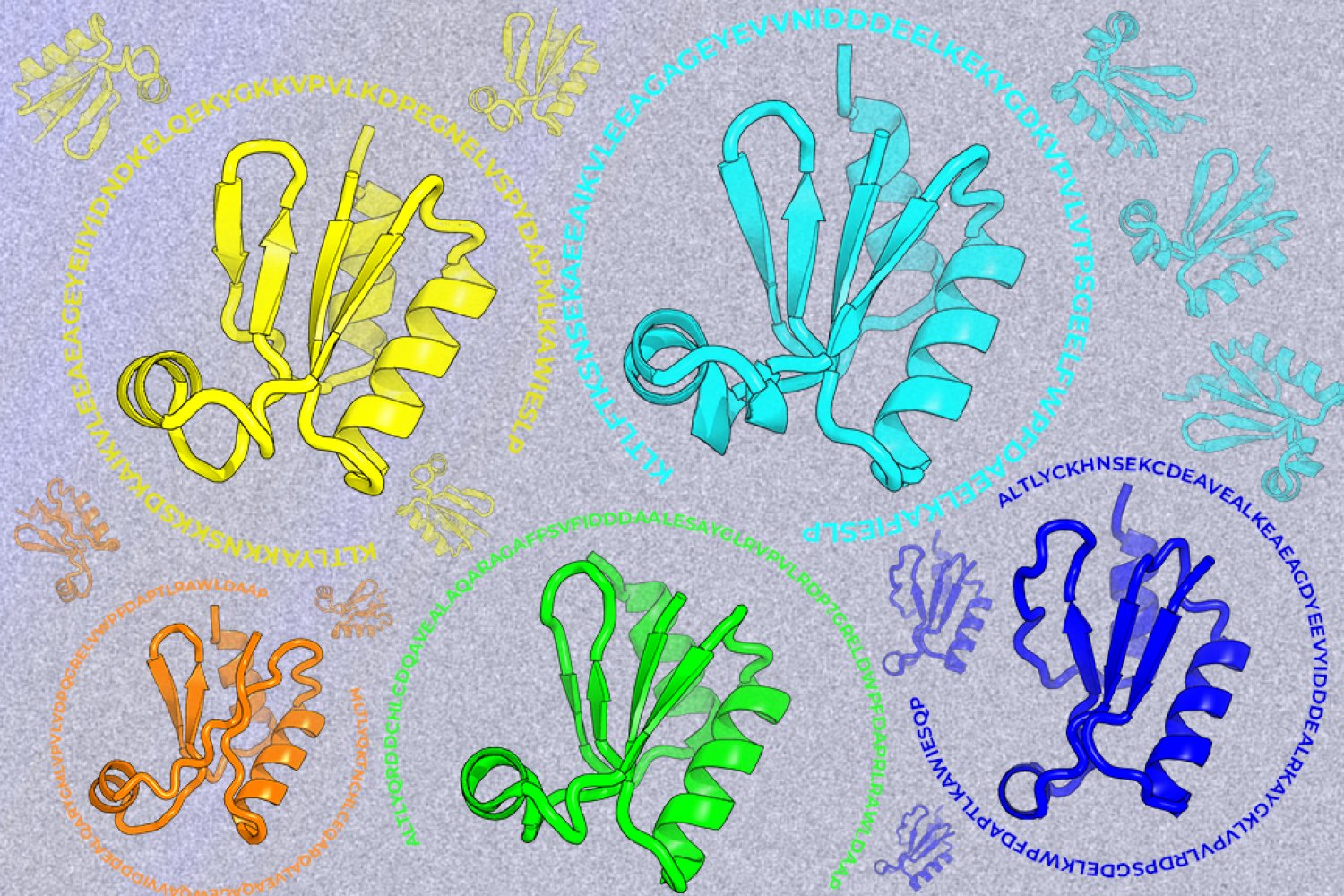
A new machine-learning framework aims to improve the success rate of computational protein design while moving away from results that reproduce sequences found in nature.
New MIT research could lead to better materials for a fossil-fuel-free process for making the chemical that's essential to fertilizer and other products.