Despite their strong performance, large language models remain highly sensitive to prompt formulation. This issue is typically addressed at inference-time through manual prompt optimization, which introduces overhead and lacks scalability. Conversely, we focus on train-time approaches that build prompt robustness into...
Listwise preference feedback offers richer supervision for large language model (LLMs) alignment than pairwise comparisons, but a full ranking also reveals more sensitive user preferences. Existing privacy-preserving alignment methods focus mainly on pairwise feedback, while listwise alignment under local differential...
Junwei Chen, Manjiang Yu, Pengpeng Qiao et al.· 0 citations
Large reasoning models have recently demonstrated remarkable capabilities in solving complex tasks, where supervised fine-tuning (SFT) on long chain-of-thought data serves as a crucial foundation for eliciting and enhancing their reasoning abilities. Despite rapid progress in both improving and analyzing reasoning-orie...
Yongcan Yu, Kuangpu Guo, Jian Liang et al.· 0 citations
Closing the gap between frontier and smaller language models is usually approached by distillation: fine-tuning the small model (student) on a frontier model's (teacher) outputs, which binds transfer to training compute and leaves the transferred knowledge largely opaque. We propose Artifact Distillation: a teacher sol...
Mustafa Safa Ozdayi, Somin Wadhwa· 0 citations
Reach audiences
Advertise in front of researchers, engineers, and readers.
Building and scaling computer-using agents (CUAs) across desktop, mobile, and web environments requires reliable task-completion verification for data curation, evaluation, and reinforcement learning. Typical automated approaches prompt vision-language models (VLMs) to judge trajectories or generate programs to inspect...
Qiushi Sun, Da Yu, Alexander Knop et al.· 0 citations
The findings highlight both similarities and differences in the application of counselling patterns across scenarios, showing the potential of LLM-based role-playing exercises to enhance counselling competencies and to identify areas for further refinement in virtual client simulations.
Eric Rudolph, P. Steigerwald, J. Albrecht· Educational Data Mining· 3 citations
As AI's mathematical capabilities rapidly improve, meaningful benchmarks are shifting from university-level problems and math olympiads to research-level mathematics. The Ramanujan Challenge is a benchmark comprised of research-level problems in number theory, including unpublished results and open conjectures. It pres...
A. Sorani, Ashvni Narayanan, M. Shalyt et al.· 0 citations
It is argued for a benchmarking protocol that fixes the model, data, and sampling parameters and that reports relative-error metrics alongside absolute ones, confirming that system error dominates model error.
Hao-Wen Shi, Xu-Zhe Yan, Fa-Hao Chen et al.· 0 citations
Financial AI workflows that reuse investor knowledge need persistent memory that integrates observations across sources and periods without losing identity or provenance. In a knowledge graph, recurring observations may use different surface forms, fragmenting relationship histories and preventing evidence from accumul...
In psychiatric practice, the clinical intake interview remains a primary diagnostic instrument, requiring the clinician to establish rapport while disentangling complex, overlapping presentations. Here, we show that multi-turn reinforcement learning (RL) in simulation environments improves language model performance on...
Samuel Schmidgall, Tim Strother, Alex Bijamov et al.· 0 citations
Tool-use benchmarks often score agents by final task success, but terminal outcomes can obscure whether the intermediate tool-call trajectory was executable. We propose prefix executability as a trajectory-level evaluation protocol for tool-using agents. The protocol measures whether every prefix of a predicted tool-ca...
Amir H. Rezaeian, Weiyi Sun, Yassine Benajiba et al.· 0 citations
Large language models (LLMs) are increasingly capable, yet they produce wrong answers indistinguishable from correct ones. In question answering (QA), such an error propagates unnoticed into downstream tasks. Perturbation-based uncertainty quantification (UQ) addresses this by probing a model over a set of input rewrit...
Mesut Ceylan, Arda Baris Basaran, Elgar Fleisch et al.· 0 citations
Flint-interactive gives AI agents a language for creating interactive visualizations. Click a chart, filter data, highlight related content, and explore beyond the view the author originally chose. The post Flint-interactive: A language for creating interactive data visualizations appeared first on Microsoft Research.
A new computational approach reveals how cells communicate to assemble into tissues. This could accelerate stem cell engineering, improve disease models, and inform therapies.
Microsoft Research Blog· microsoft.comOct 15, 2026
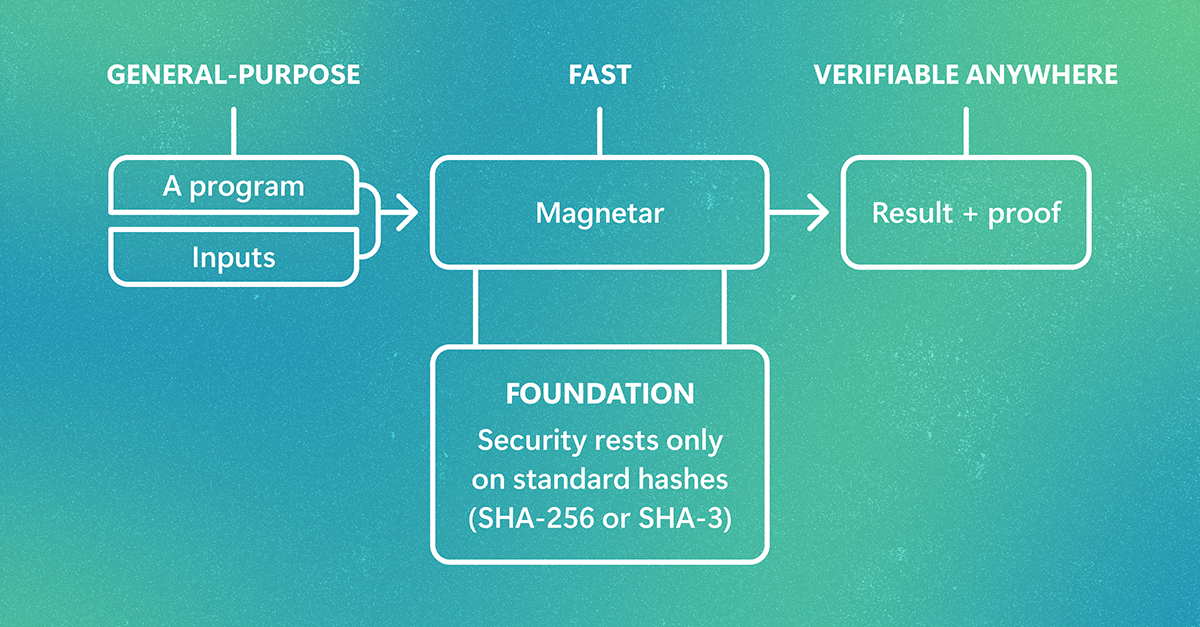
Zero-knowledge proofs can verify computing results without rerunning workloads or exposing sensitive data. Magnetar helps bring them into the mainstream with support for standard programming languages, major speed gains, and quantum-resistant security. The post Proof-based general-purpose computing with Magnetar appeared first on Microsoft Research.
We use cookies to run the site and, with your consent, for analytics and to show ads.
See our Cookie Policy.