Recent methods for improving LLM mathematical reasoning, whether through MCTS-based test-time search or causal graph-guided knowledge injection, cannot identify which concepts causally contribute to a correct answer, as the observed association may be spurious, driven by confounders such as problem difficulty.
We pro...
Weight matrices in deep networks exhibit geometric continuity---principal singular vectors of adjacent layers point in similar directions. While this property has been widely observed, its origin remains unexplained. Through experiments on toy MLPs and small transformers, we identify two mechanisms: residual connection...
Recent Transformer architectures expose later layers to representations computed in earlier layers, motivated by the observation that low-level features can become harder to recover as the residual stream is transformed through depth. One such method adds static value residuals: learned mixing coefficients that expose...
Skye Gunasekaran, T\'ea Wright, Rui-Jie Zhu et al.· 0 citations
Large-scale sign language resources usually pair RGB videos with text and support recognition, translation, and generation. However, RGB frames contain backgrounds, clothing, and other appearance information unrelated to signing motion. Representing the videos as whole-body keypoints such as DWPose removes much of this...
Sen Fang, Hongbin Zhong, Yanxin Zhang et al.· 0 citations
Reach audiences
Advertise in front of researchers, engineers, and readers.
Self-supervised learning (SSL) underpins modern audio deepfake detection, yet most prior work centers on a single large wav2vec2-XLSR backbone, leaving compact under studied. We present RAPTOR, Representation Aware Pairwise-gated Transformer for Out-of-domain Recognition a controlled study of compact SSL backbones from...
Ajinkya Kulkarni, Sandipana Dowerah, Atharva Kulkarni et al.· 0 citations
Model compression is necessary for deployment of transformer models in resource-constrained environments. However, compression reduces the performance of transformer models on downstream tasks. Existing solutions such as Knowledge Distillation (KD) and Parameter Efficient Fine-Tuning (PEFT) have their own limitations....
Rohit Raj Rai, Abhishek Dhaka, Amit Awekar· 0 citations
Large language models (LLMs) increasingly rely on external knowledge to improve factuality, yet many knowledge sources on the Web, such as scholarly indexes and product catalogs, are organized as heterogeneous graphs. Reasoning over such graph-structured knowledge poses two key challenges: (1) navigating structured, sc...
Yuyang Bai, Zhuofeng Li, Ping Nie et al.· 0 citations
Efficient key-value (KV) cache management is crucial for the practical deployment of large language models (LLMs), yet existing compression techniques often incur a trade-off between performance degradation and computational overhead. We propose a novel gating-based KV cache eviction method for frozen-weight LLMs that...
Jang-Hyun Kim, Dongyoon Han, Sangdoo Yun· 0 citations
Scientific discovery requires new ideas to be situated within an ever-expanding landscape of existing knowledge. An emerging challenge is how to identify conceptually relevant prior work from rapidly growing literature, and assess how a new idea differentiates from existing research. Current embedding approaches typica...
Minqian Liu, Yuexi Shen, Dawei Zhou et al.· 0 citations
Multimodal models have demonstrated strong capabilities in web, desktop, and mobile GUI environments, but their performance in automotive cockpit systems remains largely unexplored. In-vehicle GUIs introduce unique challenges beyond traditional GUI interaction, including vehicle-state reasoning, implicit intent underst...
Junfeng Yan, Biao Wu, Meng Fang et al.· 0 citations
Large language models (LLMs) can improve through reinforcement learning with verifiable rewards (RLVR), but many settings lack reference answers or external verifiers. Label-free self-improvement instead constructs training signals from the model's own outputs. Because the same policy generates both the candidate respo...
Yujun Zhou, Zhenwen Liang, Haolin Liu et al.· 0 citations
This study investigates the efficacy of state-of-the-art multi-modal large language models-including OpenAI O1, OpenAI 4o, Gemini Flash (thinking), Deepseek Janus, Grok, Llama 3.2 and 4, Qwen 2 and 2.5 VL, Mistral Pixtral, and Claude detecting fraudulent documents, and reveals that top-performing multi-modal LLMs demon...
Zi-Sheng Liang, Kidus Zewde, R. Singh et al.· arXiv.org· 8 citations
Flint-interactive gives AI agents a language for creating interactive visualizations. Click a chart, filter data, highlight related content, and explore beyond the view the author originally chose. The post Flint-interactive: A language for creating interactive data visualizations appeared first on Microsoft Research.
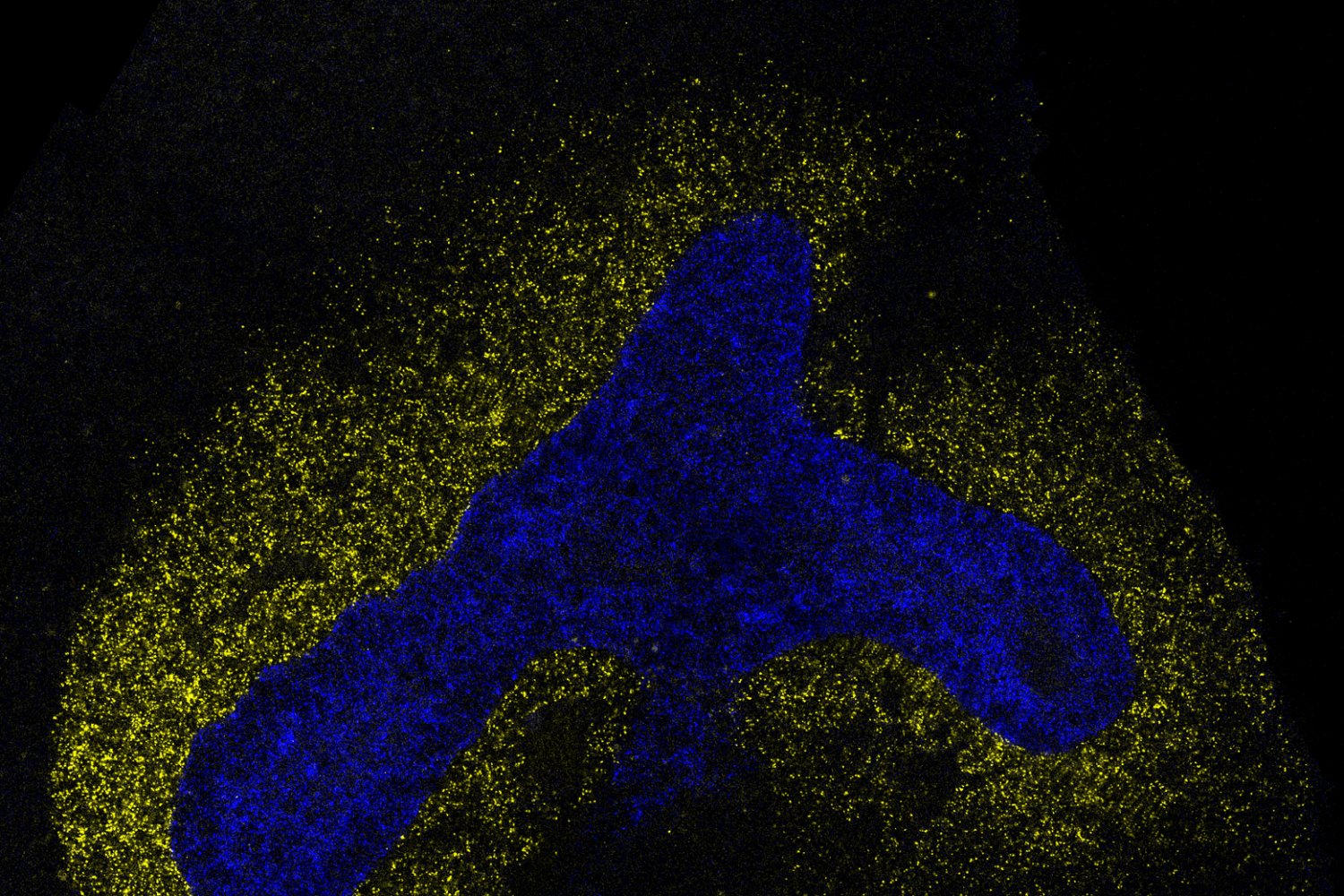
A new computational approach reveals how cells communicate to assemble into tissues. This could accelerate stem cell engineering, improve disease models, and inform therapies.
Microsoft Research Blog· microsoft.comOct 15, 2026
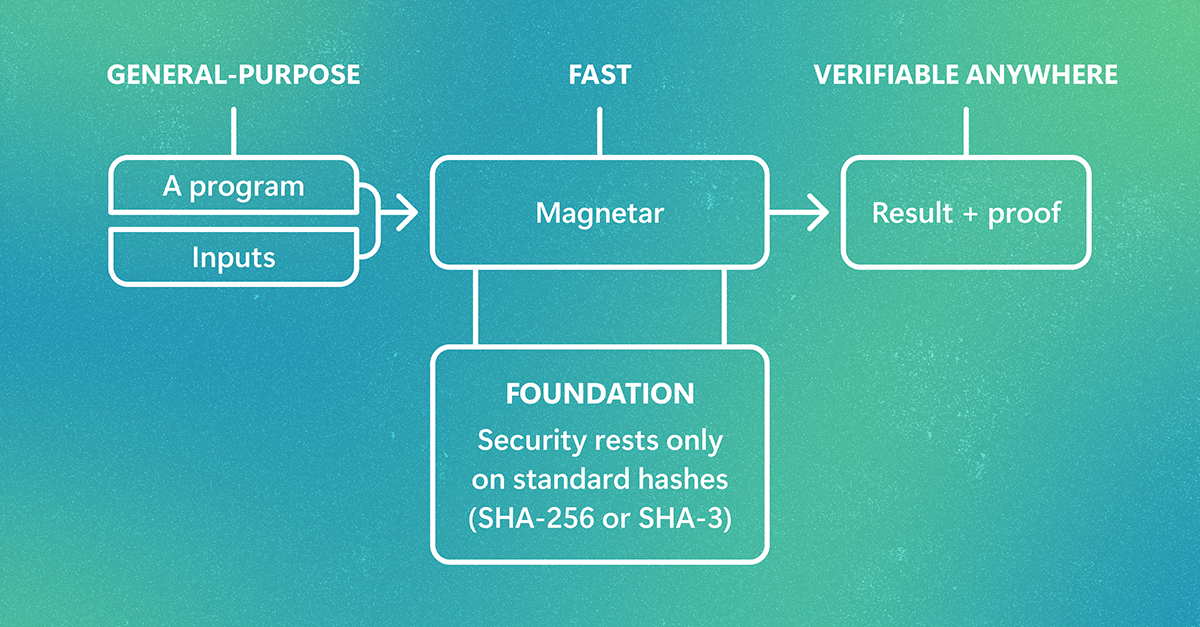
Zero-knowledge proofs can verify computing results without rerunning workloads or exposing sensitive data. Magnetar helps bring them into the mainstream with support for standard programming languages, major speed gains, and quantum-resistant security. The post Proof-based general-purpose computing with Magnetar appeared first on Microsoft Research.
We use cookies to run the site and, with your consent, for analytics and to show ads.
See our Cookie Policy.